
Nigeria’s Super Eagles, a powerhouse in African football with six appearances in seven World Cups from 1994 to 2018, have now missed consecutive tournaments for the first time since 1990.
Their latest heartbreak came on November 16, 2025, in a dramatic 4-3 penalty shootout loss to DR Congo in the African play-off final in Rabat, Morocco, after a 1-1 draw in regular and extra time.
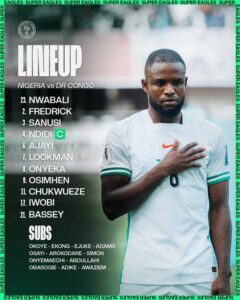
This ended their hopes of reaching the expanded 2026 FIFA World Cup in the US, Mexico, and Canada. DR Congo advanced to the inter-confederation play-offs, while Nigeria’s exit has sparked widespread outrage, including an apology from the Nigeria Football Federation (NFF) to President Bola Tinubu and the nation.
The failure wasn’t a single moment but a culmination of deep-rooted issues across the qualifying campaign.
Below, AhotorSports’ Bright Junior digs deep into the primary factors, drawing from the group’s results and broader context.
Disjointed Campaign and Poor Early Results
Nigeria finished second in the ultra-competitive CAF Group C (with South Africa, Benin, Rwanda, Zimbabwe, and Lesotho), earning 17 points—just one behind group winners South Africa (18 points). They edged Benin on goal difference but were forced into the play-offs due to the tight standings.
A disastrous start saw them winless in their first four matches (three draws, one loss), including a humiliating 2-1 defeat to Benin in neutral Abidjan, Ivory Coast—exacerbated by the wrong national anthem being played before kickoff. This left them bottom of the group early on.
Draws against South Africa and Zimbabwe further eroded momentum, with a 1-1 stalemate in Bloemfontein against South Africa proving costly. Even a forfeited 3-0 win over Libya (due to disciplinary action) couldn’t fully salvage the damage.
Managerial Instability and Late Recovery
The campaign featured two head coach changes: Finidi George was sacked after the Benin loss in June 2024, replaced by interim Augustine Eguavoen, who guided them to the 2025 Africa Cup of Nations (AFCON).
Eric Chelle took over in January 2025, sparking a turnaround with four wins and two draws in the remaining qualifiers.
Despite the late surge, the instability disrupted team cohesion, and Chelle’s tenure couldn’t overcome the early deficit. Post-match, Chelle accused DR Congo’s staff of “voodoo” during penalties, highlighting the emotional toll.
Internal Conflicts and Player Unrest
In a shocking low, players boycotted training ahead of a crucial AFCON qualifier against Gabon in October 2025, protesting unpaid bonuses and allowances.
Captain William Troost-Ekong later called for unity, but the incident exposed chronic administrative failures.
These rifts, combined with broader NFF mismanagement, created a toxic environment. The federation’s closed-door election system and lack of reforms have long been criticized for stifling progress.
Tactical and Performance Shortcomings in Key Moments
Injuries to star players: Victor Osimhen, Nigeria’s talismanic striker, scored eight goals in seven qualifiers but limped off injured at halftime in the play-off final against DR Congo. His absence sapped the team’s cutting edge, allowing DR Congo to dominate possession and create better chances.
Penalty shootout woes: Nigeria’s elimination hinged on misses from Moses Simon and Semi Ajayi in the shootout. Goalkeeper Stanley Nwabali saved two, but it wasn’t enough against Chancel Mbemba’s decisive kick.
Overall, the team lacked fluency in the play-off, struggling for control after Osimhen’s exit despite a strong 4-1 extra-time win over Gabon in the semi-final. Critics point to a “listless” style in big games, wasting a generation of talents like Osimhen, Alex Iwobi, and Wilfred Ndidi.
Broader Systemic and Structural Issues
Talent development failures: Despite Nigeria’s massive population and football-mad diaspora (especially in the US, a 2026 host), the country has struggled to convert raw talent into consistent results.
ESPN called it a “wasted” golden generation, with calls for NFF reforms like opening elections to outsiders.
Administrative dysfunction: The NFF’s apology acknowledged “collective effort” falling short, but public anger focuses on embezzlement fears (ironically, some joked no World Cup means no fund scandals) and lack of accountability. The sports ministry demanded explanations after early losses, labeling them “unacceptable.”
Regional rivalry amplified the pain: West African neighbors like Ghana (who knocked Nigeria out in 2022) and South Africa reveled in the upset.
Nigeria’s crash was a perfect storm of early stumbles, leadership turmoil, off-field drama, and on-pitch fragility—exposing cracks in a system that has prioritized survival over excellence.
While DR Congo’s disciplined, counter-attacking style deserved credit for the upset (they’re ranked 19 places below Nigeria), the Super Eagles’ self-inflicted wounds were decisive. Fans now demand sweeping changes, but with AFCON 2025 looming, the road to redemption starts there.