
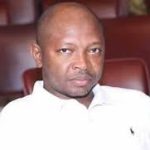
Former Member of Parliament for Kumbungu, Ras Mubarak, has strongly pushed back against recent claims by Mahamudu Bawumia that Ghana’s democracy is under threat under the governing National Democratic Congress (NDC), describing the statement as “deeply unfortunate” and lacking factual grounding.
Speaking in an interview on Ahotor 92.3 FM’s Adekyee Mu Nsem morning show hosted by Citizen Kofi Owusu, Mubarak offered a robust defence of the current administration led by John Dramani Mahama, while turning the spotlight on what he described as troubling precedents set under the previous New Patriotic Party (NPP) government.
According to him, some of the most alarming incidents that could genuinely be described as threats to democracy occurred during the NPP’s tenure. He cited instances where party supporters allegedly stormed courtrooms to disrupt legal proceedings in an attempt to free individuals facing trial—actions he stressed were unprecedented in Ghana’s political history. “Even under military regimes, including the era of the Provisional National Defence Council, we did not witness such conduct,” he remarked.
The former legislator also referenced politically sensitive arrests during the previous administration, including that of outspoken NDC supporter Appiah Stadium, arguing that the use of state power to clamp down on dissent is not new and should not be selectively interpreted.
Turning to recent public discourse, the former legislator expressed concern over what he described as a growing culture of disrespect and inflammatory rhetoric, particularly among the youth. While affirming that criticism of government is a vital component of democracy, he drew a firm line against personal insults directed at national leaders.
“There is a clear difference between constructive criticism and outright insult,” he stressed, warning that unchecked verbal attacks—especially on social media—risk eroding the moral fabric of society. He lamented what he sees as a decline in traditional values such as respect for elders, leaders, and authority figures, noting that even religious and traditional leaders are increasingly becoming targets of online abuse.
Hon. Mubarak called on both major political parties—the NDC and the NPP—to take responsibility for educating their supporters on civil engagement and responsible communication. He emphasised that political competition should not come at the expense of national unity and mutual respect.
On the issue of punitive measures for individuals who engage in offensive conduct, Mubarak advocated for alternative forms of punishment rather than custodial sentences. He proposed community service as a more constructive and reform-oriented approach, suggesting that offenders could be assigned to public works such as construction projects. This, he noted, would not only serve as a deterrent but also help decongest the country’s overcrowded prisons.
In a separate but related discussion, Mubarak questioned the credibility and timing of recent opinion polls released by Global InfoAnalytics regarding potential flagbearer contenders within the NDC. He argued that such polls are premature, given that the party has not yet completed the process of electing its branch executives—who form the core of its delegate system.
“On what basis are these polls being conducted?” he asked, pointing out that without a clearly defined and current delegate base, the methodology behind such surveys becomes questionable. He also raised concerns about the frequency of the polls—reportedly conducted every few weeks—and the financial resources required to execute them, suggesting that transparency around funding is necessary.
While acknowledging that pollsters sometimes get the general direction of elections right, Mubarak noted that they are not infallible. He cited the Ayawaso East by-election as an example where projections missed the mark, adding that some analysts are often reluctant to admit inaccuracies.
Reflecting on the 2024 general elections, Mubarak argued that the outcome—which saw the NPP lose power—was predictable to many Ghanaians without the need for sophisticated polling. He attributed this to widespread dissatisfaction with governance under former President Nana Addo Dankwa Akufo-Addo and his Finance Minister Ken Ofori-Atta, particularly in relation to economic management.
He concluded by urging political actors, analysts, and the media to redirect attention to more pressing national concerns, including unemployment, challenges facing farmers, and transportation issues. According to him, excessive focus on political projections and internal party contests risks distracting from the urgent task of governance.
“Ghanaians expect solutions, not distractions,” Mubarak stated, calling for a more disciplined and issue-driven national conversation.
Story by Freedom Etsey Lavoe/Ahotoronline.com