
In the sweltering heat of Mercedes-Benz Stadium in Atlanta, under the floodlights that illuminated a night destined for drama, Lionel Messi once again proved why he stands as one of football’s most transcendent figures.

The 2026 FIFA World Cup semifinal between defending champions Argentina and a determined England side unfolded like a gripping novel, full of tension, setbacks, and ultimately, redemption.
What began as a cautious battle of styles quickly escalated into a thriller, with Argentina staging a remarkable late comeback to secure a 2-1 victory and book their place in the final against Spain. This was not just a win; it was a testament to resilience, leadership, and the enduring brilliance of a player who refuses to let his story fade.
From the opening minutes, the match carried the heavy weight of history. England, well-organized and energetic, dictated much of the early tempo, pressing high and disrupting Argentina’s rhythm. The Three Lions looked dangerous on the counter, their movement crisp and their defensive shape difficult to penetrate.
Messi, ever the focal point at 39 years old, dropped deep at times to orchestrate play, his vision cutting through the midfield like a laser. Yet it was England who drew first blood in the second half. Anthony Gordon capitalized on a moment of uncertainty in the Argentine defense, finishing neatly to send waves of jubilation through the English supporters.

For a long stretch afterward, the score remained in England’s favor, as they defended stoutly and limited the space for Argentina’s creative forces. The clock seemed to conspire against the holders, with every passing second amplifying the pressure and the sense that an upset might be on the cards.
But those familiar with Messi’s career know that he thrives in such crucibles. As the game entered its final frantic phase, the Argentine captain summoned every ounce of his experience and magic. In the 85th minute, with the tension at its peak, Messi received the ball in a crowded area. With a deft touch and a quick glance, he slipped a precise pass to Enzo Fernández. The midfielder, unleashed from midfield, struck a powerful shot from over 20 yards that flew past Jordan Pickford and into the net. The equalizer sparked instant bedlam. Players and fans alike erupted, sensing that the momentum had irreversibly shifted. Fernández’s goal was more than a strike; it was the ignition point for a comeback fueled by belief and the unyielding presence of their leader.
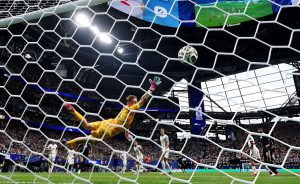
The final minutes became a blur of intensity. England, pushed back on their heels, tried to regain control but left vulnerabilities in their wake. Deep into stoppage time, Messi once more took center stage. Drifting out to the right flank with that familiar graceful stride, he evaded a challenge and delivered a cross of breathtaking accuracy, curling it toward the far post with perfect weight and trajectory. Lautaro Martínez, on as a substitute to add fresh menace up front, rose highest and powered a header into the goal. The winner, coming in the second minute of added time, was pure ecstasy. Argentina had turned certain elimination into glorious progression in the space of mere moments, a sequence that encapsulated the never-say-die spirit that has defined their campaign.

Messi’s two assists were the soul of the performance. He did not score himself, yet his influence permeated every attacking sequence, drawing markers away and creating opportunities where none seemed to exist.
At an age when most players contemplate retirement, he continues to redefine excellence, guiding his teammates with quiet authority and instinctive genius. The final whistle brought scenes of unbridled joy, with Messi embraced by his squad and lifted by fans who had poured onto the field. This victory carried deep significance—not only advancing Argentina to a second successive World Cup final but also silencing any lingering doubts about their hunger or ability to overcome adversity against a strong rival like England.
Across Argentina, from the vibrant streets of Buenos Aires to remote towns, celebrations lit up the night. Horns blared endlessly, flags waved in a sea of sky blue and white, and chants honoring Messi and the team echoed far into the dawn. The triumph felt poetic, a clash against historic foes resolved in the most dramatic fashion. Now, with Spain awaiting in the final, the opportunity for back-to-back titles beckons, a feat that would immortalize this group.

Messi has inspired a nation once more, reminding the world that true greatness lies not in avoiding challenges but in conquering them when the stakes are highest. In the grand theater of the World Cup, this night reaffirmed football’s power to captivate, unite, and elevate, all through the enduring magic of its greatest protagonist. Argentina marches forward, their dream alive and burning brighter than ever. setting up Spain in the final on Sunday, July 19, 2026.