
Vice President of the Republic of Ghana, Professor Naana Jane Opoku-Agyemang, has made a passionate call for the health, education, and protection of children and young people to remain at the very heart of Ghana’s national development agenda.
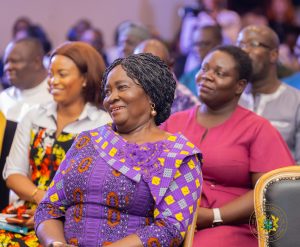
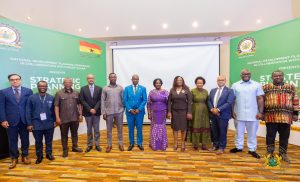
Speaking at the closing session of the Strategic Planning Retreat, organised by the National Development Planning Commission (NDPC) at the Royal Senchi Hotel in Akosombo, the Vice President stressed that no development plan can be truly successful if it fails to prioritise the wellbeing of children.
Professor Opoku-Agyemang highlighted Ghana’s strong performance in child health, revealing that the country has achieved between 95 and 97 per cent coverage of key vaccinations within the first year of life. While describing this as commendable, she cautioned against complacency.
“The figures are encouraging, but we must be deeply concerned about the remaining three per cent. That three per cent still represents far too many children,” she said.
She further noted that in 2025, Ghana fully met its co-financing obligations for immunisation, demonstrating a firm commitment to sustaining vaccination programmes and protecting millions of children from diseases that are entirely preventable.
Touching on education and social protection, the Vice President said inequalities between urban and rural communities have significantly narrowed over the past three decades. She pointed out that school enrolment and completion rates have improved, particularly from kindergarten through to junior high school, reflecting progress in access to basic education.
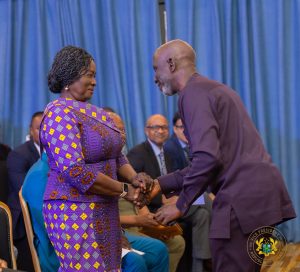
She also observed that child marriages and informal unions have declined in parts of the country in recent years, marking a positive shift in child welfare outcomes.
Despite these gains, Professor Opoku-Agyemang warned that serious challenges remain in achieving child-related Sustainable Development Goals (SDGs) by 2030. She revealed that more than 60,000 children are currently living and working on the streets, especially in Ghana’s major urban centres.
The Vice President expressed concern that many children are still not registered at birth, while countless others continue to suffer deprivation in critical areas such as healthcare, education, nutrition, clean water, housing, and protection.
She concluded with a strong reminder that child poverty has far-reaching consequences, undermining health and learning outcomes and increasing children’s vulnerability to violence, abuse, and exploitation.
According to her, placing children at the centre of national planning is not only a moral responsibility but also the surest path to building a resilient and prosperous Ghana.
Story by: George Osei-Akoto Addae (Teacher Kojo) #ahotoronline.com/oseiakotor1@gmail.com