


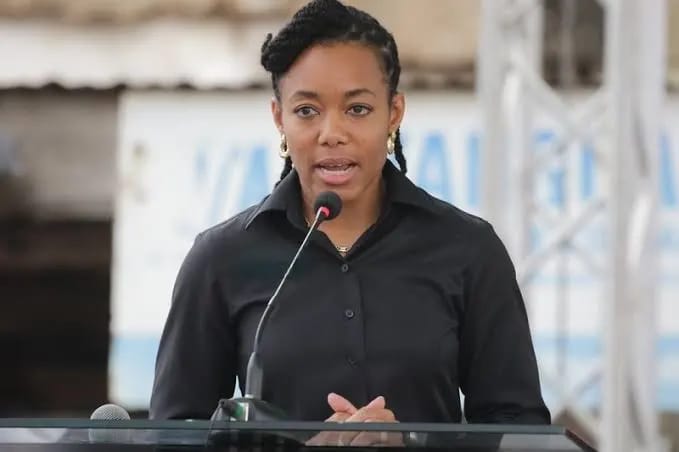
Ghana’s Minister for Environment, Science and Technology, Dr Zanetor Agyeman–Rawlings, has expressed disappointment with the outcome of COP31, saying African countries have been left without meaningful progress on critical climate priorities, particularly adaptation finance.
Speaking at the closing plenary of the 31st United Nations Climate Change Conference (COP31) in Antalya, Türkiye, on behalf of the African Group of Negotiators (AGN), which Ghana chairs, she criticised the proposed climate agreement for failing to provide clear financial commitments and adequate support for vulnerable countries.
She described the proposed outcome as a setback compared with progress made at COP30 in Belém, Brazil, arguing that Africa’s climate ambitions must be matched with concrete financial commitments and accountability.
Dr Agyeman-Rawlings particularly questioned the proposed commitment to at least triple adaptation finance by 2035, saying the text provided no specific funding target, baseline or clear pathway for delivering the promised support.
An earlier proposal for at least $120 billion annually by 2035 was also dropped, with further discussions deferred to CMA9 in 2027.
The Minister further expressed concerns about the lack of meaningful progress on the Global Goal on Adaptation, inadequate support for National Adaptation Plans, the absence of specific resource targets for loss and damage, and delays in establishing a just transition mechanism.
She also criticised the proposed Antalya-to-Addis Ababa Roadmap, arguing that it would produce another report rather than guarantee the delivery of climate finance to vulnerable countries.
Zanetor protests interruption by COP31 President
Her presentation was briefly disrupted when COP31 President Murat Kurum interrupted her about a minute into the African Group’s closing statement.
The interruption prompted Dr Agyeman-Rawlings to protest, questioning why other delegates had been allowed to deliver their interventions without interruption.
“I was rudely cut off during my delivery by your good self,” she told the conference president.
She invoked the principle of primus inter pares, meaning first among equals, and said the interruption was inconsistent with the standards of respect expected during international negotiations.
She also disclosed that she had changed her flight arrangements twice and extended her stay to fulfil her responsibility of representing Africa at the conference.
The Chair of the African Group of Negotiators, Nana Dr Antwi-Boasiako Amoah, also objected to the interruption and drew the President’s attention to the conference’s Code of Conduct.
Mr Kurum subsequently apologised to Dr Agyeman-Rawlings and the African Group, explaining that he had no intention of disrespecting Ghana or the Minister.
He said his intervention was intended to announce a RASP session.
Dr Agyeman-Rawlings later returned to the floor and delivered the African Group’s statement from the beginning.
COP31 ends without consensus
The concerns raised by the African Group came against the backdrop of a broader breakdown in negotiations, with countries failing to reach consensus on the conference’s main political agreement, known as the Antalya Pact.
The failure to adopt the agreement marked the first time since the 2009 Copenhagen climate summit that UN climate talks had ended without consensus on their main cover decision.
Countries remained divided over key issues, including climate finance and references to fossil fuels in the proposed agreement.
Although negotiations produced progress on some separate issues, the failure to agree on the Antalya Pact left several major questions unresolved.
Despite its reservations about the proposed text, the African Group had indicated that it would not stand in the way of the negotiations, citing the importance of protecting multilateralism.
Dr Agyeman-Rawlings, however, maintained that Africa would continue to demand clear financial commitments and accountability from developed countries.
Focus shifts to COP32 in Ethiopia
With COP31 ending without agreement on its main political decision, attention is expected to shift to the next round of negotiations ahead of COP32, scheduled to take place in Addis Ababa, Ethiopia, in 2027.
Dr Agyeman-Rawlings has called for adequate, predictable and accessible climate financing for vulnerable countries, stressing that failure to provide the necessary resources today would leave future generations with a heavier burden.
She also emphasised the need for inclusive, transparent and respectful negotiations, insisting that every country must have a meaningful opportunity to participate in decisions affecting the global climate response.
Story by Ama Frimpomaa


