


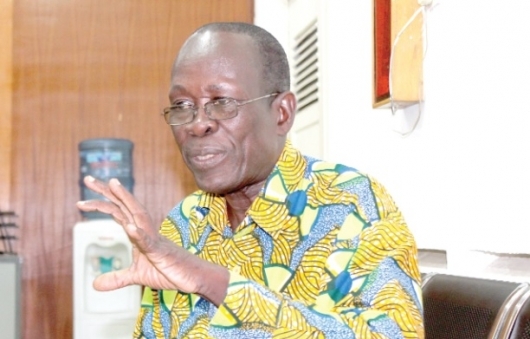
TEMA, Ghana, 28th June: The Secretary-General of the Ghana Federation of Labour (GFL), Abraham Koomson, has expressed strong concerns over new levies being contemplated by the government, warning that such measures could undermine industrial growth and place additional burdens on businesses and workers.
According to Mr. Koomson, increasing tax burden on businesses and consumers is becoming a major challenge for economic growth and job creation.
He stressed that government must carefully reconsider any plans to introduce new taxes or levies, particularly what he described as “nuisance taxes,” including the fumigation levy, the Import Declaration Form (IDF) levy, and the proposed cargo levy, warning that such measures could further increase the cost of doing business in the country.
“We have very serious issues with taxation and the new levies being contemplated, specifically the nuisance taxes such as the fumigation levy, the IDF levy, and the cargo levy,” he stated.
According to him, workers and businesses remain concerned about the lack of transparency surrounding the collection and utilization of revenue generated from some of these taxes and levies.
He alleged that available information suggests the existence of a cartel benefiting from the policy, rather than the state directly reaping the proceeds.
“We do not even know who benefits from the revenue generated through these taxes. Our information is that there is a cartel behind this perceived government policy, and the state is not directly benefiting from it,” he said.
His comments come in the wake of the Public Utilities Regulatory Commission (PURC) announcing upward adjustments in utility tariffs. Under the new tariff regime, electricity tariffs will increase by 3.49 percent, while water tariffs will rise by 0.85 percent, effective July 1, 2026.
The PURC explained that the adjustments form part of its quarterly tariff review mechanism and are intended to account for changes in inflation, movements in the Ghana Cedi-to-US Dollar exchange rate, and operational generation costs.
The Commission maintains that the increases are purely economic and necessary to ensure the financial sustainability of utility service providers, including the Electricity Company of Ghana (ECG) and the Ghana Water Company Limited (GWCL).
However, speaking on Ahotor FM’s Yepe Ahunu programme on Saturday, June 28, Mr. Koomson argued that inefficiencies within ECG, rather than genuine operational costs alone, are contributing significantly to the tariff adjustments.
According to him, research conducted by the GFL indicates that approximately 35 percent of electricity consumers do not pay for the power they consume, creating substantial revenue losses for the power distributor.
“Our research also reveals that about 35 percent of electricity consumers are not paying, and other inefficiencies at ECG account for the tariff adjustments,” he stated.
Mr. Koomson contended that consumers and businesses should not be made to bear the cost of inefficiencies within state institutions.
He warned that the continuous increase in utility costs, coupled with existing taxes and levies, is placing enormous pressure on industries, particularly manufacturers.
He emphasized that higher utility tariffs will inevitably increase production costs, reduce competitiveness, and threaten the growth of local industries.
“This situation threatens industrial growth, as manufacturing industries are already overburdened with high production costs,” he said.
The GFL Secretary-General therefore called on government and utility regulators to address revenue leakages and operational inefficiencies within ECG and other public institutions before resorting to tariff increases that further burden consumers and businesses.
Story by: Emmanuel Romeo Tetteh(#RomeoWrites✍️)/Ahotoronline.com | Ghana 🇬🇭


