


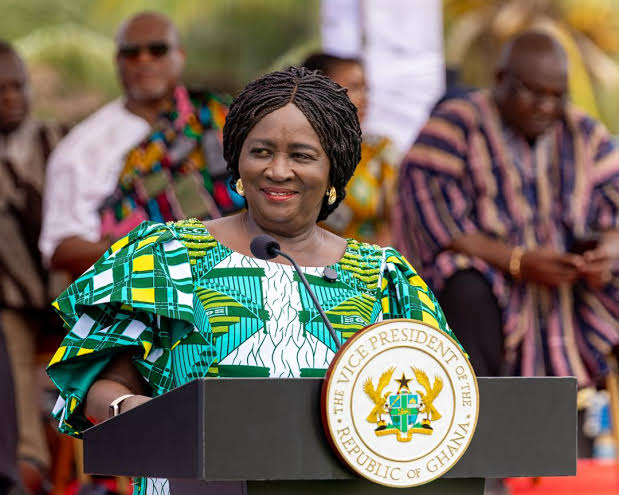
Vice President Professor Jane Naana Opoku-Agyemang will represent President John Dramani Mahama at the inaugural Africa Mindset Reset Forum, scheduled to take place in Kigali, Rwanda, on August 25 and 26, 2026.
The two-day forum, to be held at the Kigali Convention Centre, is being organised by the African School of Governance (ASG) and is expected to bring together about 1,000 leaders from across Africa and the global community. Organisers say about 80 percent of participants will be young people and emerging leaders, reflecting the forum’s focus on shaping a new generation of African leadership.
The gathering will convene current and former heads of state, policymakers, business leaders, academics, innovators and civil society actors to discuss practical solutions for accelerating Africa’s development and strengthening continental cooperation.
Among the high-profile participants expected at the forum are former South African President Thabo Mbeki, former Nigerian President Olusegun Obasanjo, former Ethiopian Prime Minister Hailemariam Desalegn, and Vice President Jane Naana Opoku-Agyemang.
Also expected to participate are former Gambian Vice President Fatoumata Jallow-Tambajang, recognised for her work in promoting women’s and youth rights, democratic governance and peacebuilding, as well as Monica Geingos, the widow of former Namibian President Hage Geingob.
From Pan-Africanism to Meta-Africanism
The forum will be held under the theme “From Pan-Africanism to Meta-Africanism,” a concept organisers describe as the next stage in Africa’s development journey.
According to the ASG, the initiative seeks to move beyond the traditional emphasis on political independence and continental solidarity towards building stronger institutions, promoting accountable leadership, developing homegrown solutions and implementing policies that produce measurable improvements in the lives of Africans.
On the opening day, former President Thabo Mbeki is expected to deliver the keynote address outlining the vision of Meta-Africanism.
Rwandan President Paul Kagame, one of the founders of the African School of Governance, will join Vice President Jane Naana Opoku-Agyemang and former Prime Minister Hailemariam Desalegn for a high-level conversation on how Africa can translate the aspirations of Pan-African unity into concrete action and sustainable development.
Focus on Youth, Innovation and Economic Integration
The second day of the forum will centre on African ownership and management of the continent’s natural resources, people-centred development and strategies for increasing Africa’s competitiveness in the global economy.
Key proposals expected to feature prominently include:
* Expanding the free movement of people across African countries.
* Accelerating the implementation of the Single African Air Transport Market (SAATM).
* Strengthening regional trade under the African Continental Free Trade Area (AfCFTA).
* Establishing an African institution to assess the creditworthiness of African countries.
* Encouraging investment in education, technology, entrepreneurship and innovation led by young Africans.
Organisers believe these initiatives could reduce Africa’s dependence on external systems while enabling countries to finance and implement development priorities on their own terms.
A Platform for Action
The African School of Governance says the forum is designed not merely to revisit Africa’s longstanding challenges but to create a platform where successful ideas can be shared, partnerships can be formed and practical solutions can be scaled across the continent.
Rather than focusing solely on policy discussions, the event aims to connect governments, businesses, researchers and young innovators who are already delivering results in areas such as governance, digital transformation, climate resilience, education and economic inclusion.
As the forum’s first edition, it is structured around seven transformational pillars intended to reshape how African leaders think about governance, economic development and continental cooperation.
The broader objective is to inspire a new generation of African leaders to take ownership of the continent’s future and transform the ideals of Pan-Africanism into practical, measurable outcomes that improve the lives of millions across Africa.
Story by Stephen Kwaku Owusu Mintah | Ahotoronline | Accra


