


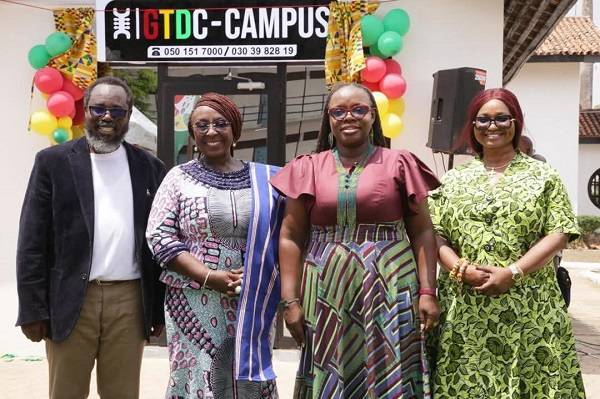
The Ghana Tourism Development Company (GTDC) has taken a significant step toward repositioning academic spaces as viable tourism assets by opening its first campus tourism office at the University of Ghana. This initiative aims to coordinate and package tourism opportunities on campus while showcasing the university’s rich heritage and cultural attractions.
According to Kobby Mensah, Chief Executive Officer of GTDC, the initiative emerged from the need to properly organize and promote the university’s tourism potential. “There is more than enough content here,” he said. “What we need is coordination, effective packaging, and a deliberate strategy.”
The decision followed discussions with the university’s Public Affairs Directorate, the Dean of Students, and several faculty members. These engagements revealed a shared interest in deliberately curating and promoting the campus experience for visitors.
The campus tourism office will focus on organizing, marketing, and monetizing the university’s unique assets. These include its iconic tower, the archaeology museum, the Institute of African Studies museum, and the Department of Performing Arts.
Cultural Heritage and Academic Excellence
In another development, the University of Ghana, located in Legon in Accra, stands as one of Africa’s most prestigious institutions of higher learning. Since its establishment in 1948, the university has grown into a center of intellectual leadership, cultural preservation, and national development in Ghana. Its reputation is built not only on academic achievement but also on its commitment to preserving and promoting Ghanaian and African cultural heritage.
Cultural Heritage and Identity
One of the defining characteristics of the University of Ghana is its deep connection to Ghana’s cultural identity. The university actively promotes African traditions, languages, and values through academic programs and cultural institutions.
For example, the Institute of African Studies, founded under the vision of Kwame Nkrumah, plays a major role in researching and documenting African history, arts, and traditions. Through festivals, performances, and research, the institute preserves indigenous knowledge while sharing it with the global academic community.
The university campus itself reflects Ghanaian heritage through art, architecture, and cultural landmarks. These elements contribute to discussions on national identity and highlight the symbolic presence of cultural monuments on campus. Students also celebrate cultural diversity through events such as cultural weeks and traditional ceremonies that showcase Ghana’s rich ethnic diversity.
Academic Excellence
Academically, the University of Ghana has earned recognition as one of the leading universities in West Africa. It offers a wide range of programs across disciplines including the humanities, sciences, business, law, and health sciences.
The institution also collaborates with international universities and research centers, strengthening its role in global scholarship. Its libraries, research institutes, and laboratories support groundbreaking research in fields ranging from public health to environmental science.
Notably, the university’s commitment to quality education has produced many influential alumni who have contributed significantly to governance, academia, and industry both in Ghana and internationally.
A Hub for Leadership and Innovation
Beyond academics and cultural preservation, the University of Ghana serves as a training ground for future leaders. The university encourages critical thinking, innovation, and civic responsibility among students.
Through student organizations, debates, and leadership programs, the institution nurtures individuals who are prepared to address social, economic, and political challenges. This leadership tradition reflects the university’s mission to contribute meaningfully to national and continental development.
Conclusion
In essence, the University of Ghana represents a powerful blend of cultural heritage and academic excellence. By preserving African traditions while advancing modern research and education, the university continues to shape the intellectual and cultural landscape of Ghana and Africa as a whole. Its legacy remains a testament to the transformative power of education rooted in cultural identity.


