


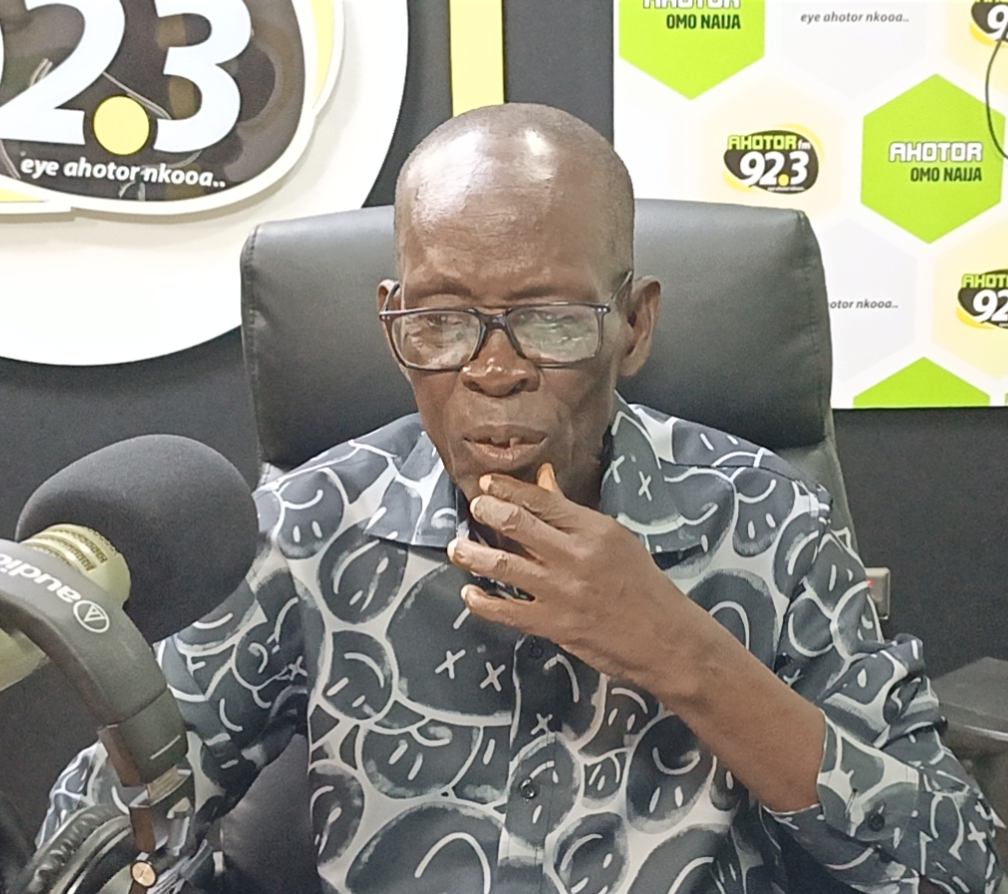
The Secretary-General of the Ghana Federation of Labour, Abraham Koomson, has criticised the Trades Union Congress (TUC) for what he describes as a misplaced priority in its response to proposals contained in the ongoing constitutional review.
According to him, while proposals concerning dual citizenship and the possible extension of the presidential term from four to five years deserve public discussion, organised labour should first concentrate on urgent labour matters that directly affect workers.
Speaking on Ahotor FM’s morning programme on Thursday, September 10, 2026, Abraham Koomson questioned why the TUC would focus its attention on constitutional amendments when the Labour Commission is facing challenges that are affecting its ability to resolve disputes between workers and employers.
He said several cases are piling up at the Labour Commission, but the institution is unable to effectively deal with them because the necessary panels have not been constituted.
“Cases are piling up every day. Workers are complaining there, and they cannot handle any case because we have not been able to put the Commission panel,” he stated.
Mr Koomson said the situation should be treated as an immediate priority by organised labour because workers who have legitimate grievances need an effective institution through which their concerns can be addressed.
He questioned why labour leaders would leave such an urgent matter unresolved and instead devote considerable attention to broader constitutional questions.
“We have also put down something about the constitutional amendment. We also have some points to raise. But there are priorities we have. We don’t have to delay on that. Deal with this before we come to these other constitutional matters,” he said.
TUC Must Focus on Its Mandate
Mr Koomson further argued that the core mandate of organised labour is to protect workers and advocate for their interests.
He therefore believes the TUC must demonstrate leadership by pushing for the Labour Commission to become fully functional before taking up other matters that, although important, are not as urgent as the challenges currently facing workers.
He said the inability of the Labour Commission to constitute its panels means workers are being left without timely avenues for resolving labour disputes.
According to him, the TUC must ask itself whether it is fulfilling its mandate if workers continue to have their cases delayed while attention is shifted to other national issues.
He also called for the relevant authorities to establish whether the Labour Commission is fully functioning and capable of dealing with the increasing number of cases brought before it.
Koomson Questions Constitutional Priorities
On the proposed constitutional changes, Abraham Koomson said he does not consider the issues unimportant, but believes they should not be allowed to overshadow pressing labour concerns.
He specifically referred to proposals on dual citizenship and the possible introduction of a five-year presidential term.
According to him, the debate over the presidential term must be approached carefully because extending the term could have serious consequences for citizens if a government performs poorly.
He questioned how citizens would cope with what they consider bad governance for an additional year before getting another opportunity to change their government through elections.
Mr Koomson argued that while a five-year term could allow a government more time to implement its programmes, the proposal also comes with risks that must be carefully considered.
He therefore said he would not support making the constitutional proposals the immediate priority until the Labour Commission issue has been addressed.
“I never agree with them on anything until or unless we have been able to resolve this Labour Commission matter,” he stated.
“This Is Not a Priority”
Mr Koomson maintained that the constitutional review process could continue, but the immediate attention of organised labour should remain on issues directly affecting workers.
He described the Labour Commission challenge as more urgent than the current constitutional discussions, particularly because unresolved labour cases could have direct consequences for workers and employers.
He questioned whether those pushing some of the constitutional proposals fully appreciate the mandate of organised labour and the pressing concerns facing workers.
“Why do we leave the Commission here? Cases are piling up every day. Workers are complaining there, and they cannot handle any case because we have not been able to put the Commission panel,” he reiterated.
His comments have therefore opened a wider discussion about the priorities of organised labour and whether the TUC should first resolve outstanding labour-sector challenges before taking a stronger position on constitutional reforms.
Mr Koomson stressed that constitutional amendments, including the debate over presidential tenure and dual citizenship, can be considered, but they should not come at the expense of urgent institutional and labour-related problems.
He called for renewed attention to the Labour Commission, saying a properly functioning Commission is essential to protecting workers, resolving industrial disputes and maintaining industrial harmony in the country.
By Stephen Kwaku Owusu Mintah, Ahotoronline. Accra.


