


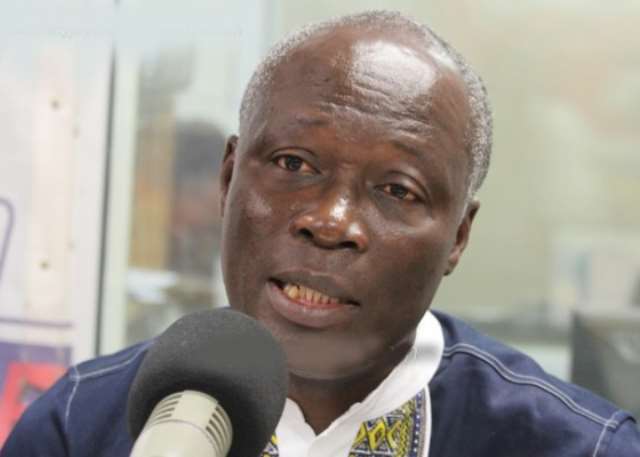
Former National DRIP Coordinator Nii Lantey Vanderpuye has expressed doubt over the implementation of the Supreme Court’s directive requiring political parties to replace the delegate system with a universal voting model within one year, arguing that the timeline is unrealistic given the financial and logistical challenges involved.
Vanderpuye said that although the ruling seeks to deepen internal party democracy, implementing such sweeping reforms within the stipulated timeframe would place enormous pressure on political parties.
He said political parties currently lack the resources needed to organise nationwide internal elections involving every eligible member, insisting that the one-year timeline does not reflect the practical realities on the ground.
“I hear that we should do this within a year. It’s practically impossible. I don’t think it’s possible that it could be done within a year because of the sort of logistical challenges that the parties already face,” he said.
Vanderpuye therefore urged political parties to engage in bipartisan discussions to determine how best to comply with the judgment while preserving their organisational strength and addressing the concerns that informed the court’s decision.
According to him, such consultations should focus on developing a practical framework that broadens participation in internal elections without creating operational difficulties that could weaken political parties.
He further cautioned against any proposal for the state to finance political parties solely to enable them to implement the new electoral system, arguing that Ghana’s limited public resources should instead be directed towards critical sectors such as healthcare, education and infrastructure.Ghana tourism promotion
“This may call for the argument that political parties don’t have the ability or resources to do what the Supreme Court is asking for, so the state should now come in and fund political parties at the expense of hospitals, schools, roads and other social infrastructure needs,” he stated.
While acknowledging that a stable political system contributes to national development, Vanderpuye maintained that public funds should not be prioritised for party financing. Instead, he called on political parties to strengthen their internal rules and processes to curb vote-buying, bribery and corruption in internal elections.
The Supreme Court, in a 5–2 majority decision, declared the delegate system used by political parties to elect their presidential and parliamentary candidates unconstitutional. The court ordered all political parties to replace the system with one that allows every member in good standing to vote directly in internal primaries and directed that the necessary measures be implemented within one year of the judgment.


