


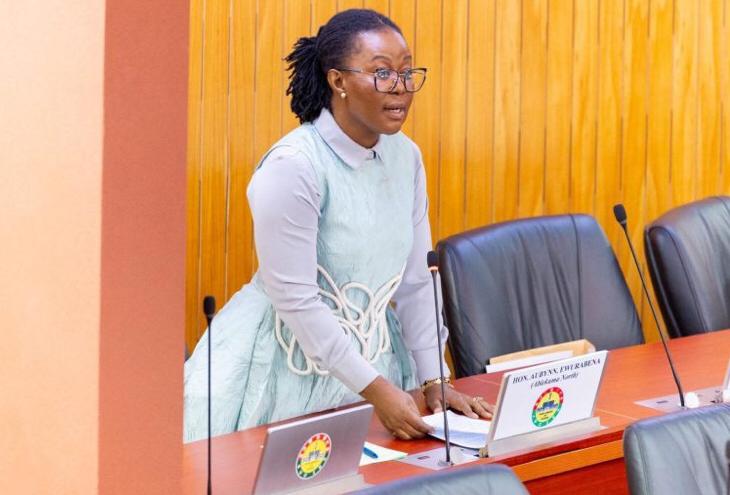
Thank you, Rt. Hon. Speaker, for affording me this opportunity.
Today, I rise on behalf of the resilient people of Ablekuma North and in solidarity with millions across Ghana and the globe to commemorate World Cancer Day 2026. Observed under the poignant global theme “United by Unique”, this day powerfully reminds us that behind every stark statistic lies a unique human story—a cherished individual, a grieving family, and a tight-knit community forever altered by the scourge of cancer.
Rt. Hon. Speaker, cancer is no longer a distant or exotic affliction in Ghana. It has emerged as a formidable public health crisis, transcending age, gender, income, and geography to touch every corner of our nation.
According to data from our health authorities and national cancer registries, Ghana grapples with over 24,000 new cases annually. Breast, cervical, prostate, liver, and colorectal cancers dominate the landscape, with far too many diagnosed at advanced stages—when treatments are limited, exorbitantly costly, and heartbreakingly less effective.
In Ablekuma North, as in constituencies nationwide, families are increasingly burdened by cancer’s emotional toll and financial devastation. Rt. Hon. Speaker, this disease does not merely threaten lives; it impoverishes households, shatters livelihoods, and overwhelms our already strained healthcare infrastructure.
Honourable Members, perhaps the most alarming facet of Ghana’s cancer burden is late detection. Countless citizens lack access to routine screening, and even where services exist, affordability erects insurmountable barriers. Compounding this are cultural taboos, pervasive fear, rampant misinformation, and deep-seated stigma, all deterring timely health-seeking. Consequently, patients flood facilities only when the disease has metastasized to irreversible stages.
Rt. Hon. Speaker, amid these daunting challenges, Ghana has notched commendable progress. The Ministry of Health and Ghana Health Service have scaled up screening for breast and cervical cancers at regional and select district hospitals. Oncology centers at Korle Bu Teaching Hospital, Komfo Anokye Teaching Hospital, Tamale Teaching Hospital, and beyond have bolstered specialized care. Vigorous public education via media and grassroots outreach has heightened awareness of prevention and early detection.
Yet, Mr. Speaker, awareness is merely the first step—insufficient without systemic action. The elephant in the room remains financing. Chemotherapy, radiotherapy, surgery, and palliative care exact costs that dwarf the average Ghanaian’s resources. While the National Health Insurance Scheme offers relief, its coverage gaps for essential cancer services and drugs leave the vulnerable exposed. For many, cancer thus becomes a de facto death sentence, reserved for those too poor to fight.
It is precisely in this dire context that I wholeheartedly commend His Excellency President John Dramani Mahama and the Government of Ghana for launching the Ghana Medical Trust Fund—affectionately known as MahamaCares. Rt. Hon. Speaker, this visionary initiative stands as a beacon of compassion, delivering targeted financial aid to Ghanaians battling chronic and life-threatening illnesses, especially cancer.
MahamaCares instills hope in thousands who might otherwise forgo life-saving treatment due to poverty. It enshrines the sacred principle that quality healthcare is every Ghanaian’s inalienable right—not a luxury for the elite. As Parliament, we must champion this fund with robust funding, rigorous oversight, and ironclad transparency, ensuring aid flows swiftly to those in desperate need.
Rt. Hon. Speaker, our battle must extend beyond treatment to fervent prevention and early detection. Evidence underscores that up to 40% of cancers are preventable through simple lifestyle shifts: nutritious diets, regular exercise, curbed alcohol use, tobacco avoidance, and vaccinations against hepatitis B and human papillomavirus (HPV). Let us amplify health education in schools, workplaces, churches, mosques, and communities, empowering every citizen as their own first line of defense.
Mr. Speaker, decentralization is imperative. It is unconscionable that patients from Upper West, Upper East, and even parts of Greater Accra endure grueling journeys for radiotherapy and oncology expertise. Such barriers breed delays, inflate costs, and erode treatment compliance. Ghana demands more regional cancer centers, a surge in trained oncologists and nurses, and widespread diagnostic tools.
Rt. Hon. Speaker, on this World Cancer Day, I implore this august House to elevate cancer from a mere health issue to a national development imperative. A robust, cancer-resilient population underpins productivity, economic vitality, and societal harmony. Every cedi invested in cancer care yields dividends for Ghana’s tomorrow.
In conclusion, let us pledge a Ghana where no one perishes due to poverty alone; where early screening graces every district; where cancer patients receive dignified support; and where MahamaCares evolves into an unshakeable pillar of our health architecture.
Rt. Hon. Speaker, vanquishing cancer demands unwavering unity—uniting government, Parliament, civil society, private sector, health warriors, media, and everyday citizens. Together, let us transform the promise of World Cancer Day 2026 into tangible triumphs for all Ghanaians.
I thank you, Rt. Hon. Speaker.
Story by: Collins Owusu Debrah


