


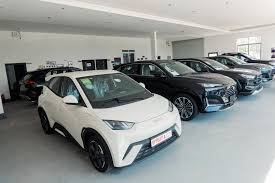
For many years, Spintex Road was known primarily as one of Accra’s busiest commercial corridors, lined with shopping centers, restaurants, banks, and residential developments. Today, however, the stretch is acquiring a new identity—one that reflects the changing dynamics of Ghana’s automobile market. Increasingly, Spintex Road is becoming recognized as the country’s emerging Chinese automobile hub.
A drive along the road reveals a noticeable trend. Modern showrooms displaying Chinese vehicle brands are becoming a common sight. Dealerships offering sport utility vehicles, pickup trucks, sedans, and increasingly electric vehicles are establishing a strong presence, transforming the area into a focal point for automotive commerce. What was once a market dominated largely by Japanese and European brands is now witnessing the rapid rise of Chinese manufacturers eager to secure a share of Ghana’s growing vehicle market.
Several factors explain this development. First is affordability. Chinese automakers have successfully positioned themselves between the expensive European brands and the often aging imported used vehicles that dominate Ghana’s roads. For many middle-income consumers and businesses, Chinese vehicles offer an attractive balance of price, technology, and modern design.
Secondly, improvements in quality have significantly changed public perception. Earlier generations of Chinese vehicles struggled with concerns over durability and reliability. However, recent models have benefited from substantial investments in engineering, safety, and technology. Features such as touchscreen infotainment systems, advanced driver-assistance technologies, fuel efficiency, and stylish aesthetics have made Chinese vehicles increasingly appealing to Ghanaian consumers.
Spintex Road’s strategic location has also played a critical role. Situated within one of Accra’s fastest-growing commercial zones and offering easy access to key parts of the city, the corridor provides an ideal environment for vehicle dealerships, spare-parts suppliers, and automotive service centers. The clustering of these businesses creates an ecosystem that attracts customers seeking convenience and variety.
The growing influence of Chinese businesses in the area has further reinforced this trend. Trade links between Ghana and China continue to deepen, and the automotive sector has become one of the visible beneficiaries of this relationship. Chinese investors and local partners are leveraging these connections to expand dealership networks, improve after-sales services, and introduce new vehicle models tailored to African markets.
The economic implications are significant. The expansion of automobile dealerships generates employment opportunities in sales, servicing, logistics, marketing, and technical support. Consumers benefit from increased competition, while businesses gain access to a wider range of commercial vehicles at competitive prices. The emergence of electric vehicle options could also contribute to Ghana’s long-term sustainability goals.
Yet challenges remain. Many motorists continue to associate reliability and resale value with established Japanese brands. Building long-term consumer confidence will require consistent quality, dependable after-sales support, and readily available spare parts. Chinese manufacturers must demonstrate that their vehicles can withstand Ghana’s road conditions and deliver value over time.
Nevertheless, the momentum is undeniable. The increasing concentration of Chinese automobile brands along Spintex Road signals a shift in both consumer preferences and market realities. As China’s automotive industry expands its global footprint, Accra’s Spintex Road appears poised to become one of West Africa’s most visible showcases of this transformation.
If current trends continue, Spintex Road may soon be known not only as one of Accra’s busiest commercial corridors but also as the gateway through which Chinese automotive innovation enters the Ghanaian market.


