


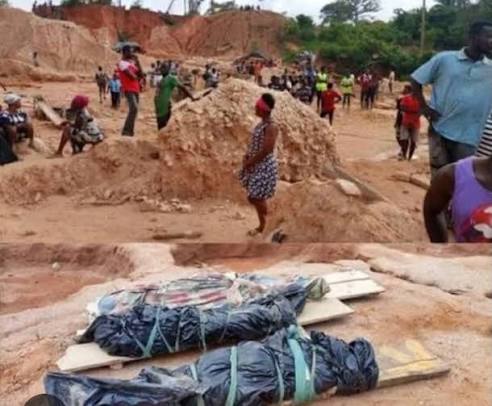
Seven people have died and one other has been injured after a mining pit collapsed at Asamantamfoe in the Atiwa East District of the Eastern Region.
The tragic incident occurred on Sunday, August 30, 2026, at a mining site in the community, where the victims had reportedly gone to engage in mining activities.
The incident happened on the same day as Akwasidae, a traditional observance during which chiefs and traditional leaders in various communities undertake customary activities, including the pouring of libation.
According to the Eastern Regional Director of the National Disaster Management Organisation (NADMO), Stamford Cudjoe Adukpo, nine young men from the community went to the mining site, where surface mining activities were being undertaken.
Eight of the men reportedly entered the mining pit while the ninth person remained at the top.
Mr. Adukpo explained that the miner operating at the site was not working at the time because of the Akwasidae observance.
He said while the eight men were inside the pit, one side of the excavation suddenly collapsed, causing a large amount of sand and earth to fall on them and trapping them underground.
The ninth person, who had remained at the top of the pit, reportedly rushed to inform elders in the community, prompting an immediate rescue effort.
The Atiwa East District Chief Executive subsequently assigned the District NADMO Director, Emmanuel, and other officials to assist in the rescue operation.
NADMO personnel, together with community members, worked to retrieve the victims from the collapsed pit.
However, seven of the eight people trapped underground were found dead, while one person survived but was reported to be in critical condition.
Speaking on Ahotor FM’s Adekyee Mu Nsem programme in Accra on Tuesday, September 1, 2026, the Eastern Regional Director of NADMO, Stamford Cudjoe Adukpo, provided details of the incident and the rescue operation.
He said the nine individuals involved were residents and indigenes of Asamantamfoe and were well known within the community.
The incident forms part of continuing concerns over deaths and accidents associated with mining activities in Ghana, particularly in areas where individuals enter abandoned or active mining pits without adequate safety measures.
While surface mining involves removing layers of soil and earth and transporting the excavated material elsewhere for processing, Mr. Adukpo indicated that the situation at Asamantamfoe appeared to have involved a different activity by the young men.
According to him, the operator at the site was engaged in surface mining, but the young men allegedly entered the area and undertook unauthorised digging beneath the existing excavation.
He said the additional digging may have weakened the structure of the mining pit, eventually causing one side to collapse and bury the eight men inside.
The tragedy has renewed concerns about the dangers associated with unregulated and unsafe mining practices and the need for strict adherence to safety regulations at mining sites.
It has also highlighted the importance of preventing people from entering unstable mining pits, particularly areas where excavation has already weakened the surrounding soil.
Authorities and stakeholders continue to face pressure to address illegal and unsafe mining practices, commonly referred to as galamsey, while ensuring that legitimate small-scale mining activities are conducted within the law and under proper safety conditions.
Story By Stephen Kwaku Owusu Mintah


