

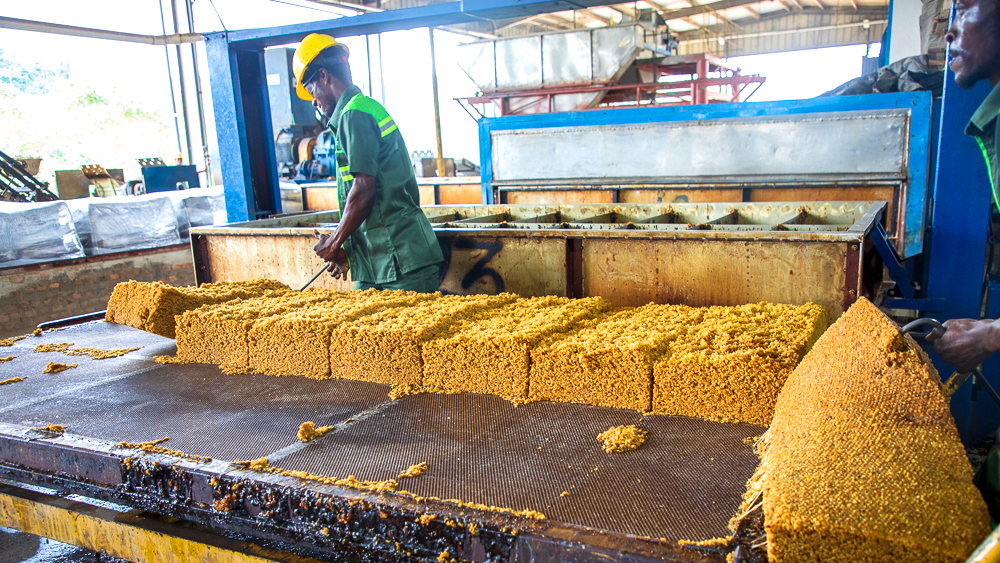

Local rubber processors have urged the Ghanaian government to swiftly restrict raw rubber exports, warning that the unchecked practice is devastating domestic factories, idling production lines, and endangering jobs throughout the supply chain.
In a petition to the Ministries of Food and Agriculture, Trade and Industry, and Finance, the group highlights how raw rubber exports have triggered severe shortages for local plants. Many now run far below capacity, with others on the brink of closure.
Ghana built its rubber sector to drive value addition and industrial expansion, the petitioners stress. Yet surging exports of unprocessed latex are eroding this goal. Foreign buyers, flush with cash, inflate local prices, and sidelining domestic processors.
Raw exports also drain foreign exchange, they argue. From 2025 to 2030, processed rubber could generate $950 million—versus just $380 million raw—a gap of $570 million. Factory collapses would cost Ghana $190 million annually in earnings. The group questions if raw export proceeds even fully return under the Foreign Exchange Act, per the petition reviewed by Citi Business News.
Local plants rely on steady raw supplies from outgrower farmers and plantations. Supply disruptions threaten layoffs, shrinking tax revenues, and wasted investments in government-backed industrialization.
The processors demand policies favouring local processing: export restrictions or a temporary ban on raw rubber, plus incentives for value addition. They also seek robust enforcement against smuggling and compliance with agricultural export rules.
Safeguarding processors, they say, will protect jobs, ramp up finished-product exports, boost forex gains, and fortify Ghana’s industry.
Key Demands
Immediately halt authorizations for raw rubber exports.
Mandate all raw rubber supplies to local processors per national policy.
Enforce the May 2025 directive against violators.
Publish transparent reports on export volumes, enforcement, and penalties.
Align TCDA with the President’s 24-hour economy and value-addition goals.
Story by: Mercy Addai Turkson #ahotoronline.com


