


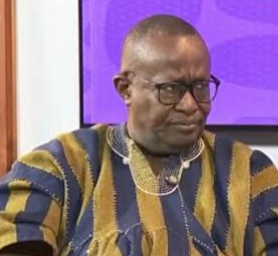
Local Governance Analyst Issaka Amon Kotei has called on the Minister for the Interior to retract comments concerning the use of fake and doctored documents in recruitment and apologise to the Ghana Education Service (GES).
Speaking on Ahotor FM’s Yepe Ahunu programme on Saturday, September 12, 2026, Issaka Amon Kotei said although the submission of forged documents during recruitment is a serious matter that must be dealt with, the Interior Minister must be cautious about comments that could create a negative perception about the teaching fraternity.
His comments follow concerns raised by the Interior Minister during discussions on the recent security recruitment exercise, where some applicants were reportedly found to have presented fake, doctored or forged documents.
Issaka Amon Kotei said there is nothing wrong with exposing individuals who use fraudulent documents to gain employment, but such cases must be properly investigated and dealt with according to the law.
He argued that the existence of fraudulent documents in recruitment does not necessarily mean that the entire educational system or teaching profession is involved in such practices.
According to him, the Interior Minister should therefore retract any suggestion that could be interpreted as accusing the Ghana Education Service or the teaching fraternity of widespread certificate fraud and apologise to GES.
He explained that fraudulent academic documents can sometimes escape initial verification even within established educational institutions.
Issaka Amon Kotei cited universities as an example, saying some students may be admitted based on documents that appear genuine, only for the institutions to later discover that the results or certificates were fraudulent.
He said in such situations, the affected students can be dismissed after the forgery is discovered.
The analyst therefore questioned why the same possibility could not occur in recruitment into the security services or other public institutions.
He stressed that the appropriate response should be to strengthen verification systems rather than make sweeping statements that could damage the reputation of legitimate teachers and graduates.
‘Prove the Allegation With Evidence’
Issaka Amon Kotei maintained that if an individual is suspected of presenting a forged certificate, the person should be investigated and prosecuted where there is sufficient evidence.
He said authorities must be able to establish the specific offence committed instead of making general allegations against a professional group.
He further warned that careless statements about fake certificates could undermine public confidence in teachers, graduates and other professionals who obtained their qualifications legitimately.
According to him, the challenge of fraudulent documents is not unique to the Ghana Education Service and can affect universities, teacher-training institutions and other professional institutions.
He therefore called for stronger systems for verifying academic qualifications before applicants are recruited into sensitive sectors such as education, health and national security.
Strengthen Verification Systems
The analyst said the recent controversy should rather serve as an opportunity for government to examine how certificates and academic results are verified during recruitment.
He argued that if a forged document is capable of passing through an institution’s initial verification process, the focus should be on identifying the weakness in the system and correcting it.
Issaka Amon Kotei said institutions must also have mechanisms to conduct further verification where there are doubts about the authenticity of applicants’ documents.
He maintained that fraudulent documents must not be tolerated, but the fight against document fraud must also be conducted fairly and based on evidence.
He consequently urged the Interior Minister to clarify his position, retract the comments if they were intended to implicate the Ghana Education Service or teaching fraternity generally, and apologise to GES to prevent the matter from creating unnecessary tension between government and education-sector stakeholders.
Story by Stephen Kwaku Owusu Mintah,Ahotoronline,Accra.


