


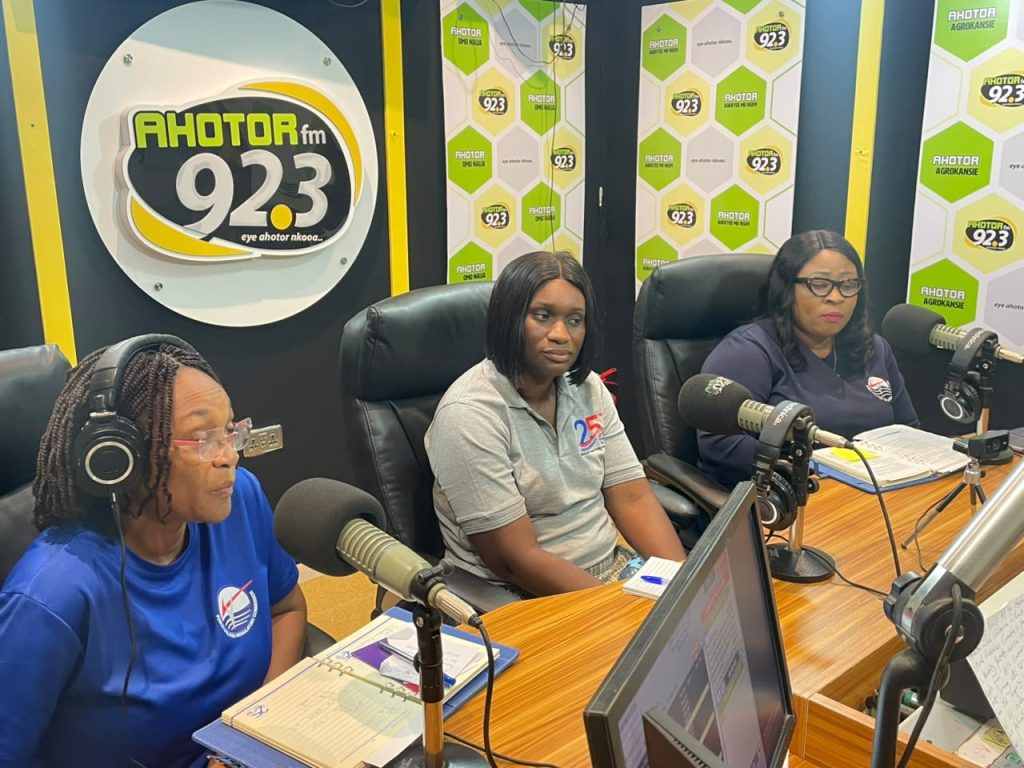
The Public Utilities Regulatory Commission (PURC) engaged the public through a discussion aimed at educating consumers and creating awareness about its role, as well as how to address utility-related concerns. The discussion covered topics such as the payment of utility bills, payment by instalments, meter tampering, interference with ECG lines and transformers, defective meters, and the Commission’s complaint resolution process.
The PURC is an independent statutory body in Ghana responsible for regulating electricity, piped water, and natural gas transportation. Its primary mandate is to protect consumers by ensuring fair utility rates while safeguarding the financial viability of utility service providers and investors.
During the panel discussion, listeners called in to raise concerns about power outages, metering challenges, high electricity bills, and delays in the refund of unused electricity credits.
Speaking on the programme were the Greater Accra Regional Manager, Gifty Bruce-Nelson; the Public Relations Manager, Pamela Naa Aku Shika Brown; and the Senior Complaints Officer, Grace Nynn-Colecraft. They encouraged the public to freely report utility-related issues, assuring consumers that the Commission remains committed to addressing their concerns promptly and fairly.
The panelists participated in the Adekyee Mu Nsem morning show on Ahotor 92.3 FM, hosted by Citizen Kofi Owusu in Accra.
They further explained the respective roles of the Ghana Water Company Limited and the Electricity Company of Ghana (ECG), emphasizing the commitment of both institutions to delivering quality services and responding to customer complaints.
The officials also addressed concerns about backdated bills, explaining that such cases require thorough investigation. They noted that the disconnection and fault response teams are always available to resolve genuine customer complaints.
The panel further cautioned the public against tampering with electricity meters, transformers, or power lines, stressing that such practices are illegal. They warned that some individuals unlawfully attempt to alter electrical phases or interfere with utility infrastructure, actions that endanger lives and disrupt service delivery.
In addition, the panelists encouraged consumers to adopt energy conservation measures. They noted that responsible electricity use helps ensure the equitable distribution of power and contributes to a more reliable electricity supply for all consumers.


