


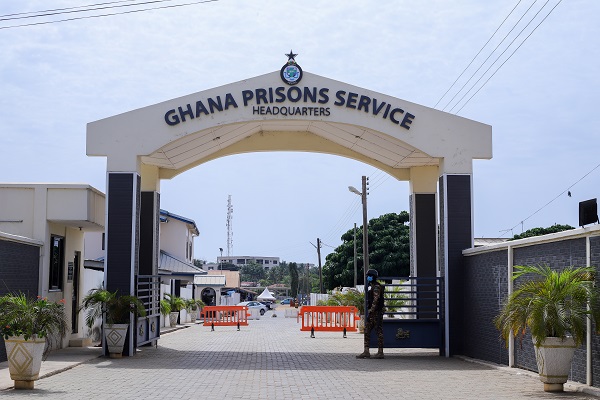
Superintendent Nanavi Solomon, PRO in charge of Social Media at the Ghana Prisons Service, has emphasised the importance of safe custody, reform and rehabilitation in the management of prisoners, stressing that the responsibility of the Service goes beyond keeping inmates in custody.
Speaking through a telephone interview on Ahotor 92.3 FM’s Adekyee Mu Nsem programme, hosted by Nana Dogbe on Friday, Superintendent Nanavi Solomon said once a person is brought to prison and sentenced by a court, the Ghana Prisons Service assumes responsibility for the person’s safe custody, welfare, reform and rehabilitation.
He explained that people are sent to prison for different offences, including abetment of crime, armed robbery and other criminal offences. According to him, safe custody means ensuring that prisoners remain secure and serve the sentences imposed on them by the courts.
Superintendent Nanavi Solomon, however, stressed that imprisonment should not only be about keeping offenders behind bars, but should also provide opportunities for them to change their behaviour and acquire skills that can help them after their release.
Prisoners undergo diagnostic assessment
He said every person who comes to prison, whether a hardened criminal or a first-time offender, goes through a diagnostic assessment process to determine the individual’s background, abilities and rehabilitation needs.
According to Superintendent Nanavi Solomon, the assessment seeks to establish the person’s character, educational background, existing skills and what the individual is capable of doing.
He said the information obtained through the assessment helps the Prisons Service determine the appropriate programmes and interventions for each inmate.
Education and skills development
Superintendent Nanavi Solomon said education and skills development are important components of the rehabilitation process within the prison system.
He disclosed that at the Central Prison, inmates have access to both formal and informal education, with opportunities ranging from basic education to university level.
He explained that the programmes cater for inmates with different educational backgrounds, including adults who may need to begin or continue their education.
According to him, some inmates are able to progress through the educational system up to the university level while serving their sentences.
Beyond formal education, he said inmates are also trained in practical and vocational skills, including welding, carpentry and other trades, to equip them with skills that can support them after their release.
Rehabilitation and reducing reoffending
Superintendent Nanavi Solomon said providing inmates with education, skills and other rehabilitation opportunities is important in preventing them from returning to the activities that brought them to prison.
He explained that if an offender, particularly someone convicted of armed robbery, leaves prison without any meaningful change or alternative means of making a living, there is a risk that the person could return to criminal activities.
He said the purpose of rehabilitation is therefore to give inmates a better alternative and help them make positive decisions after serving their sentences.
He also identified inability to control one’s temper as a factor that can contribute to some offences.
According to him, some people may become involved in fights following disagreements, with such confrontations sometimes resulting in serious injuries or death.
He explained that a person could hit another individual during a confrontation without intending to cause death, but if the victim eventually dies, the person responsible could find themselves serving a prison sentence.
Preparing inmates for reintegration
Superintendent Nanavi Solomon stressed that the ultimate objective of the Prisons Service is to ensure that inmates serve their sentences safely while receiving the necessary support to prepare them for reintegration into society.
He said education, vocational training and other rehabilitation programmes provide inmates with opportunities to develop themselves while in custody.
He maintained that prisoners should leave the correctional system with improved attitudes, useful skills and the capacity to make better choices.
According to him, the welfare of prisoners is also an important responsibility of the Ghana Prisons Service because successful rehabilitation can contribute to safer communities and reduce the likelihood of former inmates returning to crime.
Superintendent Nanavi Solomon reiterated that safe custody, reform and rehabilitation are interconnected responsibilities, with the broader objective of ensuring that inmates serve their sentences while being given the opportunity to change, acquire skills and return to society as productive individuals.
Story by Freedom Etsey Lavoe


