


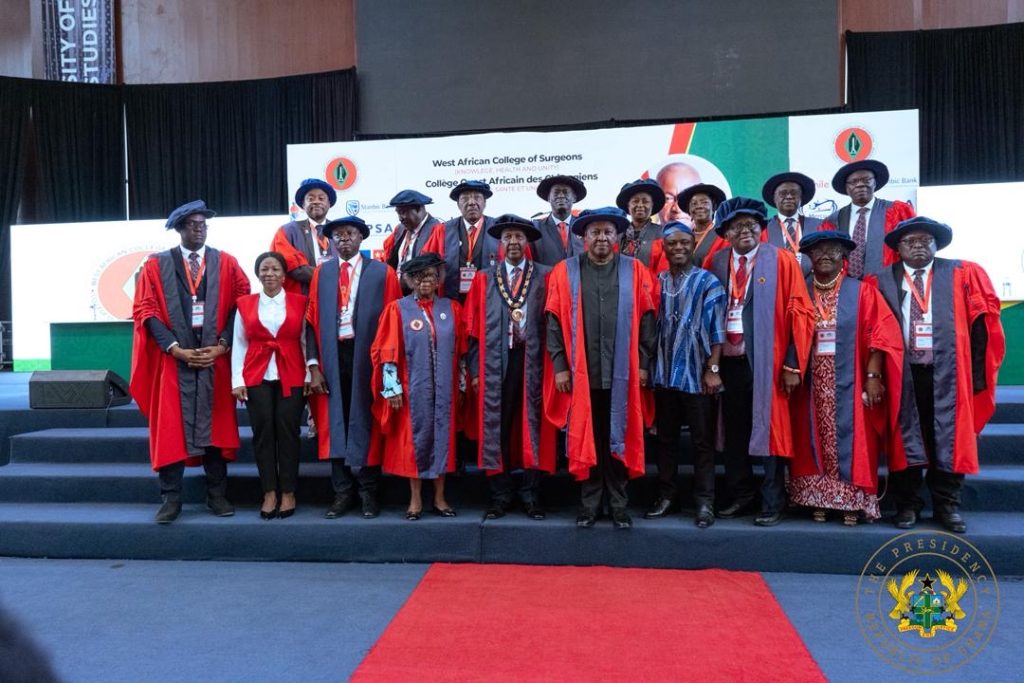
ACCRA, Ghana, 9 February: President John Dramani Mahama has reaffirmed the government’s commitment to strengthening the foundations of Ghana’s healthcare system, with particular emphasis on surgical capacity and emergency care.
Speaking at the 66th Annual Conference of the West African College of Surgeons on Monday, February 9, 2026, President Mahama underscored the critical role of timely and effective surgical care in saving lives, noting that delays in managing surgical emergencies often lead to preventable deaths and prolonged suffering.
He explained that conditions such as trauma, obstetric complications, cancers, congenital anomalies and other acute illnesses require prompt intervention, stressing that strengthening surgical systems is essential to improving health outcomes across the sub-region.
President Mahama described the theme of the conference as both relevant and urgent, highlighting the need for a holistic approach to surgical capacity building.
“The theme of this conference, capacity building in surgery, is both timely and compelling. Capacity building must be understood comprehensively. It is not only about producing more surgeons. It’s equally about strengthening the teams and the systems that support safe surgery, including anesthesia, nursing, diagnostics, blood services, sterile supply chains, critical care, and reliable referral pathways. It also requires robust clinical governance, continuous professional development, and regulatory frameworks that protect patients while enabling skilled practice” he said.
The President assured participants that government is committed to reinforcing the systems that support quality surgical care and will act on key recommendations from the conference.
“The government remains committed to strengthening these foundations. We’ll carefully study the recommendations coming out of this conference and work with stakeholders to implement those that require immediate action while developing structured pathways for longer-term reforms. We also recognize the need to expand and upgrade health infrastructure across our countries in the sub-region” he stated.
President Mahama further called for stronger collaboration between governments, professional bodies and training institutions to ensure newly trained health professionals are adequately supported, particularly in underserved communities.
“Governments working with professional bodies and training institutions must explore practical mechanisms to support newly trained health professionals in establishing viable services, particularly in underserved and unserved communities, while ensuring appropriate oversight and adherence to standards” he stated.
He acknowledged the fiscal challenges facing health systems across the sub-region and urged the adoption of innovative and sustainable approaches to financing and service delivery.
“At the same time, we must be realistic about fiscal constraints many health systems in our sub-region face. This calls for sustainable and innovative financing and service delivery models, including responsible private sector participation that safeguards equity, quality, and affordability. Governments working with professional bodies and training institutions must explore practical mechanisms to support newly trained health professionals in establishing viable services, particularly in underserved and unserved communities, while ensuring appropriate oversight and adherence to standards”.
Touching on inclusion, President Mahama stressed that gender equity must remain central to capacity building in surgery, describing it as both a moral and practical imperative.
“In building capacity, inclusion must be central. Gender equity in surgical training and leadership is not only a matter of fairness, but also a practical necessity for stronger, more resilient health systems. I therefore encourage the College to maintain deliberate measures that promote female participation across all surgical disciplines through mentorship, supportive institutional policies, and training structures that enable excellence alongside family responsibilities” he said.
The President also highlighted the importance of innovation and technology in shaping the future of surgical training and practice.
“The future of capacity building will also depend on how effectively we harness innovation. I’m encouraged by the College’s embrace of information and communication technology in training and examinations. Conference sub-teams such as Artificial Intelligence in Surgery, Innovation in Surgical Education, and the application of technology in clinical practice reflect the direction of modern medicine” he said.
LISTEN TO PRESIDENT MAHAMA IN THE AUDIO BELOW👇 :
Story by: Emmanuel Romeo Tetteh(#RomeoWrites✍️)/Ahotoronline.com | Ghana 🇬🇭


