


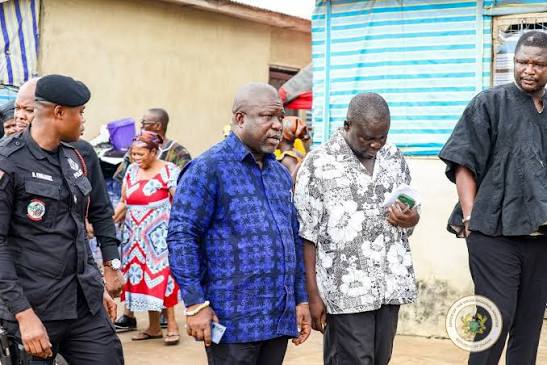
The Volta Regional Minister, James Gunu, has disclosed that 64,741 people have been affected by flooding across the Volta Region, with 11,953 households and approximately 5,000 houses impacted by the disaster.
Speaking on Ahotor FM’s Adekyee Mu Nsem programme in Accra with host Citizen Kofi Owusu, Mr. Gunu outlined both the emergency response measures and long-term interventions being implemented to address the flooding.
He explained that the flooding has largely been caused by rising water levels in the Keta Lagoon and surrounding estuarine systems. According to him, the accumulated water created immense pressure on nearby communities, prompting authorities to open a floodgate at Riske/Keta to discharge excess water into the sea and reduce the immediate threat.
Mr. Gunu said engineers and technical experts, working in collaboration with the Volta Regional Coordinating Council, have been closely monitoring water levels and implementing emergency measures to safeguard lives and property.
He further disclosed that discussions are underway with the Ghana Ports and Harbours Authority (GPHA) to relocate and redesign sections of the floodgate infrastructure. The proposed redesign would allow excess water to be discharged automatically during periods of high water levels, reducing dependence on manual operations.
The Regional Minister also expressed concern about the deteriorating environmental conditions around the estuary, including saltwater intrusion, loss of vegetation, and ecosystem degradation, all of which are contributing to recurrent flooding and threatening the livelihoods of coastal communities.
He called for extensive mangrove restoration and marshland rehabilitation as part of a comprehensive environmental recovery strategy to strengthen the region’s natural flood defenses.
Mr. Gunu further revealed that several rivers and streams, including the Todzie River and its tributaries, have overflowed following heavy rainfall and years of silt accumulation. He stressed that dredging and desilting these water bodies are critical to restoring their capacity and reducing future flood risks.
He added that emergency engineering works are currently underway, including the expansion of storm drains and improvements to drainage systems, to accommodate increased water volumes and protect vulnerable communities.
According to the minister, while temporary measures such as controlled water releases and structural adjustments have helped ease pressure in flood-prone areas, lasting solutions will require sustained investment in resilient infrastructure and environmental management.
Mr. Gunu also assured residents that schools and health facilities affected by the floods are gradually returning to normal operations as water levels continue to recede. However, he noted that authorities remain on high alert due to the possibility of further rainfall.
He commended the collaborative efforts of the National Disaster Management Organisation (NADMO), river authorities, district assemblies, and the security agencies, all of whom continue to provide relief assistance, evacuation support, and emergency response services to affected communities.
Addressing public health concerns, he said the Ghana Health Service is intensifying disease surveillance and preventive measures to avert possible outbreaks, particularly in communities where sanitation systems have been compromised by floodwaters.
Responding to concerns about a possible spillage from the Akosombo Dam, Mr. Gunu said he had not received any official confirmation but underscored the need for effective coordination and timely early warning systems to minimise any downstream impacts should such a release become necessary.
He expressed sympathy to families affected by the floods and commended all emergency responders for their swift intervention. He reaffirmed the government’s commitment to providing relief to victims while pursuing long-term flood resilience and climate adaptation strategies.
Mr. Gunu concluded that the Volta Region’s flooding challenges stem from a combination of estuary dynamics, heavy rainfall, inadequate drainage infrastructure, and environmental degradation. He stressed that addressing the problem will require sustained investment in infrastructure development, ecosystem restoration, and climate-resilient planning.
Story by Stephen Kwaku Owusu Mintah


