


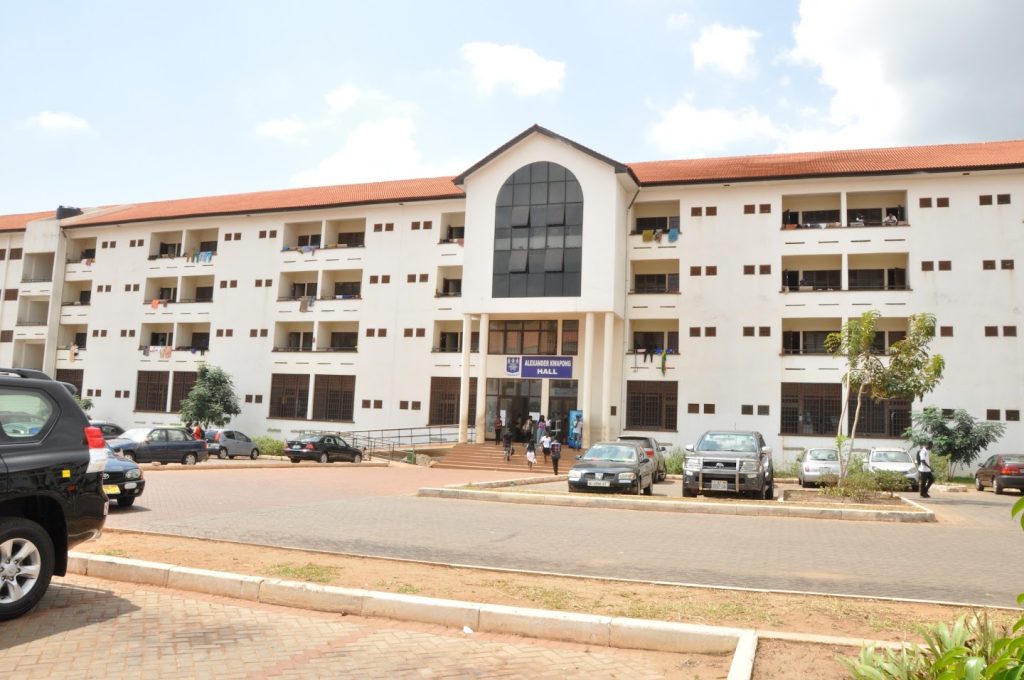
The National Union of Ghana Students (NUGS) has given the Ghana Tertiary Education Commission (GTEC) a two-week ultimatum to enforce the directive capping accommodation fee increases at 10 per cent in publicly funded halls, warning that it will organise protests if the directive is not implemented.
The directive, issued by the Ministry of Education through GTEC on November 16, requires halls that increased their accommodation fees by more than 10 per cent to reverse the excess charges and refund affected students.
Speaking to media, NUGS President-elect Benedict Amelorku said the union began counting the two-week period on November 24 and expects GTEC to ensure that universities and hostel operators comply with the directive.
He warned that students would take to the streets if the Commission failed to act, insisting that issuing the directive must be followed by effective enforcement.
NUGS says the 10 per cent cap follows sustained advocacy by the union for fair and transparent accommodation pricing. In a statement issued on November 18 and signed by its President, Rashid Ibrahim, the union commended GTEC for the intervention but cautioned that it would have limited impact if private hostels, which accommodate a significant proportion of students, were excluded.
The union also argued that the 10 per cent ceiling should not be treated as automatic approval for fee increases, insisting that any adjustment must be supported by justifiable reasons and independently assessed by the Rent Control Department.
The University of Ghana has emerged as a major focus of the dispute. NUGS says accommodation fees at the university’s four Diaspora halls have increased from about GH¢3,500 in the 2021/2022 academic year to approximately GH¢8,050 currently, representing a cumulative increase of 224 per cent.
UGEL initially proposed a 26 per cent increase but reduced it to 15 per cent following consultations. The adjustment raised the cost of a standard four-bed room from GH¢7,000 to GH¢8,050, still exceeding GTEC’s 10 per cent ceiling.
Acting Rent Commissioner Frederick Opoku has maintained that UGEL must reduce the proposed increase to 10 per cent before he participates in further discussions on the dispute. He has also insisted that no institution is exempt from the Rent Act, 1963 (Act 220).
Meanwhile, NUGS President Rashid Ibrahim told Joy News’ PM Express on November 23 that some students were being forced to defer their studies because they could no longer afford accommodation. He said between 20 and 30 students had contacted him directly to seek assistance.
Beyond demanding full enforcement of the 10 per cent cap in publicly funded halls and refunds for students who have been overcharged, NUGS is calling for private hostels to be brought under a regulatory framework.
The union is also proposing a comprehensive accommodation pricing framework to promote transparency and accountability, alongside government budgetary allocations, low-cost loans and free land to encourage the development of affordable student accommodation.
Story by Ama Frimpomaa


