


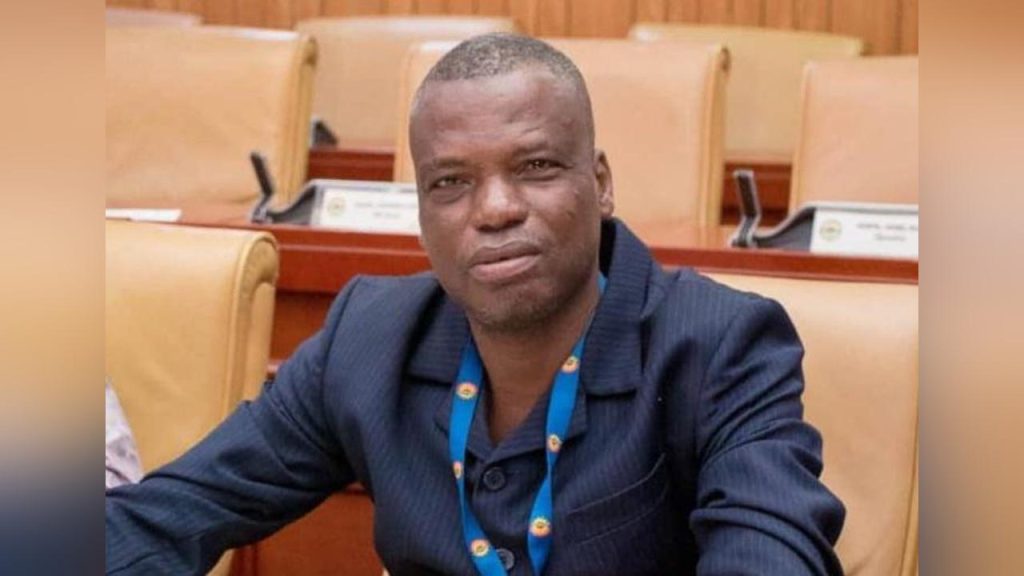
Sanja Nanja has criticised the opposition New Patriotic Party (NPP) over the implementation of the Agenda 111 hospital project, questioning the lack of proper planning and value for money under the previous administration.
Speaking on Adekyee Mu Nsem on Ahotor 92.3 FM with host Nana Dogbe, Hon. Nanja said politicians must begin taking Ghanaians more seriously when embarking on major national projects.
According to him, although the idea of providing district hospitals across the country is commendable, the previous NPP administration failed to adequately plan before rolling out the ambitious Agenda 111 initiative. He questioned the huge sums invested in the projects and whether the expenditure reflected value for money for the country.
Hon. Nanja stressed that every government project must bring meaningful benefits and economic value to Ghana. He argued that the previous administration became overly ambitious and still failed to fully complete even one of the hospitals for operation before leaving office.
He noted that no government, including the current administration, can complete all the Agenda 111 hospitals within a short period, insisting that a long-term strategic plan is necessary to successfully complete and operationalise all the facilities.
The Atebubu-Amantin MP further argued that the NPP has no justification for blaming the current government for delays in completing the hospitals, since the project itself was not properly structured from the outset.
He, however, assured Ghanaians that the current government remains committed to continuing the Agenda 111 projects and ensuring that the hospitals are eventually completed and operational to improve healthcare delivery across the country.
In a related development, President John Dramani Mahama has openly criticised the previous Nana Addo Dankwa Akufo-Addo administration over its handling of the Agenda 111 hospital projects.
President Mahama described the decision to simultaneously initiate construction on 111 hospitals across the country as imprudent and poorly executed.
He questioned the strategic thinking behind launching all the projects at the same time, arguing that a phased approach would have been more effective and fiscally responsible.
“When the Agenda 111 hospitals… I don’t think it was a very prudent idea to start 111 hospitals at the same time. At least they should have been phased out,” he stated.
The President noted that while some of the projects had progressed to foundation level, the overall execution had been deeply problematic, with serious concerns about contractor performance and value for money.
“With some of the projects, people took the mobilisation and never went to the site,” he disclosed.
According to him, the government is actively pursuing such contractors to recover funds and ensure accountability.
“EOCO is going after them,” he assured chiefs, signalling that legal and administrative action is underway against defaulting contractors.
Despite his criticism of how the initiative was managed, President Mahama reaffirmed his administration’s commitment to ensuring that Ghanaians ultimately benefit from the hospital projects.
He disclosed that the government has reviewed the programme and will prioritise the completion of 35 hospitals that are close to completion.
President Mahama added that additional funding will be provided in the next national budget to support another batch of hospitals in subsequent phases.
According to him, the restructuring plan will also involve collaboration with faith-based health institutions, which will be encouraged to adopt some of the facilities and support their completion and operation.
“We’re also inviting the faith-based organisations that run hospitals to adopt some of the hospitals that they think they can complete and bring into operation,” the President said.
The Agenda 111 initiative, launched as a major healthcare infrastructure expansion programme, has faced delays and criticism over stalled projects and cost concerns, prompting renewed government focus on phased completion and strategic partnerships.
Story by Stephen Kwaku Owusu Mintah


