


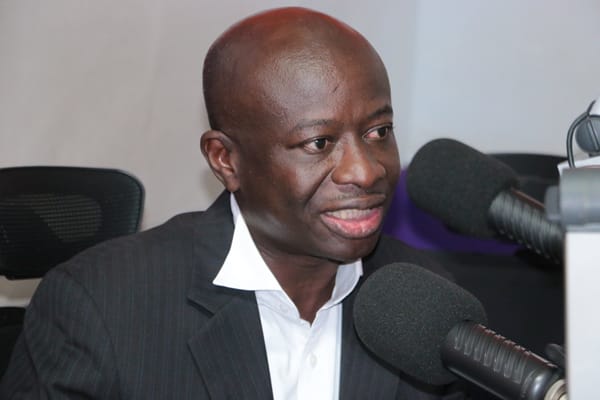
Constitutional lawyer Kwame Adofo says Ghana’s rapidly changing media environment, particularly the rise of social media and digital platforms, has gone beyond what could have been anticipated when the 1992 Constitution was drafted.
Speaking on Ahotor FM’s morning show in Accra-Tema on Monday, September 28, 2026, Lawyer Adofo said although the Constitution guarantees freedom of speech and expression, the media landscape has changed significantly since the Constitution came into force.
Article 21(1)(a) of the 1992 Constitution guarantees freedom of speech and expression, including freedom of the press and other media, while Article 162 provides for the freedom and independence of the media.
Lawyer Adofo explained that traditional media organisations were the main channels through which individuals could reach large audiences when the Constitution was drafted. The situation, he said, has changed considerably with the emergence of social media.
According to him, individuals can now create and operate their own platforms without necessarily depending on established media organisations. Platforms such as Facebook, TikTok, Instagram and Threads allow people to produce and distribute content directly to audiences from virtually anywhere.
“The type of media then is different from the media now. People have gone way beyond being given a platform. They create their own platforms.”
He said the development presents new challenges for interpreting and regulating freedom of expression because the constitutional framework was developed at a time when the media environment was significantly more limited.
Freedom of speech must not be criminalised
Lawyer Adofo acknowledged that freedom of speech is not absolute and that the law provides remedies where individuals believe their rights have been violated.
He cited defamation as an example, saying people who believe their reputation has been unlawfully damaged can seek redress through the appropriate legal channels.
However, he cautioned against giving the police the role of determining whether particular speech has crossed the legal boundary.
According to him, allowing law-enforcement agencies to decide what constitutes acceptable or unacceptable speech could create the risk of criminalising speech.
“The danger is that you end up criminalising speech. You cannot criminalise speech in a democratic dispensation,” he argued.
Ghana previously had criminal libel provisions in its Criminal Code, but the relevant provisions were repealed by the Criminal Code (Repeal of Criminal Libel and Seditious Laws) (Amendment) Act, 2001.
Lawyer Adofo therefore argued that the police should not become the final authority on what citizens can or cannot say.
He questioned whether such matters should instead be subjected to appropriate judicial processes, particularly where questions arise over whether a statement amounts to defamation or another unlawful act.
‘Involve the actors’ in social media discussions
Lawyer Adofo also called for the direct involvement of people who actively participate in the digital space in discussions aimed at addressing abuses associated with social media.
His comments followed calls for organisations such as the Ghana Journalists Association and the Media Foundation for West Africa to engage stakeholders and develop measures to address offensive or abusive online content.
While agreeing that dialogue is necessary, he argued that such discussions could have limited impact if the people directly involved in the conduct being discussed are excluded.
He compared the situation to peace negotiations, arguing that parties involved in a conflict must be part of discussions aimed at finding a solution.
“If the actors are not involved, there is nothing,” he said.
He cited controversies surrounding social media commentary, including debates such as the Ghana-Nigeria jollof discourse, as examples of conversations that largely take place among online users themselves.
Lawyer Adofo argued that bringing the actual participants into discussions would be important if stakeholders want to develop practical approaches to addressing problematic behaviour online.
Calls for social media regulation
The constitutional lawyer also addressed calls for stronger regulation of Ghana’s new media environment.
He acknowledged that governments in different jurisdictions have introduced measures to regulate aspects of digital communication but questioned whether any country has completely resolved the challenges associated with social media.
He noted that digital platforms differ fundamentally from traditional media organisations, which generally have identifiable structures, editors and established systems of accountability.
Social media, by contrast, allows individuals to create content and distribute it directly to audiences without passing through traditional editorial structures.
He therefore said any attempt to develop measures to address Ghana’s social media challenges must take these differences into account.
Lawyer Adofo maintained that Ghana’s response should seek to protect freedom of expression while addressing unlawful conduct and protecting the rights of others.
He also cautioned against approaches that could give excessive discretionary power to law-enforcement agencies, arguing instead for a framework that involves the actual actors in the digital space and balances freedom of expression with accountability.
Story by Stephen Kwaku Owusu Mintah


