


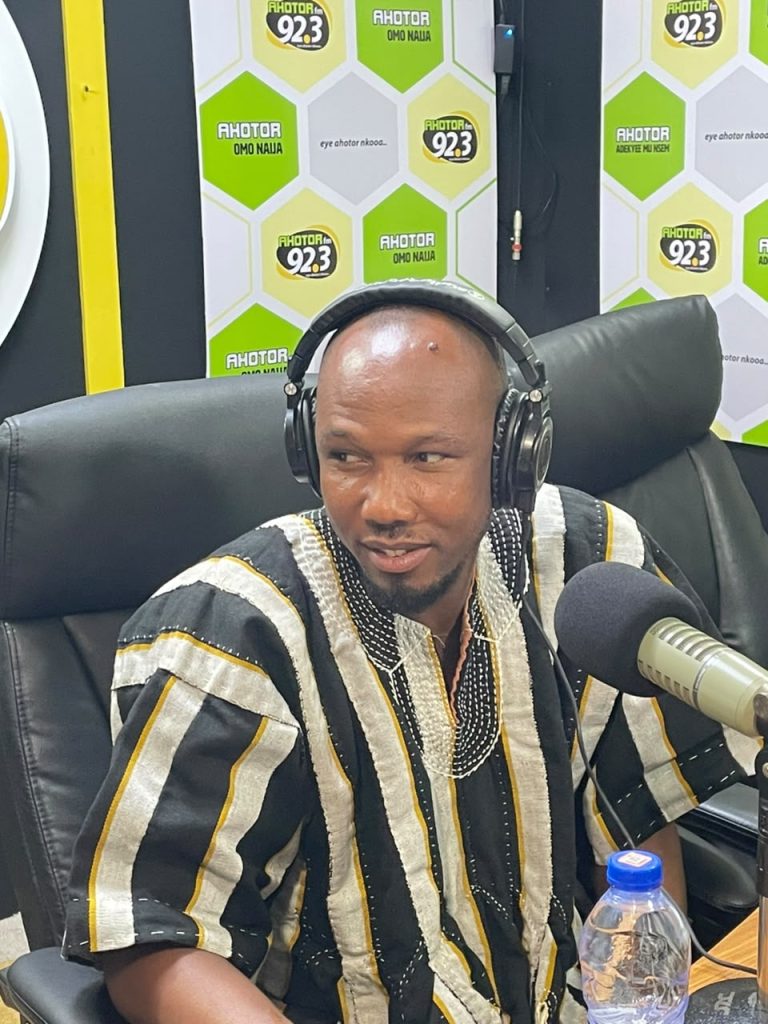
An aspiring Deputy Communications Officer of the National Democratic Congress (NDC) in the Tema West Constituency, Moses Klomega, has urged young politicians and party members to demonstrate professionalism and respect for government appointees.
Speaking on the Adekyee Mu Nsem morning show on Ahotor FM 92.3, hosted by Citizen Kofi Owusu in Accra, Mr Klomega said party members must refrain from making unsubstantiated comments against Metropolitan, Municipal and District Chief Executives (MMDCEs) and other government appointees simply because they believe their concerns have not been addressed or they have not benefited from government contracts.
He said concerns about the performance of appointees should instead be addressed through appropriate accountability mechanisms after their tenure or stewardship.
“There is room for accountability after any appointee’s stewardship, and all party people must assist in putting professionalism in place and respecting the office of all our appointees,” he said.
Mr Klomega further called on NDC members to remain focused on governance and avoid comments that could undermine the effective performance of government officials.
AKSA Power Deal
Commenting on the AKSA power plant controversy, Mr Klomega said there was a need for facts and evidence to guide public discussions about the case rather than what he described as blanket statements and partisan public relations.
He said the matter had gained renewed attention following the conviction in the United States of former Goldman Sachs banker and former Managing Director of the Tema Oil Refinery (TOR), Asante Kwaku Berko.
According to him, the case raises important questions about procurement processes and oversight, particularly during periods of power shortages when emergency measures are often invoked.
He argued that Ghana’s recurring reliance on emergency procurement in the energy sector could create opportunities for established safeguards to be weakened.
“The key issue has exposed the fact that most times we base ourselves on an emergency to undertake certain procurement that is really sometimes dangerous,” he said.
Mr Klomega also questioned whether Parliament had exercised sufficient oversight in relation to the procurement and approval processes surrounding the AKSA power plant, also known as the Kpone power plant.
He said the US conviction had brought renewed attention to alleged payments purportedly made to facilitate the approval and selection of the power plant.
“The question about Parliament, which is supposed to be the gatekeeper, is that it did not play a very good gatekeeping role,” he said.
He further called for stronger oversight mechanisms to prevent emergency situations from being used to bypass established procurement safeguards.
Need for Long-Term Planning
Mr Klomega also questioned Ghana’s continued dependence on emergency procurement in the power sector, arguing that the country has sufficient data to anticipate future electricity demand.
“Should we always wait for an emergency? We definitely know the projections of our power sector. We know the growth of our power sector. The Energy Commission does this job all the time, and we have all that particular data,” he said.
He noted that Ghana often waits until it faces shortages in generation, distribution or equipment before entering into urgent procurement arrangements.
“We almost always wait till we tell ourselves that we are not generating enough, we are not distributing enough, we don’t have enough transformers, and then we enter into some of these pressure deals,” he said.
According to him, procurement processes conducted under certificates of urgency often limit opportunities for stakeholders to scrutinise and review proposed arrangements.
“We do not allow the process to play out. We do not allow stakeholders to review the process. We do not allow transparency into the process because we say we really need these power plants in an emergency,” he said.
His comments come amid a denial by former Power Minister Dr Kwabena Donkor of any involvement in bribery allegations connected to the US case involving Mr Berko.
Dr Donkor, through his lawyers, has denied requesting or receiving money from Mr Berko or authorising anyone to demand money on his behalf.
Meanwhile, the Economic and Organised Crime Office (EOCO) has commenced efforts to trace funds and assets that may be linked to the bribery case.
EOCO has indicated that the asset-tracing and recovery exercise forms part of investigations into the Ghanaian dimension of the case following Mr Berko’s conviction in the United States.


