


The decision by the National Democratic Congress (NDC) government to scrap the Double Track system under the Free Senior High School (FSHS) policy has sparked concerns over the government’s preparedness to address challenges associated with school placement.
The Double Track system, introduced under the previous New Patriotic Party (NPP) administration, was intended to create additional capacity in public Senior High Schools (SHSs) and accommodate students who otherwise would not have secured placement due to limited infrastructure.
However, concerns have emerged over the current school placement exercise, with about 54,985 students reportedly redirected to private Senior High Schools under a discounted-fee arrangement.
Critics argue that the development could undermine the original objective of the Free SHS policy, which was designed to provide students with access to secondary education without financial barriers and prepare them adequately for the future.
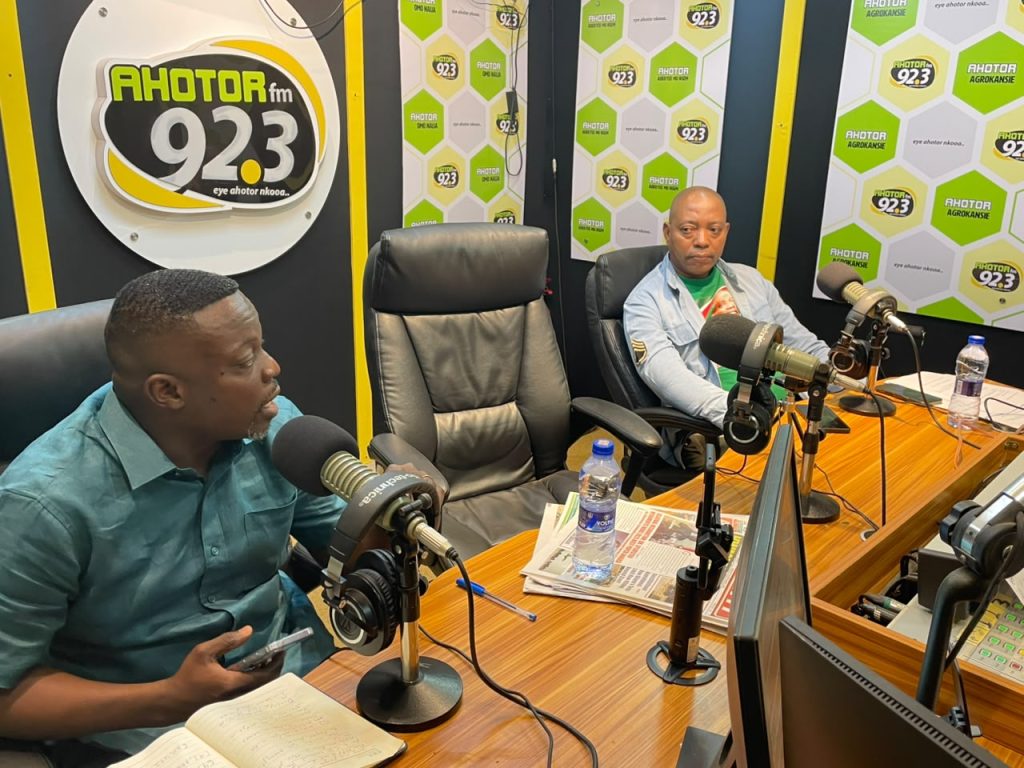
Speaking during a panel discussion on Adekyee Mu Nsem, a morning show on Ahotor 92.3 FM in Accra, the NPP Communication Officer for Tema West, James Edem Tamakloe, raised concerns about the challenges confronting the latest school placement exercise by the Ghana Education Service (GES).
He was speaking on the programme alongside George W. Nash-Snr., a member of the NDC Government Communication Team. The discussion was hosted by Citizen Kofi Owusu.
Mr. Tamakloe argued that the government needs to carefully reconsider its approach and provide a clear roadmap for expanding and upgrading infrastructure in public Senior High Schools.
According to him, expanding existing facilities and improving infrastructure would help address the challenges confronting the placement system while easing the financial burden on parents whose wards have been placed in private SHSs under the discounted-fee arrangement.
In response, Mr. Nash defended the government’s approach, describing the decision to create an avenue for private schools to absorb the 54,985 students as a laudable intervention.
He maintained that the fact that students placed in private schools are required to pay discounted fees does not necessarily mean the fundamental objective of the Free SHS policy has been defeated.
Mr. Nash further argued that the government remains committed to addressing the challenges within the education sector, pointing to what he described as positive developments in the broader economy, including stability in the cedi against the US dollar.
He expressed confidence that the government would eventually address the challenges associated with the school placement system.
Mr. Nash also called on the government to adopt a holistic approach to the development of Senior High Schools and discourage what he described as the growing culture of categorising schools, particularly the perception that Category “A” schools are inherently better than others.
He said greater attention should be given to improving infrastructure and teaching conditions across all Senior High Schools to ensure that students have access to quality and equitable learning environments regardless of the school they attend.
According to him, improving facilities and the quality of education across schools would help reduce discrimination and the perception that some Senior High Schools are superior to others based primarily on infrastructure and the quality of teachers.


