


The National Democratic Congress finds itself at a delicate and defining crossroads. As John Dramani Mahama presses forward with the ambition of cementing a lasting legacy, his leadership carries a rare historical distinction. His political journey—marked by defeat and a subsequent return through a resounding electoral victory—places him in a unique position within Ghana’s democratic evolution.
Yet, this moment of potential legacy-building is accompanied by an undercurrent of internal uncertainty. Constitutionally, the President is limited to a single remaining term, a reality that has quietly but unmistakably opened a succession gap within the party. This vacuum is not merely theoretical—it is already shaping internal dynamics. Across public platforms and political gatherings, subtle alignments and “below-the-surface” maneuvering have begun to emerge, as prospective candidates position themselves for future leadership.
From an analytical standpoint, this is a critical moment for the party’s leadership—particularly its National Council—to act decisively. Without clear direction and an early, structured succession process, the risk is not just internal fragmentation, but reputational damage. The achievements of the administration—whether framed through initiatives like the “Big Push,” efforts toward fiscal discipline, or broader economic stabilization—could easily be overshadowed by internal contestation over a single question: Who succeeds President Mahama?
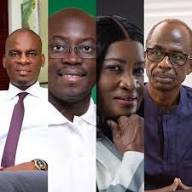

This looming contest presents an opportunity not only for internal reflection but also for political exploitation. The opposition, particularly the New Patriotic Party, will almost certainly capitalize on any signs of disunity or strategic missteps. In politics, perception often carries as much weight as performance, and even minor internal fractures can be amplified into narratives of instability.
Stepping back, this situation reflects a broader truth about Ghana’s political evolution. Since the establishment of the Fourth Republic of Ghana, leadership succession has become one of the most consequential tests of democratic maturity. Ghana’s reputation for stability is built not only on successful governance but on orderly and credible transitions of power.
In this context, the selection of a successor is not merely a party affair—it is a national concern. A worthy candidate must demonstrate an unambiguous commitment to democratic principles, including respect for institutions such as the Electoral Commission of Ghana. These institutions form the backbone of Ghana’s electoral credibility and must remain insulated from political interference.
Integrity, too, stands at the center of public expectation. In an era where accountability is increasingly demanded by citizens, any aspirant must embody transparency and support mechanisms such as the Office of the Special Prosecutor (Ghana). Leadership credibility is no longer optional—it is foundational.
Equally, the next leader must be equipped to navigate Ghana’s economic realities. Issues such as inflation, unemployment, and fiscal constraints require not just political rhetoric, but practical and informed solutions. Economic competence will ultimately determine whether political promises translate into tangible improvements in citizens’ lives.
However, leadership in Ghana transcends policy frameworks. It is deeply human, rooted in connection and relatability. From the vibrant energy of Accra to the agricultural heartlands, a successful leader must engage authentically with the lived experiences of the people. Empathy, visibility, and responsiveness are indispensable traits.
At the same time, the ability to unify cannot be overstated. Ghana’s political landscape, often defined by the rivalry between the NDC and the NPP, requires leaders who can rise above entrenched divisions. National cohesion must take precedence over partisan advantage.
Traditional authority also remains a vital component of governance. Institutions like the National House of Chiefs continue to influence social and cultural life. A thoughtful successor recognizes the importance of collaboration between modern state structures and traditional systems.
Looking ahead, the stakes are equally tied to the aspirations of Ghana’s youth. A forward-thinking leader must prioritize innovation, education, and employment, creating pathways for a generation that holds the key to the country’s future. At the regional level, engagement with bodies such as ECOWAS will remain essential in shaping Ghana’s diplomatic and economic positioning.
In conclusion, the challenge before the NDC is not simply about managing succession—it is about shaping the future of leadership in Ghana. The process must be deliberate, transparent, and anchored in national interest. For in the end, the question is not just who leads next, but whether that leadership can preserve Ghana’s democratic legacy while advancing it into a new era of stability, unity, and progress.
alexkuakah7@gmail.com


