


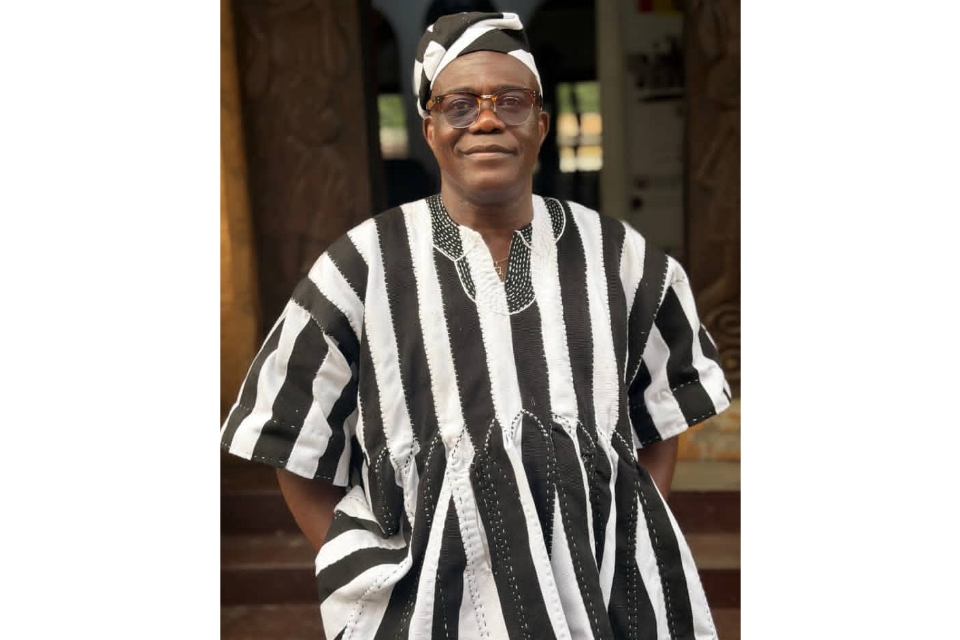
The Acting Executive Director of the National Commission on Culture, Mr. Wakefield Ackuaku, has reaffirmed the Commission’s commitment to preserving, promoting, and revitalizing Ghana’s rich cultural heritage, while calling on citizens to actively support efforts to project the country’s identity both locally and globally.
Speaking on Ahotor 92.3 FM as part of the ongoing Ghana Month celebrations, Mr. Ackuaku explained that the National Commission on Culture serves as the government body responsible for safeguarding cultural traditions and advancing creative arts initiatives across the country. He noted that the Commission is also leading the rollout of a new national cultural policy aimed at strengthening Ghana’s cultural ecosystem.
According to him, the Commission operates an extensive network of offices across all regions and districts in Ghana, ensuring that cultural development is not concentrated in the capital alone. He highlighted key cultural hubs such as Kumasi, often described as the heartbeat of Ghanaian culture, and Cape Coast, which serves as a significant center for heritage and historical reflection.
“Every region has a role to play in our cultural identity,” he emphasized, adding that regional offices and facilities, including auditoriums like the National Theatre in Accra and similar venues in Kumasi, provide platforms for cultural expression and creative engagement.
Mr. Ackuaku also used the opportunity to call on individuals and stakeholders within the cultural and creative sectors to contribute actively to the promotion of Ghanaian traditions. He stressed that national development in the cultural space requires collective effort, especially from practitioners, educators, and young creatives.
Outlining the Commission’s structured approach to Ghana Month, he explained that activities are organized across various thematic areas throughout the year. January, he said, is dedicated to research and development, during which lesser-known cultural practices are documented and explained through storytelling, performances, and educational content.
February focuses on the promotion of Ghanaian languages, alongside youth engagement initiatives such as festivals and competitions that showcase artistic talent. He noted that outstanding performances are preserved and published to ensure they are passed down to future generations.
March, according to Mr. Ackuaku, is centered on heritage appreciation, encouraging Ghanaians to reflect on the country’s diverse historical narratives and identities. He highlighted the importance of understanding regional histories, citing the distinct cultural backgrounds of communities such as Ada, Nzema, and Salaga.
He further emphasized the need for accurate historical education, noting that many Ghanaians lack a full understanding of key national narratives. He referenced discussions around Ghana’s so-called “Big Six,” pointing out that historical interpretations should be guided by factual evidence and research rather than assumptions.
Touching on the President’s directive for Ghanaians to wear Fugu on designated days, Mr. Ackuaku explained that the initiative goes beyond fashion, representing a broader economic and cultural value chain. He described Fugu as a finished product that embodies a process beginning from agricultural production to textile creation and final garment design.
He noted that this value chain supports livelihoods at every stage, from farmers to weavers and tailors, and urged Ghanaians to recognize the economic importance of supporting local industries. “Adding value to our indigenous products creates jobs and strengthens our economy,” he said.
Mr. Ackuaku also appealed to citizens to avoid politicizing cultural initiatives, stressing that national development should be a shared responsibility. He cautioned against dismissing government-led cultural programs based on political differences, urging unity in efforts to preserve Ghana’s heritage.
“As Ghanaians, we must take our culture seriously, especially for the younger generation,” he said. “If we fail to do so, there will come a time when we depend entirely on foreign cultures and imports.”
He concluded by encouraging Ghanaians to actively participate in cultural preservation activities, particularly during Ghana Month, noting that such efforts help sustain the nation’s identity and promote national pride.
Story by Freedom Etsey
Lavoe/Ahotoronline.com


