


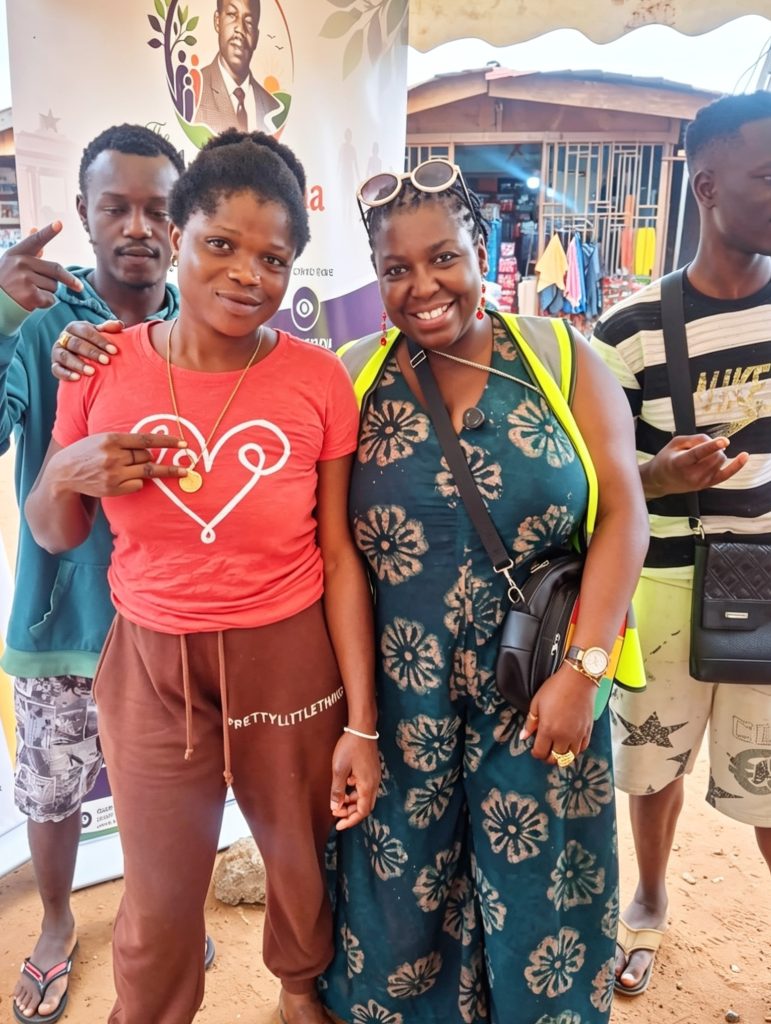
The Nuhu Asaana Community Mental Health & Family Support Initiative (NACMFSI), in strategic partnership with K.P. Concerned Rising Youth Africa (CRYA), has undertaken a comprehensive community mental health outreach and substance abuse counseling campaign at the Madina New Market Ghetto in Accra, targeting vulnerable young people affected by addiction, trauma, and socio-economic hardship.
The outreach was held on Friday, 16th May 2026 at Friends Canopy, a community gathering space within the Madina New Market enclave. The programme engaged approximately 40 young people between the ages of 17 and 34, many of whom are actively struggling with substance use disorders, unemployment, and psychological distress. The initiative formed part of NACMFSI’s broader mission of delivering accessible, community-based mental health services directly to high-risk populations.
The programme was led by licensed professional counselor and Founder & Executive Director of NACMFSI, Dr. Sadia Nuhu, alongside the Executive Director of CRYA, Prosper Liwanyan Gyidie Kabuja. The team combined professional clinical counseling with grassroots community engagement, creating a supportive environment where participants could freely express themselves without fear of stigma, discrimination, or judgment.


According to facilitators, the outreach adopted both group-based interaction and individual one-on-one counseling sessions. The group discussions allowed participants to share lived experiences and realize shared struggles, while the private sessions provided deeper psychological assessment and emotional support tailored to individual needs.
Participants were encouraged to openly discuss the root causes of their substance use, including unemployment, family breakdown, peer pressure, grief, emotional neglect, and lack of educational or vocational opportunities. Many participants reportedly described feelings of hopelessness, social rejection, and long-term emotional pain without access to professional mental health care.
Out of the 40 individuals engaged, 16 participants—including two young mothers—voluntarily committed to ongoing counseling and structured follow-up support services. These individuals will be enrolled in continued psychological care, rehabilitation referrals, and psychosocial support programmes coordinated by NACMFSI and CRYA.
The outreach further revealed widespread substance abuse within the community, with participants reporting the use of alcohol, cannabis, tramadol, cigarettes, and unregulated street substances commonly referred to as “red” and “blue.” Mental health professionals involved in the exercise noted that the combination of multiple substance use patterns presents serious long-term health risks, including addiction dependency, cognitive impairment, and emotional instability.
Dr. Sadia Nuhu observed that many participants presented symptoms consistent with depression, anxiety disorders, trauma-related stress, and substance use disorders. She also identified two urgent cases—a teenage boy and a young woman—who require immediate clinical intervention beyond the scope of the outreach programme.
A particularly concerning dimension of the outreach involved two young mothers, both approximately 19 years old, who shared deeply personal accounts of addiction, early motherhood, and survival in extremely vulnerable conditions. Despite their challenges, both expressed strong motivation to recover, rebuild their lives, and return to education or meaningful employment. NACMFSI described their cases as priority interventions requiring integrated mental health, social support, and childcare-sensitive rehabilitation services.

The organisation also noted that the Madina New Market Ghetto remains one of the most underserved urban communities in Accra, with limited access to formal mental health infrastructure. Facilitators observed that the normalization of drug use within the area, combined with economic hardship and weak family support systems, continues to drive increasing levels of addiction among young people.
During the outreach, community safety concerns were also observed, including an incident involving a suspected petty theft and citizen’s intervention. According to facilitators, such occurrences highlight the strong link between substance abuse, criminal vulnerability, and community insecurity in the area.
Despite these challenges, NACMFSI reported encouraging outcomes, noting that 16 participants voluntarily enrolled for continued support services. These include individual counseling, trauma therapy, substance abuse rehabilitation referrals, family reintegration support, and vocational guidance where applicable.
The organisation outlined several key challenges, including limited rehabilitation centres in the Greater Accra Region, persistent stigma surrounding mental health, and the lack of sustainable economic opportunities for recovering individuals. NACMFSI stressed that without addressing these structural issues, relapse risks remain high among affected youth.
As part of its next steps, NACMFSI and CRYA plan to formalize their collaboration through a structured Memorandum of Understanding (MoU), establish monthly outreach programmes in Madina, and develop stronger referral systems with the Ghana Health Service, Narcotics Control Commission, and accredited rehabilitation facilities.
The organisations also intend to document anonymised case studies to support future funding applications, policy advocacy, and program expansion. Additionally, they are exploring the establishment of a community mental health support hub in Madina to provide continuous care beyond periodic outreach exercises.
Dr. Sadia Nuhu emphasized that NACMFSI’s work is driven by compassion, dignity, and a commitment to restoring hope among vulnerable populations. She noted that mental health care must be taken directly to the communities where it is most needed, rather than expecting affected individuals to navigate inaccessible clinical systems.
“This is not just about substance abuse. It is about trauma, survival, and human dignity. Every person deserves a chance to heal,” she said.
The Nuhu Asaana Community Mental Health & Family Support Initiative (NACMFSI) concluded that the Madina outreach represents an important step in building a community-based mental health response system in Ghana—one that prioritizes accessibility, empathy, and sustained engagement over time.
Story by Freedom Etsey Lavoe/Ahotoronline.com


