


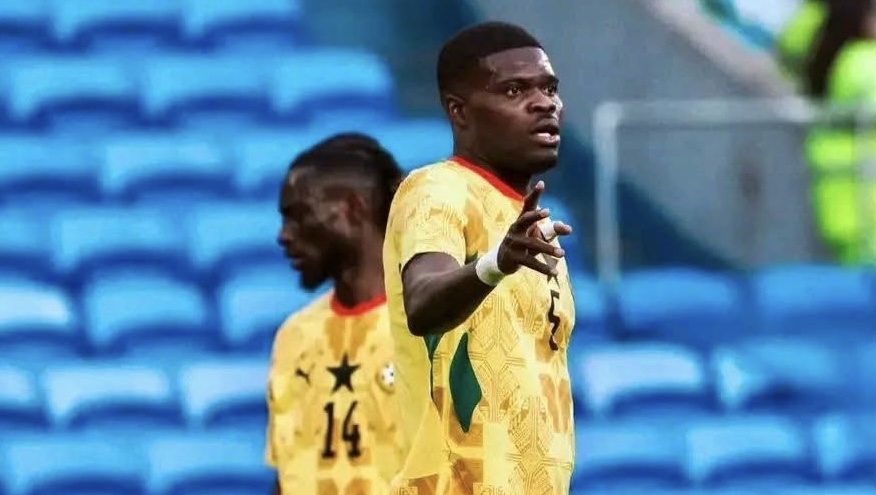
The Minority in Parliament has formally called on the Ghana Football Association and the Ministry of Sports and Recreation to explain the circumstances surrounding midfielder Thomas Partey’s exclusion from Ghana’s opening match of the 2026 FIFA World Cup.
The Black Stars faced Panama in Toronto on 17 June after Canadian authorities refused Partey’s visa application, leaving the experienced midfielder unable to travel from the team’s United States training base. Ranking Member of the Youth, Sports and Culture Committee, Vincent Ekow Assafuah, framed the inquiry around institutional responsibility rather than the player’s personal legal position.
He stated that the matter is not about determining Mr Partey’s guilt or innocence, as he remains entitled to the presumption of innocence. The central issue, Assafuah said, is whether the GFA and the Ministry carried out the necessary administrative and legal due diligence before including Partey in Ghana’s final World Cup arrangements. He posed three questions that now sit at the heart of the parliamentary demand: what the authorities knew, when they knew it, and what steps they took.
Partey, then 32 and playing for Villarreal after leaving Arsenal, had been named in coach Carlos Queiroz’s 26-man squad despite facing seven counts of rape and one count of sexual assault in the United Kingdom. The charges, which he has consistently denied and to which he has pleaded not guilty, relate to allegations by four women covering incidents between 2020 and 2022.
His trial at Southwark Crown Court was postponed and is now scheduled to begin in June 2027. Under bail conditions he was required to notify UK authorities of international travel. He entered the United States without difficulty on 4 June with the rest of the Ghana squad and trained in Rhode Island and Boston.
Canada, however, applied its immigration rules, which allow officials to find a person inadmissible where there are reasonable grounds to believe an act that would constitute a crime has been committed, even in the absence of a conviction. FIFA confirmed that the visa refusal was a host-government decision in which the world governing body played no part.
Ghana’s government reacted strongly at the time. The Ministry of Foreign Affairs described the refusal as high-handed and extremely unfair, arguing that reliance on unproven charges raised questions of fairness and proportionality.
An official note of protest was sent and an emergency appeal was lodged in Canada’s Federal Court. The court dismissed the application, finding that the player sought extraordinary relief that would have required Canada to set aside a lawfully rendered inadmissibility finding. Court-related reporting later indicated that the original visa paperwork submitted in May had stated there were no pending criminal charges.
Representatives linked to the player suggested the forms had been handled by the GFA rather than by Partey personally. The Association later issued a statement denying any finding of fault, negligence or misconduct against it and insisting that all requested documentation had been supplied.
The Sports Ministry, for its part, publicly stood by Partey and called on FIFA to engage host nations on safeguards for accredited players. Minister Kofi Adams had earlier said he was unaware of any visa problem when rumours first circulated, adding that previous visa difficulties for the player had been resolved.
Once the refusal was confirmed, the Ministry expressed concern about competitive integrity and urged FIFA to protect the rights of participating associations. Partey remained in the United States and was available for Ghana’s subsequent group matches against England in Boston and Croatia in Philadelphia.


