


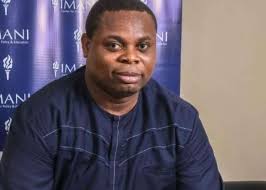
Franklin Cudjoe, President of IMANI Africa, has described as a ‘master stroke’ the decision by the Mahama government to transition to the International Monetary Fund’s Policy Coordination Instrument (PCI).
Following the completion of the Extended Credit Facility programme, Ghana is expected to engage the IMF through the PCI framework, which the government says is a non-financing arrangement designed to provide technical assistance, policy coordination, and market confidence support without direct financial disbursement from the Fund.
Officials say the PCI arrangement is expected to support Ghana’s broader ambition of attaining investment-grade status over the medium term.
According to the government, achieving investment-grade ratings could lower borrowing costs for both the government and the private sector, attract long-term investors, boost foreign direct investment, and improve access to cheaper financing for infrastructure and private sector development.
Reacting to the development during an interview with Umaru Sanda Amadu on Channel One TV’s The Big Issue on Saturday, May 16, Mr Cudjoe described the PCI arrangement as “great economic diplomacy” and “a master stroke decision,” adding that the government and the National Democratic Congress (NDC) must remain disciplined in implementing the programme.
“The PCI is a great economic diplomacy, a master stroke decision. If the government and the NDC commit to this, then they will avoid ‘settings’. There must be that discipline,” he stated.
He contrasted the current administration’s approach with that of the previous New Patriotic Party (NPP) government, arguing that many of the structural reforms promised under earlier IMF engagements were not fully implemented.
“Compare them with the NPP government, they had a ‘kenkey’ party and jumped on the jamboree. Seventy per cent of the structural shift they promised after renegotiation with the IMF didn’t come to pass,” he said.


