


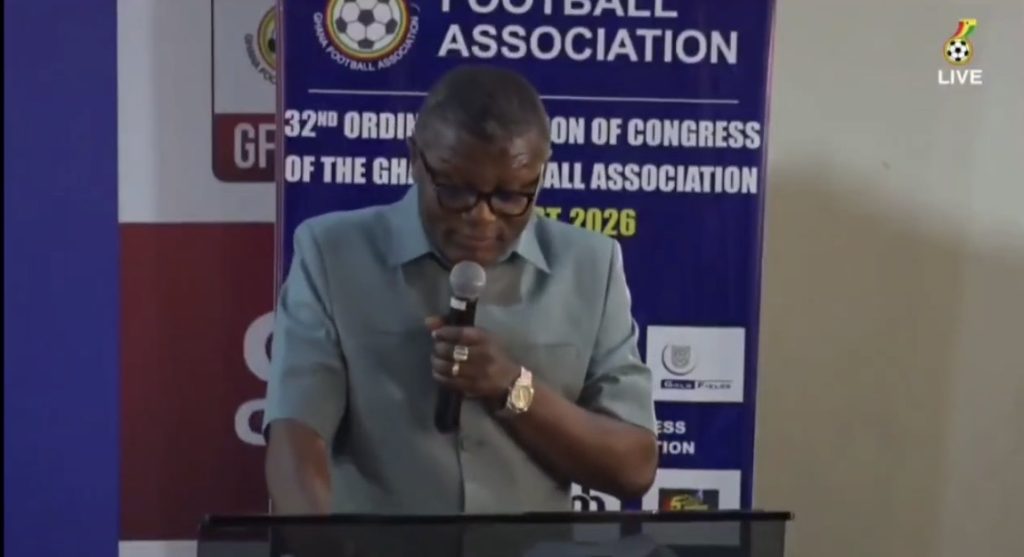
Sports and Recreation Minister Kofi Adams has announced that the government under President John Dramani Mahama will construct ten mini stadiums across ten regions of Ghana, marking a significant expansion of an earlier commitment focused on sporting infrastructure development.
Speaking at the 32nd Ordinary Session of the Ghana Football Association Congress held at the Ghanaman Soccer Centre of Excellence in Prampram on Thursday, August 20, 2026, the minister revealed that President Mahama had reviewed his previous decision to build six mini stadiums primarily for the six newly created regions and had instead directed that the number be increased to ten.
Adams explained that the original plan targeted the Western North, Oti, Ahafo, Bono East, Savannah and North East regions, areas that had been established more recently and lacked adequate modern sports facilities.
Under the revised programme, these six will still receive the new venues, while the Upper East, Upper West and Volta regions have been added to the list, with one further location still to be confirmed to bring the total to ten. The minister emphasised that the facilities would not be simple football pitches but would incorporate additional amenities designed to function as comprehensive sporting centres for their communities, supporting not only football but a broader range of athletic activities and grassroots development.
He noted that the Finance Minister, Cassiel Ato Forson, had already issued the necessary commencement authorisation, allowing the government to proceed through the required procurement processes so that contracts could be awarded and construction teams could move to the sites without delay.
Adams highlighted the TnA Stadium in Tarkwa as a model for the new projects, describing it as an example of a modern, cost-effective facility that could guide the design and implementation of the forthcoming mini stadiums.
The announcement forms part of a wider government effort to address longstanding gaps in Ghana’s sports infrastructure, particularly in regions that have historically been underserved. By expanding access to quality venues capable of hosting domestic competitions and nurturing talent at the community level, the initiative aims to improve playing conditions, encourage greater participation in sports, and contribute to the overall competitiveness of Ghanaian football and other disciplines.
The minister’s remarks at the GFA Congress underscored the administration’s intention to translate these plans into tangible progress in the near term, with work expected to begin once the contractual arrangements are finalised.


