


Ghana’s music industry has been shaken after award-winning rapper Kwesi Arthur made explosive allegations against his former record label, Ground Up Chale, and its CEO, Glen Boateng.
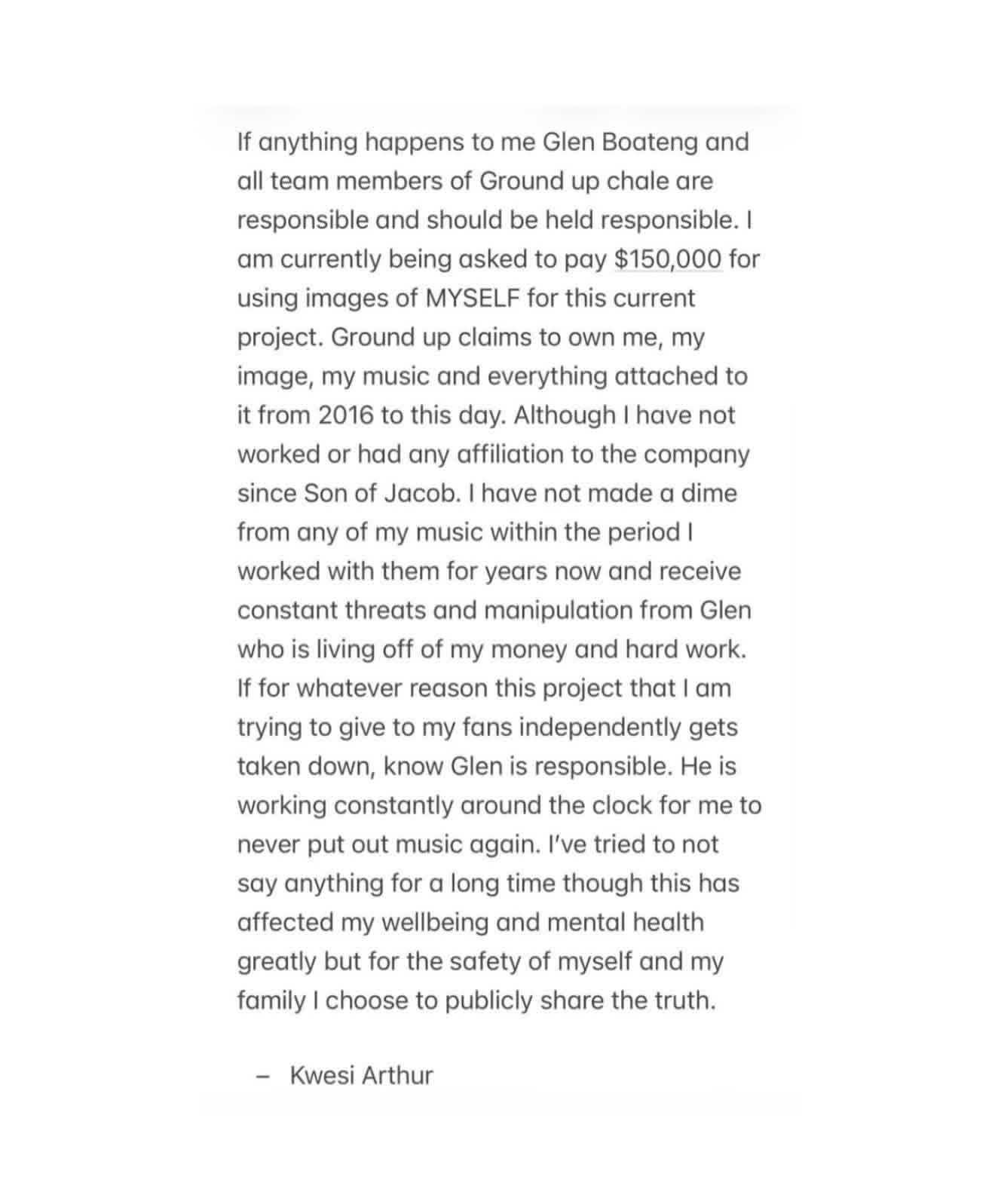
In a strongly worded statement, Kwesi Arthur claimed that despite having no working affiliation with Ground Up Chale since the release of his debut project Son of Jacob, the label and its CEO are allegedly demanding $150,000 from him while also laying claim to ownership of his image and music catalogue.
According to the rapper, these claims have persisted long after their professional relationship ended.
Even more troubling, Kwesi Arthur revealed that he has earned nothing from his music catalogue, a revelation that has left fans and industry watchers stunned, considering the massive success of his songs both locally and internationally.
He further alleged that he has been facing constant threats, a situation he says has caused him deep concern for his safety.
In a chilling warning, the rapper stated that if anything were to happen to him, the public should hold Glen Boateng and Ground Up Chale responsible, a comment that has intensified conversations across social media and within the entertainment industry.
This unfolding saga has reignited a long-standing debate about the realities of the music business. As the saying goes, the music industry is not child’s play.

Many artists and observers are once again warning that signing to a record label can feel like signing your soul to the devil if contracts are not fully understood. Without proper legal guidance and transparency, artists risk losing control over their work, their identity, and ultimately, their livelihood.
Kwesi Arthur’s revelations have exposed the darker side of fame and success, serving as a sobering lesson to upcoming artists that talent alone is not enough—knowledge, caution, and strong legal protection are just as important.
The story is still developing.


