


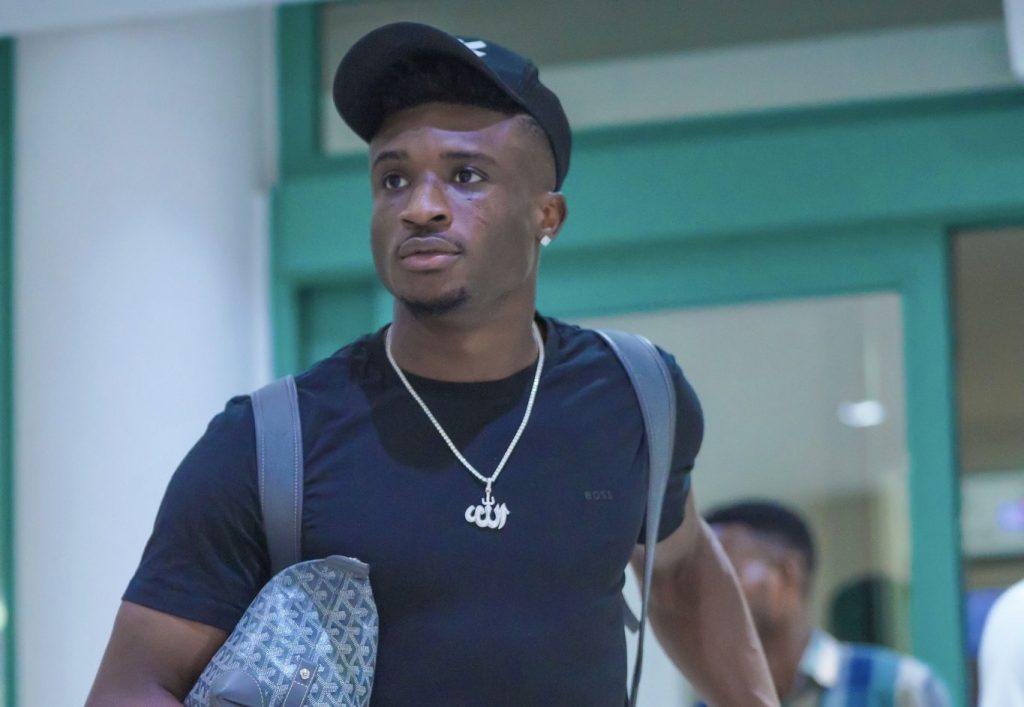
Mohammed Kudus has withdrawn from Ghana’s squad for the opening 2027 Africa Cup of Nations qualifiers, choosing to remain at Tottenham Hotspur and continue his recovery rather than join the Black Stars during the current international window.
The 26-year-old had been named in Carlos Queiroz’s 24-man party only days earlier, so the decision arrives as a clear setback for a national team beginning a new qualifying cycle without one of its most creative and influential attackers.
Kudus wants to finish his rehabilitation in London, rebuild full physical condition and regain match sharpness before returning to international football. The Ghana Football Association and Queiroz were informed, and the technical staff have already moved to cover the gap. The choice is rooted in caution after a long absence.
Kudus suffered a significant quadriceps injury in early January 2026 during Tottenham’s Premier League match against Sunderland and spent roughly seven months on the sidelines. A setback in April required further specialist assessment and ultimately kept him out of Ghana’s 2026 World Cup campaign. His most recent appearance for the Black Stars came on 12 October 2025, when he scored the winning goal in a 1-0 World Cup qualifier against Comoros in Accra.
His club return has been gradual. After several substitute outings he started for the first time since January in Tottenham’s Carabao Cup defeat at Liverpool. On Saturday he came on at half-time in a 3-2 home loss to Aston Villa, immediately lifting the attack and providing the assist for Conor Gallagher’s late goal after cutting the ball back from the byline. Those minutes showed progress, yet he has still not completed a full 90 minutes this season and remains short of peak fitness. Remaining at Tottenham’s Enfield training ground during the break allows him extra conditioning work rather than the extra travel and intensity of three national-team fixtures.
The timing is awkward for Ghana. Queiroz, reappointed in early September after a brief post-World Cup pause, has made qualification for the 2027 AFCON the immediate priority while keeping the 2030 World Cup in view. Ghana open Group C with a difficult away match against Côte d’Ivoire in Bouaké on 24 September, then host The Gambia at the Accra Sports Stadium on 29 September before travelling to Morocco for a friendly on 4 October. Ivory Coast, the 2023 champions, present a stern first test. Kudus’s ability to carry the ball, create overloads and finish would have been valuable against an organised opponent. Two teams from the group of four—Ivory Coast, Ghana, The Gambia and Somalia—will advance to the finals co-hosted by Kenya, Tanzania and Uganda.
Queiroz has already named a replacement. Derby County forward Mohammed Fuseini, on loan from Union Saint-Gilloise, received a late call-up. The 24-year-old scored a 93rd-minute equaliser for the Championship side against Burnley at the weekend and previously made his Ghana debut at the 2025 Unity Cup, scoring against Trinidad and Tobago. His inclusion also covers uncertainty over Prince Adu Kwabena, who suffered a head injury while playing for Viktoria Plzeň. Thomas Partey is another notable absentee through injury, further thinning midfield and attacking options.
Ghana’s recent record adds weight to the disappointment. The Black Stars missed the 2025 AFCON in Morocco, ending a long run of appearances at the continental tournament. Queiroz took charge in April 2026 after Otto Addo’s dismissal and guided the side to the last 32 of the 2026 World Cup, where they were eliminated 1-0 by Colombia. After appearing to step away he was re-engaged for a new mandate that begins with these qualifiers. The squad he named last week included other returnees such as Alexander Djiku, yet Kudus’s absence still removes a player capable of deciding tight matches.
Kudus’s club path has been one of high expectation. After emerging at Nordsjælland and starring at Ajax he moved to West Ham United and then Tottenham, where his dribbling, vision and goal threat quickly made him a focal point. The lengthy layoff interrupted that momentum. Both player and club appear determined not to rush the final stages of recovery, preferring a gradual build-up of minutes and physical robustness over an immediate return to the intensity of international football. That approach may serve Ghana well later if it produces a fitter, sharper Kudus in subsequent windows.
For now the Black Stars must begin their campaign without him. Queiroz will need other attackers to step forward in Bouaké. A positive result against Ivory Coast would ease pressure before the home meeting with The Gambia; a poor start would make the remaining matches more demanding. Fuseini’s late inclusion offers a younger forward a chance to stake a claim, while existing squad members will be expected to carry greater creative responsibility.


