


By Citizen Kofi Owusu
A Columnist
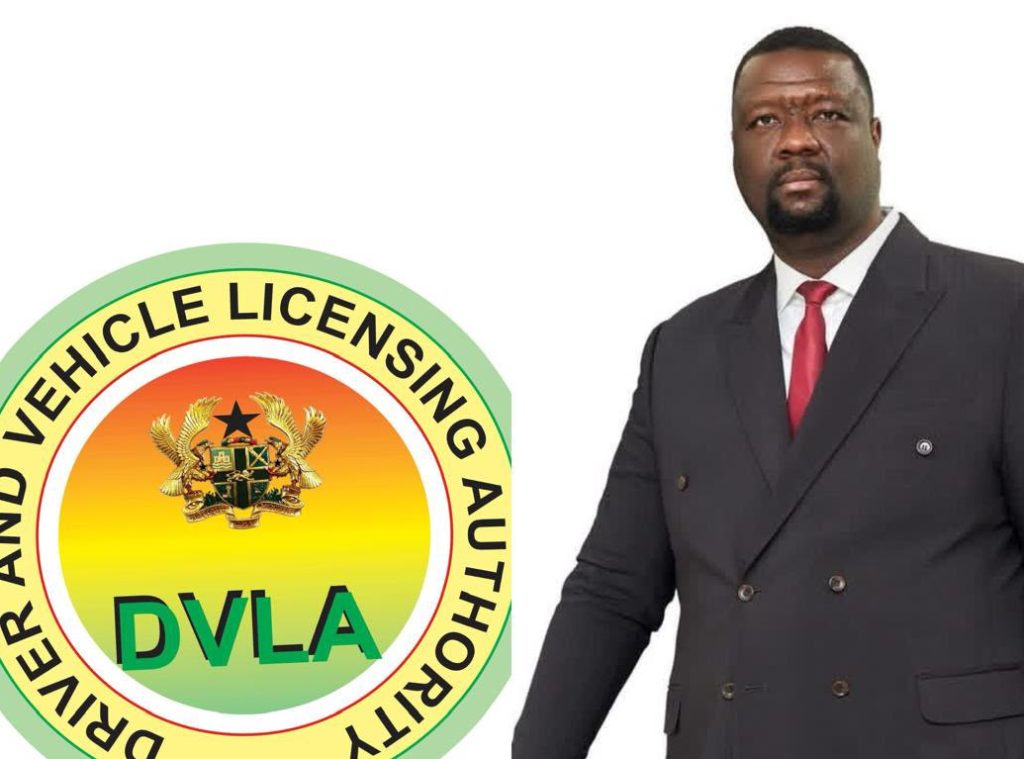
Some government appointments attract immediate applause. Others are met with scepticism and cautious optimism. When Julius Neequaye Kotey was appointed to lead the Driver and Vehicle Licensing Authority (DVLA), questions were raised about whether he possessed the administrative experience and strategic vision needed to transform one of Ghana’s most demanding public institutions.
The DVLA is an institution that has long faced public criticism over long queues, delays in obtaining driver’s licences, bureaucratic bottlenecks and concerns about middlemen. For many years, public confidence in the Authority had suffered. Against this background, the task before any new leadership was always going to be significant.
Yet less than a year into his tenure, Julius Neequaye Kotey appears to be allowing performance, rather than publicity, to define his leadership.
Rather than rushing to announce sweeping reforms, he began by seeking to understand the institution from the ground up. He visited DVLA operational centres across the country, engaged staff and customers, and listened to the challenges affecting service delivery. The approach was simple but significant: observe before acting, consult before directing and understand the problem before proposing solutions.
The results of that approach are gradually becoming visible.
One of the notable achievements under his administration has been the clearance of a driver’s licence application backlog that had reportedly accumulated over an extended period. Thousands of applicants who had faced prolonged delays have since received their licences, signalling renewed efforts to improve efficiency and responsiveness.
The administration has also placed emphasis on decentralisation. New DVLA offices have been established in underserved communities, including the commissioning of a modern facility in Ashaiman. The expansion is intended to bring services closer to citizens and reduce pressure on existing centres, while plans are reportedly underway to extend the Authority’s presence to other areas that have historically lacked direct access to DVLA services.
Technology has also become a major part of the reform agenda.
Through the introduction of Ultra Service Centres, public-private partnerships, improved queue management systems and expanded digital services, the DVLA is seeking to reduce delays, minimise unnecessary human interference and improve transparency in its operations.
The Authority is also preparing for further reforms, including smart driving tests, advanced vehicle emission testing systems, stronger cybersecurity infrastructure, a demerit points system for traffic offenders and modernised vehicle testing facilities. If properly implemented, these initiatives could bring Ghana’s licensing and road safety systems closer to international standards.
Improved efficiency has also been linked to stronger financial performance. Through initiatives such as the “Drive from Port” sticker programme and other operational reforms, the Authority has reportedly recorded a 39 per cent increase in revenue. The development suggests that efficient administration and improved service delivery can contribute not only to customer satisfaction but also to increased revenue generation.
Julius Neequaye’s approach to institutional integrity has also attracted attention. During public discussions surrounding the proposed new vehicle number plate system, he addressed concerns by clarifying that no new contracts had been awarded under his administration and reaffirming the importance of transparency and due process.
In an environment where misinformation can quickly undermine public confidence, such direct engagement with the public is important.
Customer experience has equally received attention. The successful implementation of a 24-hour pilot operation at the Adenta DVLA office has demonstrated the potential of flexible service delivery to respond to growing public demand. The initiative has reportedly improved efficiency and revenue generation, with plans to extend the model to other regional offices.
Recognition has followed some of these developments. Julius Neequaye Kotey and the DVLA have received several awards for public service, institutional leadership, service delivery innovation and digital transformation. While awards alone cannot determine the success of a leader, they reflect growing recognition of the direction in which the Authority is moving.
However, the most important achievement may not be a new office, an increase in revenue or an award. It may be the gradual restoration of confidence.
Confidence among staff that the DVLA can become a more efficient public institution. Confidence among motorists that government services can be delivered with greater speed and transparency. And confidence among policymakers that meaningful reform remains possible within Ghana’s public sector.
Leadership is not simply about occupying an office. It is about improving the institution one has been entrusted to lead.
Julius Neequaye Kotey’s leadership so far suggests an approach built on observation, discipline, innovation and a focus on results. The reform process is far from complete, and the DVLA still faces significant challenges. However, the direction appears clear.
If the current momentum is sustained, Julius Neequaye Kotey may ultimately be remembered as one of the Chief Executives who helped move the DVLA from being widely associated with bureaucratic frustration towards becoming a model of efficient, technology-driven public service.
History rarely remembers leaders only for the promises they make. It remembers those who leave institutions stronger, more credible and more effective than they found them.
That is why, today, Julius Neequaye Kotey is a story worth telling.
#CitizenSpeaks


