
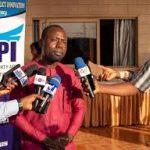
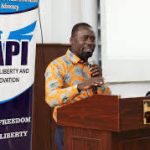
The Executive Director of the Institute of Liberty and Policy Innovation (ILAPI), Peter Bismark Kwofie, has cautioned against Ghana’s heavy dependence on imports which he said could expose the country to serious economic risks if tensions between the United States and Iran escalate, urging government to accelerate industrialisation and implement protective economic policies.
Speaking during a phone interview on Ahotor 92.3 FM, Mr. Kwofie explained that his comments were focused on the strategic policies Ghana must adopt to safeguard the country from potential economic shocks arising from the conflict in the Gulf region.

Ghana’s Import-Dependent Economy
According to Mr. Kwofie, a critical analysis of Ghana’s economic structure reveals a major structural weakness: the country has not yet fully industrialised its economy.
As a result, Ghana remains heavily dependent on imports for a wide range of goods, including food items, cosmetics, detergents, and several industrial products.
“We are largely an import-driven economy,” he said. “We import food and almost everything we consume. When you carefully study the structure of our trade system, you realise that any external disruption immediately affects our revenue and overall economic stability.”
He warned that because Ghana relies heavily on foreign markets, global events and geopolitical tensions can easily disrupt supply chains and reduce government revenue, particularly from port duties, levies, and taxes.
The Urgent Need for Industrialisation
Mr. Kwofie emphasised that the frequent national slogan of “industrialise, industrialise” must now move beyond rhetoric to concrete action.
“This is the moment for Ghana to take advantage of the situation and industrialise the economy,” he said. “We missed some opportunities during the COVID-19 pandemic and the Russia–Ukraine War, but we must not repeat that mistake.”
He urged policymakers to implement innovative home-grown policies that will enable the country to withstand global economic shocks.
“If we fail to make the difficult but necessary decision to industrialise our economy at this critical moment, it will become extremely difficult for us as a nation in the near future,” he cautioned.
Global Supply Chains and Trade Risks
Mr. Kwofie further explained that many goods imported from China often pass through Dubai before arriving in Ghana. He warned that escalating tensions in the Gulf region could severely disrupt these trade routes.
He noted that products such as cosmetics, detergents, and other consumer goods may become difficult to access if the conflict between the United States and Iran expands to affect Gulf countries like Qatar and other strategic trade hubs.
“If these supply chains are disrupted, it will have a direct and damaging impact on Ghana’s economy,” he explained. “Imports will decline, port activities will slow down, and government revenue from taxes and levies will reduce significantly.”
Concerns Over Ghana’s Fuel Reserves
Another major concern raised by Mr. Kwofie is the country’s limited fuel reserve capacity. According to him, Ghana currently holds fuel reserves that can last for only about three weeks, based on information from the National Petroleum Authority (NPA).
He described this situation as extremely risky for a country whose economic activities depend heavily on fuel.
“Ghana operates largely on a fuel-dependent economy,” he explained. “Transportation, energy production, and industrial operations all rely on petroleum products. Whenever fuel prices rise on the global market, our economy immediately feels the pressure.”
Mr. Kwofie therefore proposed that Ghana should significantly increase its strategic fuel reserves to cover at least 15 months, instead of focusing primarily on monetary reserves abroad.
“If Ghana cannot access fuel for more than three weeks, the consequences will be severe,” he warned.
“There will be widespread hardship across the country.”
Expanding Exports to Sustain the Cedi
When asked about the government’s recent success in stabilising the economy and strengthening the cedi, Mr. Kwofie commended the authorities for their efforts.
“I must commend the government for the remarkable work they have done in managing the economy and stabilising the exchange rate over the past two years,” he said.
However, he emphasised that sustaining these gains will require a strong focus on increasing exports.
“If we export more goods and services, we will earn more foreign exchange. That is the only sustainable way to maintain the gains we have achieved so far,” he noted.
Opportunities in Food Export
Mr. Kwofie also encouraged Ghana to take advantage of the global situation by expanding food exports to countries that rely heavily on imports.
He cited countries such as the United Arab Emirates, where agricultural production is limited and most food items are imported from nations like Mexico and the United States.
According to him, Ghana could strategically position itself to supply food products to these markets.
“With proper research and investment, Ghana can export more agricultural products to these countries and earn valuable foreign exchange,” he suggested.
Risks to Ghana’s Key Export Commodities
Mr. Kwofie also warned that global conflicts could reduce demand for Ghana’s major export commodities, including cocoa, gold, and timber.
If this happens, Ghana may experience a decline in foreign exchange inflows, which could lead to depreciation of the cedi.
To prevent this scenario, he called for increased investment in local manufacturing and industrial production.
“We must strengthen our factories and industries so that we produce more locally rather than relying heavily on imports,” he advised.
Fiscal Discipline and IMF Support
Mr. Kwofie also recommended that the government exercise strict fiscal discipline during this period of global uncertainty.
He noted that investors often become cautious during international conflicts, which could reduce investment inflows into developing economies.
As a precautionary measure, he suggested that Ghana consider extending its programme with the International Monetary Fund (IMF) for an additional year.
According to him, maintaining the IMF programme temporarily would provide an important economic buffer while Ghana continues to stabilise its economy.
“If the IMF programme ends immediately, we will have to manage the economy entirely on our own at a time when global tensions remain unpredictable,” he explained.
Security and Foreign Policy Considerations
Addressing concerns about potential security threats, Mr. Kwofie dismissed suggestions that Ghana could become a target because of the presence of United States Armed Forces facilities in the country.
He clarified that U.S. facilities in Ghana are not used for intelligence interception or military operations in the Gulf region.
“It does not mean that every country hosting a U.S. facility will automatically become a target,” he stated. “That is not the focus of Iran.”
However, he urged Ghana to maintain a neutral stance in the ongoing tensions between the United States and Iran.
He advised the Ministry of Foreign Affairs and Regional Integration to ensure that Ghana’s diplomatic statements remain balanced and measured.
“As a country, we should avoid taking sides,” he said. “We must remain neutral and use diplomatic platforms such as the United Nations and the United Nations Security Council to advocate for peace.”
A Call for Calm and Strategic Leadership
Mr. Kwofie concluded by urging Ghana and the broader West Africa region not to panic but to remain vigilant.
According to him, African countries should avoid becoming entangled in global geopolitical conflicts and instead focus on strengthening their economies.
“We should not be afraid as Africans,” he said. “But at the same time, we must remain neutral and call for the de-escalation of the conflict.”
The Executive Director of the Institute of Liberty and Policy Innovation (ILAPI), Peter Bismark Kwofie emphasised that with the right economic policies, industrialisation, export diversification, disciplined spending, and strategic reserves, Ghana can withstand global shocks and protect its economic stability.
Story by Freedom Etsey Lavoe/Ahotoronline.com