
The Institute for Liberty and Policy Innovation (ILAPI) convened a pivotal business regulatory dialogue yesterday, drawing key stakeholders from across Ghana’s regulatory landscape. The event featured Nana Yaa Juantua, a Presidential Staffer, as the special guest, alongside representatives from vital institutions including the Ghana Revenue Authority (GRA), Ghana Tourism Authority, Environmental Protection Agency (EPA), Ministry of Trade and Agriculture, Ghana Standards Authority (GSA), and many others. The dialogue focused on the theme “Enhancing Regulatory Efficiency and Compliance Support for Business Growth,” highlighting the crucial role of streamlined regulations in fostering economic prosperity.
At the heart of the discussions was the recognition that Ghana’s economy is fundamentally business-driven and that private entrepreneurs must fully understand their regulatory environment to thrive. Mr. Peter Bismarck Kwofie, ILAPI’s CEO, emphasized the importance of maintaining a comprehensive database to guide policy and business decisions—something currently lacking and much needed for effective regulatory oversight and business facilitation.
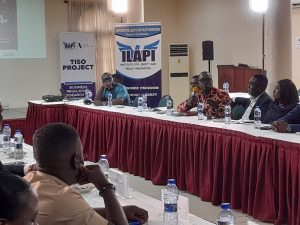
 Highlighting the findings from ILAPI’s recent research, Mr. Kwofie pointed out how many Ghanaian businesses face significant barriers due to overly complex, costly, and time-consuming regulatory processes. These obstacles often discourage investments and slow down official business registration, licensing, and compliance renewals. His remarks underscored the urgent need to address these bottlenecks, which impede not only individual enterprises but also the broader economic growth of the country.

Central to ILAPI’s call was a plea for greater collaboration among regulatory bodies to streamline processes and reduce administrative burdens. Mr. Kwofie advocated for eliminating redundant certification requirements, especially in the manufacturing sector, to allow businesses to operate legally with fewer hurdles. This approach, he noted, would simplify compliance, reduce costs, and ultimately boost Ghana’s attractiveness as an investment destination.
The dialogue marks a significant step towards cultivating a regulatory environment that supports business growth while safeguarding public interest. With active engagement from government agencies, industry players, and advocacy groups, ILAPI’s initiative promises to drive reforms that enhance efficiency, improve transparency, and unlock the potential of Ghana’s private sector for sustainable economic development.
Source: Ohemaa Adusi-Poku