


The Ghana Tertiary Education Commission (GTEC) has assured tertiary institutions that its nationwide freeze on new PhD programmes will last no longer than a month.
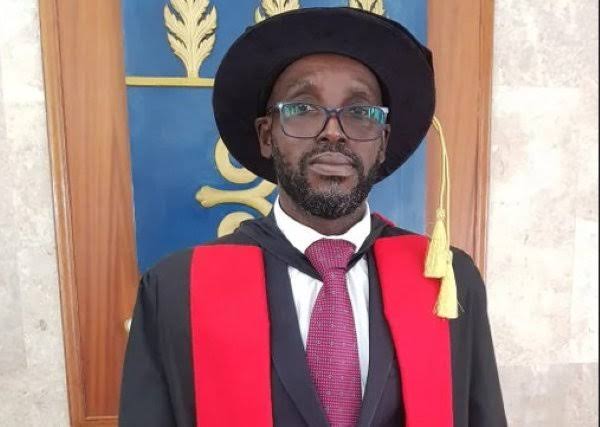
Deputy Director-General of GTEC, Prof. Augustine Ocloo, says the directive is a temporary regulatory intervention to address growing concerns over accreditation breaches, institutional capacity, and the quality of tertiary education.
Prof. Ocloo dismissed fears that the suspension could disrupt an entire academic year.
“So, for how long, as the GTEC DG has indicated, just after the audit, and this audit wouldn’t take more than a month to complete,” he said.
He explained that the Commission would still consider applications from institutions that present compelling justifications for introducing new programmes during the suspension.
He cited the University of Ghana, KNUST and the University of Cape Coast as examples of institutions whose applications could be considered on merit.
Prof. Ocloo also apologised for the anxiety the directive generated, explaining that such regulatory interventions were not new.
“Let me add that this hold-on or freeze approach is something that the Commission uses most of the time on a case-by-case basis. It’s just that this term is nationwide.”
He revealed that GTEC had encountered institutions where only about 50% of the programmes being offered were accredited.
Others, he said, were admitting excessive numbers of PhD students without the requisite academic and supervisory capacity.
He explained that some institutions had also failed to maintain the standards and resources that earned them initial accreditation.
The Commission intends to constitute four or five teams to examine data submitted by tertiary institutions and make recommendations.
“So within a week, the data would have been analysed. Recommendations would have been given to the Commission,” he said.
Prof. Ocloo, however, warned that institutions found to have inadequate capacity could face restrictions on fresh admissions for up to two years.
Existing students would not ordinarily be asked to abandon their programmes.
He explained that departments with too many students relative to their faculty strength could be directed to suspend admissions until they had the necessary resources in place.
Prof. Ocloo maintained that the Commission’s objective was not to undermine tertiary education but to protect academic standards.
“I don’t think the Commission is set out to destroy tertiary education. We are there to support and make sure that quality is sustained.”
GTEC Director-General Prof. Ahmed Jinapor Abdulai announced the directive on Saturday, November 21, at the 19th Congregation of the University of Mines and Technology (UMaT) in Tarkwa.
The Commission later clarified that the suspension targets applications to accredit new PhD programmes and does not constitute a blanket ban on admissions to existing accredited programmes. MyJoyOnline+1
The nationwide audit will examine accreditation status, student enrolment, supervisory capacity, research facilities, completion rates and the integrity of thesis examinations.


