


The Ghanaian music industry has been thrown into fresh controversy following news that record label Ground Up Chale and its founder, Glen Boateng, have filed a libel lawsuit against musician Kwesi Arthur at the High Court in Accra, turning a long-rumoured fallout into a full-blown legal showdown.
It all began online, where emotions spilt faster than punchlines. Kwesi Arthur, one of Ghana’s most influential hip-hop voices, took to social media with a storm of claims.
In raw, emotional posts, he accused his former label, Ground Up Chale, of unfairly laying claim to his image and music, demanding a hefty $150,000, blocking his releases, and even threatening him.

Fans watched closely as the story unfolded in real-time, choosing sides, sharing opinions, and refreshing their timelines.
But the plot thickened.
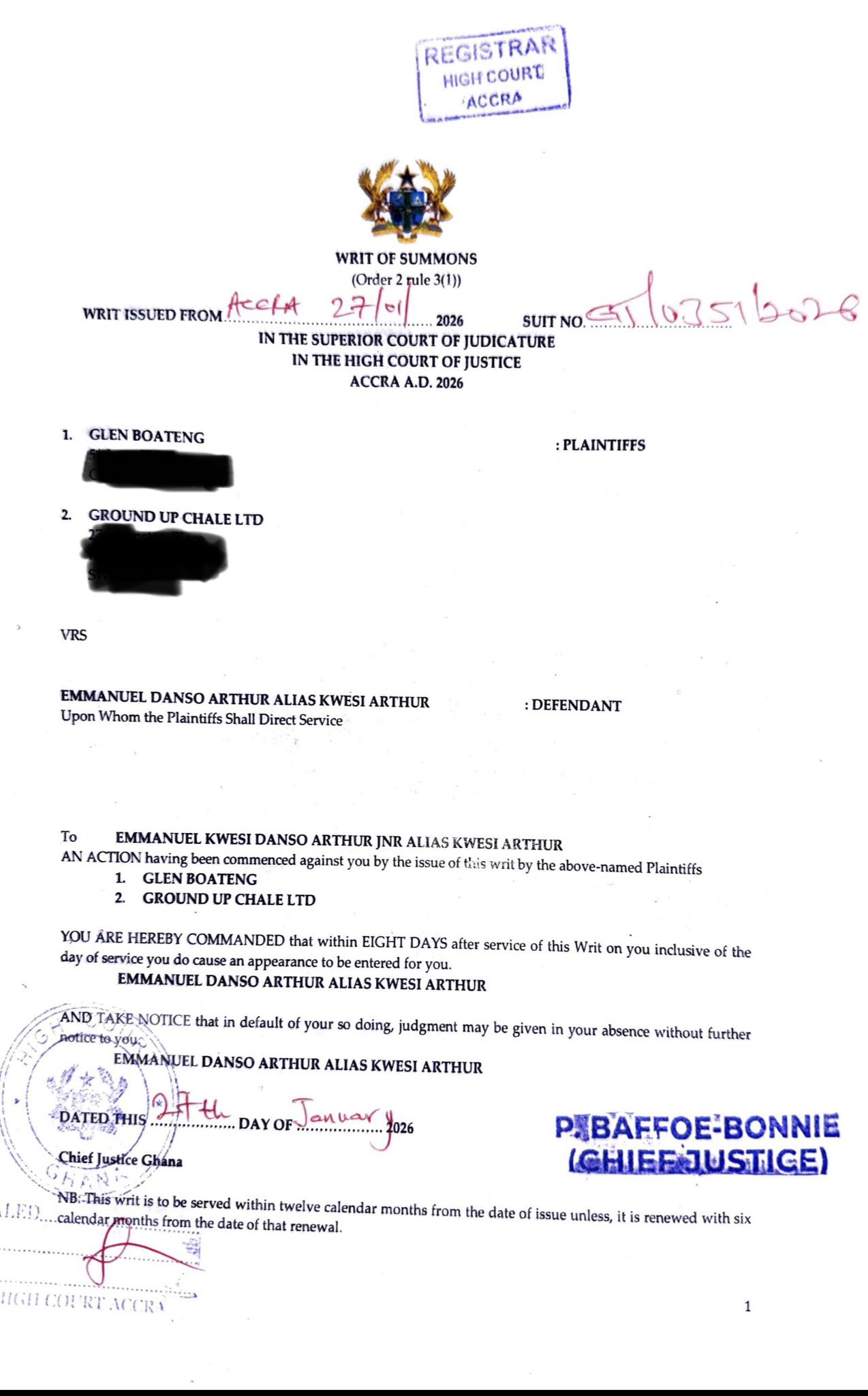
On 27 January 2026, Ground Up Chale and its founder, Glen Boateng, responded—not with posts, but with papers. A lawsuit was filed at the High Court in Accra, accusing Kwesi Arthur of libel.
According to the label, the statements weren’t just emotional outbursts; they were damaging, false, and harmful to their reputation. The claim? More than GH¢10 million in damages, the removal of the posts, a court injunction to silence further comments, and a public apology.
Enter the courtroom’s leading voice for the label, Jonathan K. Amable. Calm, calculated, and firm, he denied every major allegation.
Added that Kwesi Arthur was never blocked from releasing music—only restricted from using visuals owned by the label. He added that records clearly show the artist received his royalties. Ground Up Chale, he said, has nothing to hide and is ready to defend its name.
Now, the stage has shifted.
This is no longer just about contracts or creative control—it’s about reputation, legacy, and who owns what in an industry where art and business often collide. Fans who once vibed to the same anthems are now watching from the sidelines, wondering how a partnership that once shook Ghana’s music scene ended up before a judge.
As the court prepares to listen, this isn’t just a legal battle—it’s a defining chapter in Ghana’s entertainment history.


