


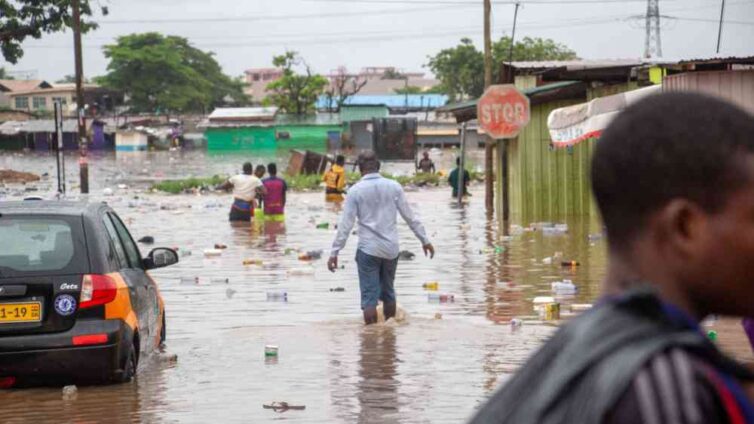
The Greater Accra Regional Security Council (REGSEC) has identified several flood-prone communities across the region for heightened monitoring and intervention following forecasts of increased rainfall in June.
The move comes after the Ghana Meteorological Agency (GMet) warned that Accra faces an elevated flood risk this month, with rainfall totals expected to range between 100 and 150 millimetres across the Coastal Zone.
In a statement issued on June 10, 2026, and signed by the Greater Accra Regional Minister, Linda Obenewaa Akweley Ocloo, REGSEC outlined several communities considered vulnerable to flooding and requiring urgent attention.
Among the identified areas are Odawna and Official Town in Adabraka, Sahara in Dansoman, Alajo—particularly the D.K. Poison and Polo Park areas—as well as Berlin Bridge and Downside in Nima.
Other communities listed include Jelil Estate Junction, Baba Yara Area and Akorli Down in Madina, together with parts of Osu Alata, Osu Doku and the Abelemkpe Methodist Church area.
The statement said residents in these communities should remain vigilant and comply with safety directives as authorities intensify flood preparedness measures ahead of the peak rainy season and the upcoming Homowo celebrations.
According to REGSEC, the measures are intended to reduce the risk of flooding while supporting broader security arrangements for the annual Homowo festivities across the region.
The council has also directed increased monitoring of major drainage catchment areas in parts of Weija-Gbawe, Ga West and Ga East.
Communities earmarked for special attention include Old Barrier, Choice, Tetegu and Oblogo in Weija-Gbawe; Manhean, Afuaman and Medie in Ga West; and Dome Crossing, GAEC Road, Christian Village Drain and the Dakyibi River catchment areas in Ga East.
REGSEC said all the identified locations require enhanced surveillance and intervention as authorities work to mitigate the impact of potential flooding.
As part of the preparedness measures, Metropolitan, Municipal and District Chief Executives (MMDCEs) have been directed to intensify drainage maintenance and sanitation exercises within their jurisdictions.
The directive forms part of broader efforts by the regional authorities to reduce flood risks, improve public safety and ensure communities are adequately prepared for the anticipated heavy rains.
Greater Accra experiences recurrent flooding during the rainy season, often resulting in the displacement of residents, destruction of property and disruption of economic activities. Authorities are therefore urging residents, particularly those living in low-lying and flood-prone areas, to take precautionary measures and heed official advisories throughout the season.


