


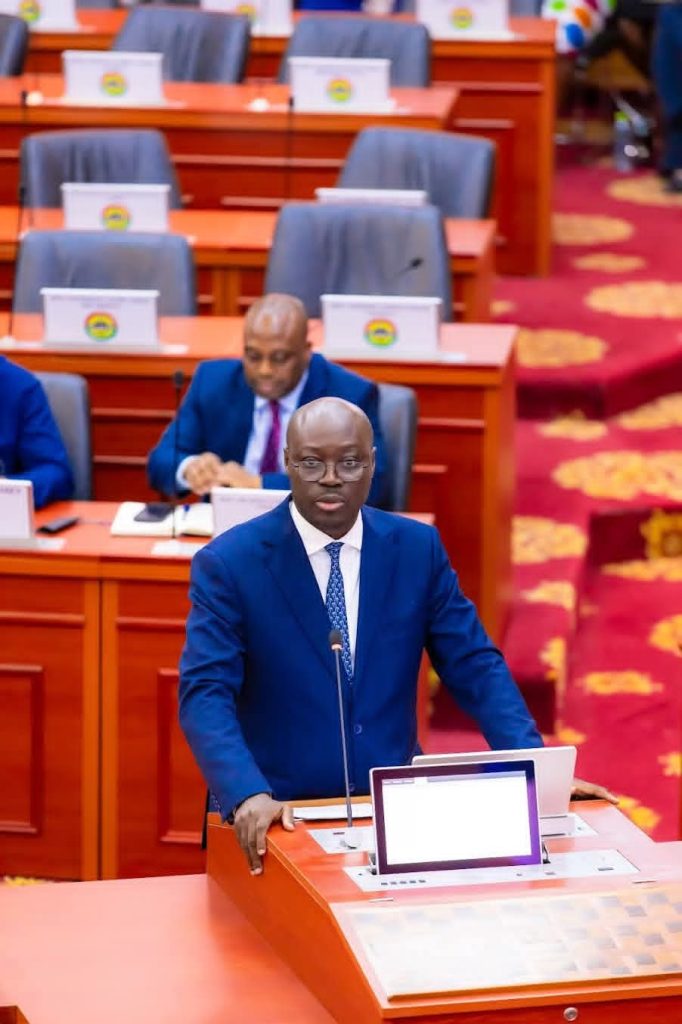
The Government of Ghana has announced a major shift in infrastructure financing policy, revealing plans to fund the proposed Accra–Kumasi Expressway entirely through petroleum and mineral revenues instead of borrowing. According to Finance Minister Cassiel Ato Forson, the decision forms part of broader fiscal reforms aimed at reducing debt accumulation while ensuring that the country’s natural resource earnings are directed toward large-scale national development projects.
Speaking at the Ishmael Yamson & Associates Business Roundtable, Dr. Forson explained that the policy is linked to government’s “Big Push” agenda, which prioritises massive investment in road infrastructure during the first two years of President John Dramani Mahama’s administration. He disclosed that government has earmarked about 4.5 billion dollars for road infrastructure projects, with the Accra–Kumasi Expressway identified as one of the flagship developments expected to transform transportation and economic activities between the two largest commercial corridors in the country.
The Finance Minister noted that previous governments often spread petroleum revenues across multiple recurrent expenditures, including travel, conferences, and administrative costs, leaving limited resources for strategic development. To reverse the trend, he said government has amended the law governing petroleum revenue utilisation to ensure oil revenues are dedicated solely to infrastructure projects. Under the new arrangement, each administration will be required to designate major projects to be financed directly from oil proceeds over a specified period.
Dr. Forson further revealed that government combined approximately 500 million dollars from petroleum revenues with another 500 million dollars generated from mineral royalties to raise an initial one billion dollars for the expressway project. He criticised the previous use of mineral royalties through the Minerals Income Investment Fund to purchase treasury bills, describing the practice as an inefficient recycling of state funds. According to him, redirecting those resources into infrastructure financing provides greater long-term economic value for the country.
He projected that Ghana could generate an additional 1.5 billion dollars in oil revenues this year, bringing the total available funding for the project to about 2.5 billion dollars within two years. With the estimated cost of the Accra–Kumasi Expressway placed at about 4 billion dollars, Dr. Forson expressed confidence that the project could be fully financed between 2025 and 2027 without resorting to external borrowing.
The Finance Minister stressed that government’s new financing approach represents a more disciplined and strategic use of taxpayers’ money. He argued that channeling oil and mineral revenues into transformative infrastructure projects would produce lasting national benefits instead of spending the funds on what he described as non-essential activities. He added that after completion of the expressway, future petroleum revenues would be directed toward other major national infrastructure projects as part of a long-term development strategy.
Story by Freedom Etsey Lavoe/Ahotoronline.com


