
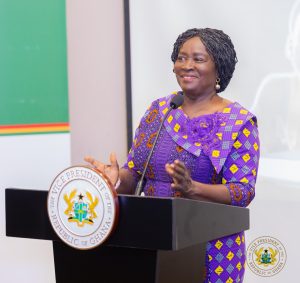
Vice President of the Republic of Ghana, Professor Naana Jane Opoku-Agyemang, has reaffirmed the government’s commitment to safeguarding the welfare of children through the implementation of strategic, child-centred reforms aimed at protection, empowerment, and long-term development.
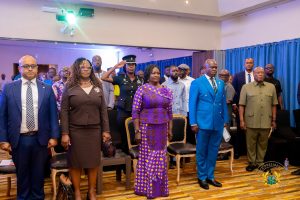
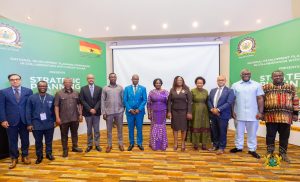
Speaking at the closing ceremony of the Strategic Planning Retreat, organised by the National Development Planning Commission (NDPC) at the Royal Senchi Hotel in Akosombo, the Vice President outlined a comprehensive Reform Roadmap designed to transform Ghana’s child protection system.
She disclosed that Ghana is shifting away from institutional care towards family-based alternatives, a move intended to ensure that children grow up in safe, nurturing environments. As part of this reform, the government is strengthening inspections, foster care systems, and oversight mechanisms to improve the quality of care and accountability across the sector.
Professor Opoku-Agyemang also highlighted progress under the Digital Social Services initiative, led by the Ministry of Gender, Children and Social Protection. She explained that child protection case management is being digitised nationwide to enhance registration, monitoring, follow-up, and accountability for vulnerable children, ensuring no child is left behind due to weak data systems.
Another key pillar of the reforms, she said, is the Coordinated Social Services approach, which brings together government agencies and development partners to harmonise child protection, education, health, social protection, and justice services.
According to the Vice President, this integrated model ensures that families receive comprehensive, multi-sector support, rather than fragmented and isolated interventions.
“Our goal is to support families holistically, addressing the many dimensions of vulnerability instead of treating challenges in silos,” she noted.
The Vice President further revealed that the government is actively implementing Adolescent Safe Spaces across various parts of the country.
These centres, she explained, are equipping young people with life skills, educational support, and ‘back-to-school’ programmes, while also empowering adolescents to make informed and responsible life choices.
In addition, Professor Opoku-Agyemang underscored the importance of community-level prevention and norm change, stating that the Ghana Child Abuse Campaign continues to engage traditional authorities, religious leaders, families, and community groups. The campaign, she said, is mobilising society to reject violence, child marriage, abuse, and exploitation, and to uphold the rights and dignity of every child.
Story by: George Osei-Akoto Addae (Teacher Kojo) #ahotoronline.com/oseiakotor1@gmail.com