


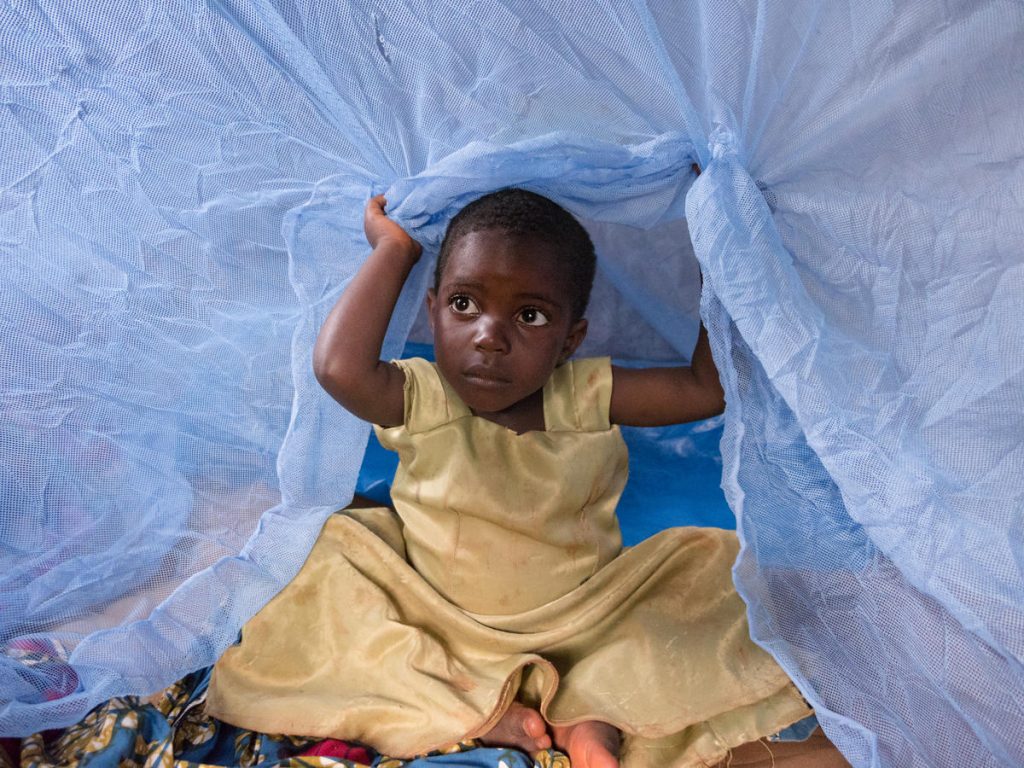
The Ghana Health Service (GHS) has dismissed as false allegations circulating on social media claiming that insecticide-treated nets being distributed to primary school children contain harmful chemical compounds. In a statement issued on Friday, June 26, the Service urged parents and the general public not to panic, insisting that the nets have undergone rigorous safety assessments and are approved by both national and international regulatory bodies.
The Service explained that the nets in question are the Interceptor® G2 Long-Lasting Insecticidal Nets (LLINs), which are approved by the World Health Organisation (WHO) and form part of Ghana’s national malaria elimination programme. It noted that the nets contain two insecticidal compounds—chlorfenapyr and alpha-cypermethrin—which have been widely used in global public health interventions for many years.
According to the GHS, concerns about respiratory risks are unfounded, as the chemicals used in the nets have extremely low vapour pressure and do not become airborne as dust, smoke or aerosol. The Service emphasized that users breathe normal air while sleeping under the nets and not insecticide, adding that no documented cases have linked properly used insecticide-treated nets to respiratory illness over decades of use in Ghana and across sub-Saharan Africa.
The Service further stated that the Interceptor® G2 nets have received WHO prequalification and approval from Ghana’s Food and Drugs Authority (FDA) after extensive safety evaluations covering all population groups, including children, pregnant women and infants. It stressed that all nets distributed under the national malaria control programme meet strict safety standards before reaching households.
Reiterating its commitment to public health, the GHS urged the public to continue using the nets, noting that malaria remains a major cause of illness and death among children in Ghana. It advised beneficiaries to air newly received nets in a shaded and well-ventilated area for up to 48 hours before first use to allow any mild odour from packaging to dissipate.
The Service also cautioned against the spread of unverified health information on social media, warning that misinformation can create unnecessary fear and undermine public health efforts. It encouraged individuals who experience unusual reactions or have concerns after using the nets to report to the nearest health facility for medical attention.
The GHS reaffirmed that all insecticide-treated nets distributed under the national malaria programme are thoroughly tested, approved, and verified as safe before being released to the public.
Story by Freedom Etsey Lavoe


