


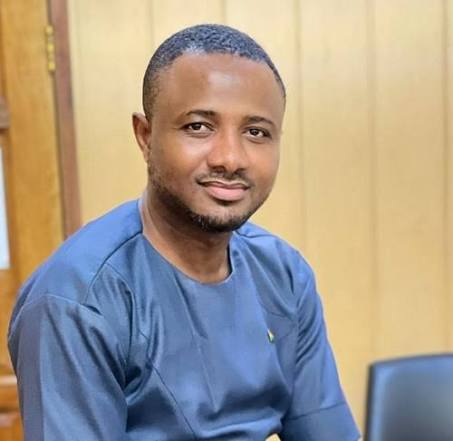
Adib Saani, Executive Director of the Jatikay Centre for Human Security and Peace Building and Chief Executive Officer of Jatikay, has called for a stronger and more coordinated national response to the growing threat of drug trafficking in Ghana, warning that the scale and sophistication of the illicit trade have turned it into a major national security concern.
Speaking on Ahotor FM’s Adekyee Mu Nsem programme in Accra-Tema on September 24, 2026, Mr Saani said Ghana could no longer treat drug trafficking as an ordinary criminal matter, citing the quantities of drugs involved, the financial resources behind the trade and the increasingly sophisticated methods allegedly being employed by traffickers. According to him, the country must approach the fight against drug trafficking with the seriousness required when confronting a major security threat.
“We are a country at war with drug peddlers,” he said, explaining that the statement was intended to emphasise the seriousness of the threat rather than suggest that Ghana was engaged in a conventional military conflict. He stressed that every Ghanaian has a role to play in the national effort to disrupt drug trafficking and prevent criminal networks from gaining further ground.
Drug trafficking is not an NDC-NPP issue
Mr Saani expressed concern about what he described as the over-politicisation of national security matters, insisting that the fight against drug trafficking must not become an NDC-versus-NPP issue. He said the problem affects Ghanaians regardless of their political affiliation and therefore requires a collective national response.
According to him, the situation also raises questions about the effectiveness of Ghana’s security leadership. He criticised what he described as failures on the part of the security chiefs and specifically called on the National Security Coordinator to intensify efforts to confront the growing threat.
Mr Saani said the National Security Coordinator must “up his game” in responding to the drug-trafficking challenge or consider stepping aside. He argued that national security responsibilities require proactive intelligence gathering, effective coordination and decisive action, particularly at a time when criminal networks are becoming increasingly sophisticated.
Ghana must strengthen security checks
The security expert also called for stronger security checks on people, goods and consignments leaving Ghana where there are reasonable grounds for suspicion. He suggested that certain categories of travellers and exports could be subjected to enhanced scrutiny as part of efforts to prevent traffickers from exploiting Ghana’s international connections.
While acknowledging that increased security checks could sometimes result in delays at airports, ports and other terminals, he maintained that national security considerations must be given serious attention. According to him, Ghana needs to strike a balance between facilitating legitimate international trade and travel and preventing criminal networks from using the country as a transit point or source for illicit drugs.
He called on security agencies to strengthen intelligence gathering, screening and monitoring at the country’s borders, ports and airports.
International reputation at stake
Mr Saani further warned that the drug-trafficking problem could have implications for Ghana’s international reputation, noting that increased reports of drug trafficking could result in greater scrutiny of Ghanaian travellers, exporters and businesses operating internationally.
According to him, Ghanaian citizens travelling abroad could face enhanced security checks if international authorities perceive Ghana as an important route for illegal drugs. He stressed that the consequences of drug trafficking extend beyond individuals directly involved in the trade, as ordinary Ghanaians and legitimate businesses could also be affected by increased international scrutiny.
He therefore urged the government and security agencies to act decisively to disrupt trafficking networks before the problem becomes even more difficult to control.
Security agencies must share intelligence
The Jatikay CEO stressed the importance of intelligence-led policing in the fight against drug trafficking, saying security and law-enforcement agencies must work together and share information rather than operate in isolation.
He explained that traffickers often operate through networks involving different individuals, locations and transportation routes, making cooperation among security agencies essential. According to him, intelligence gathering should enable security agencies to identify trafficking patterns, financing networks, routes and individuals allegedly involved in the trade.
He said successful enforcement should not focus only on arresting people found in possession of drugs but should also target the wider networks responsible for financing, transporting and distributing the substances.
Target the money behind drug trafficking
Mr Saani also pointed to the large amounts of money associated with drug trafficking as another reason Ghana must strengthen its response. He said authorities need to pay closer attention to the financial side of the drug trade and investigate how criminal networks finance their operations.
According to him, disrupting the money behind drug trafficking could make it more difficult for criminal organisations to sustain their activities. He therefore called for stronger cooperation between security agencies and institutions responsible for monitoring financial transactions and economic activities.
He said investigations should go beyond the immediate suspect and seek to establish who allegedly financed an operation, arranged the transportation and was expected to receive the drugs.
Public cooperation is important
The security expert also appealed to the public to support law-enforcement agencies by providing credible information about suspected drug-trafficking activities. He said ordinary citizens could play an important role because they may observe suspicious activities within their communities before security agencies become aware of them.
However, he cautioned against turning allegations into political accusations or making unverified claims against individuals, stressing that information provided to security agencies must be credible and properly investigated before conclusions are reached.
Politics should not interfere with national security
Mr Saani reiterated that the fight against drug trafficking requires cooperation across political lines. He said the NDC and NPP should not allow partisan disagreements to undermine efforts to address a threat that affects the entire country.
“Drug trafficking is not an NDC, NPP issue; this is a national crisis,” he said, arguing that Ghana needs a national strategy that can survive changes in government and does not depend solely on the political party in power.
He urged politicians to listen to security professionals and allow institutions responsible for national security to perform their duties within the law.
Ghana must act before the problem gets worse
The security expert warned that the increasing sophistication and scale of the drug trade should serve as a wake-up call for Ghana. He said the country must strengthen prevention, intelligence gathering, border controls, investigations, prosecution and international cooperation.
He stressed that the objective should not only be to arrest drug couriers but also to identify and dismantle the networks allegedly operating behind the trade. He maintained that the fight requires the participation of government, Parliament, security agencies, the judiciary, political parties, businesses, communities and ordinary citizens.
According to him, Ghana must treat drug trafficking as a collective national security challenge rather than another political issue. He concluded by urging Ghanaians to support legitimate efforts to combat the drug trade and called on political leaders to put partisan interests aside when dealing with threats that could affect the country’s security and international standing.
Story by Stephen Kwaku Owusu Mintah


