


The position of Ghana’s President on reparations highlights what many see as the continued callousness of Western countries toward people of African descent who were taken from the continent during the transatlantic slave trade.
The reluctance to fully acknowledge and address this historical injustice is widely viewed as hypocritical, particularly given that 52 countries abstained from the vote, while the United States, Israel, and Argentina voted against the resolution.
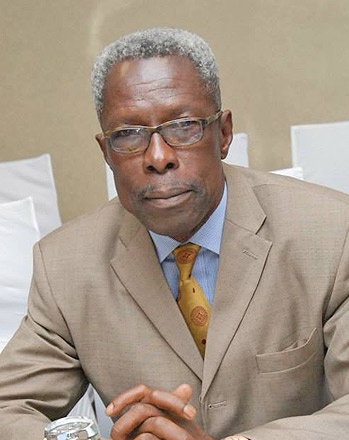
Dr. Tony Aidoo, a former Ambassador to the Netherlands, shared these views during an interview on the Adekyee Mu Nsem morning show on Ahotor 92.3 FM in Accra, hosted by Citizen Kofi Owusu.
He challenged the notion of describing any country as a “chosen nation,” calling it a baseless and misleading concept. He further questioned how the Bible could be interpreted in ways that appear to justify or glorify the slave trade, raising concerns about religious leaders who present it as the ultimate source of truth without critical reflection.
Dr. Aidoo reiterated that the issues raised by President John Mahama are grounded in historical fact. He argued that calls for reparations—even in symbolic or token form—are justified, and that resistance from some countries reflects an unwillingness to confront uncomfortable truths. He strongly criticized nations that opposed the resolution, describing their stance as unjust and untrustworthy.
He also emphasized the inhuman treatment endured by enslaved Africans, including sexual abuse, psychological torture, and the dehumanization of individuals and families. Children born to enslaved African mothers were often taken hostage by slave masters and treated as property rather than human beings.
In a related development, the United Nations General Assembly voted to recognize the enslavement of Africans during the transatlantic slave trade as “the gravest crime against humanity.” Advocates believe this decision could pave the way for healing and justice.
The resolution, proposed by Ghana, calls on UN member states to consider issuing formal apologies for their roles in the slave trade and to contribute to a reparations fund, though no specific monetary amount is mentioned.
The proposal was adopted with 123 votes in favor and three against—the United States, Israel, and Argentina—while 52 countries, including the United Kingdom and several European Union member states, abstained.
Countries such as the United Kingdom have consistently rejected calls for reparations, arguing that present-day institutions should not be held accountable for historical actions.
Although resolutions by the UN General Assembly are not legally binding like those of the Security Council, they carry significant moral and political weight as expressions of global opinion.
“Let it be recorded that when history beckoned, we did what was right for the memory of the millions who suffered the indignity of the slave trade and those who continue to suffer racial discrimination,” President John Mahama told the assembly ahead of the vote.
“The adoption of this resolution serves as a safeguard against forgetting. It also challenges the enduring scars of slavery,” he added.
Earlier, Ghana’s Foreign Minister, Samuel Okudzeto Ablakwa, clarified that the call for reparations is not about personal gain for African leaders. “We are demanding compensation—and let us be clear, African leaders are not asking for money for themselves,” he said. “We want justice for the victims, and support for initiatives such as educational endowment funds and skills training programs.”
The campaign for reparations has gained significant momentum in recent years. “Reparatory justice” was adopted as the African Union’s official theme for 2025, and Commonwealth leaders have also called for dialogue on the issue.
Ablakwa further noted that Ghana’s efforts are not about ranking its suffering above others, but about acknowledging and documenting a historical reality.
Between 1500 and 1800, an estimated 12 to 15 million Africans were captured and transported to the Americas, where they were forced into slavery. More than two million are believed to have died during the journey alone.


