


The Ghana Federation of Labour (GFL) has urged the leadership of the governing National Democratic Congress (NDC) to pay closer attention to the activities of the Trades Union Congress (TUC), alleging that some of the Congress’ recent positions appear to align with the opposition New Patriotic Party (NPP) and could undermine the government’s public image.
The call follows the TUC’s recent appeal to President John Dramani Mahama to withhold assent to the Tribunals Bill, which was recently passed by Parliament. The labour body has expressed concerns about aspects of the proposed legislation and its implementation.
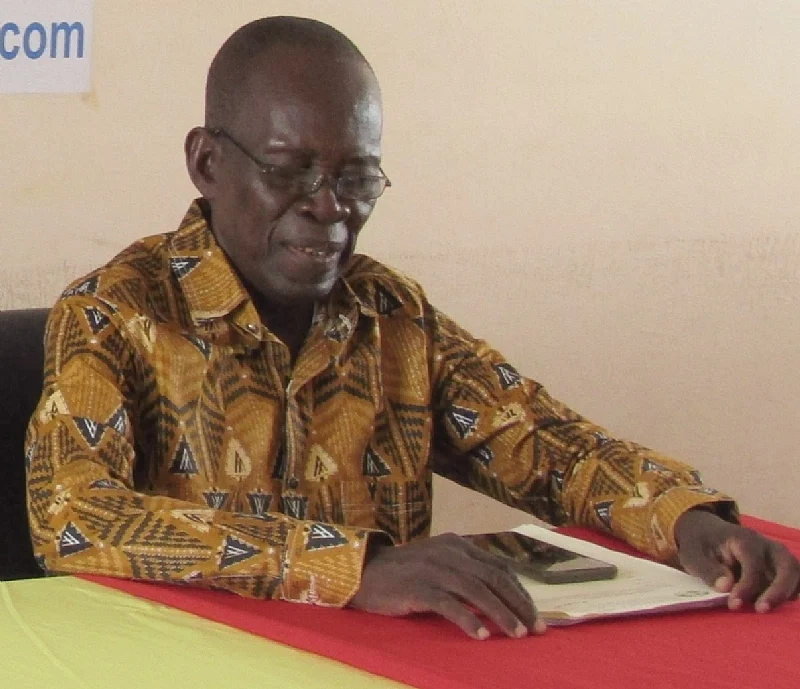
Speaking on Ahotor FM’s Yepe Ahunu programme with Citizen Kofi Owusu in Accra, the Secretary-General of the Ghana Federation of Labour, Abraham Koomson, argued that the NDC should adopt a more strategic approach in its engagement with organised labour.
According to him, Ghana’s first President, Dr. Kwame Nkrumah, recognised the political influence of organised labour and maintained a close working relationship with the TUC because of its significant role in national politics and governance.
Koomson said the NDC should draw lessons from that experience and remain politically alert in its dealings with the TUC, alleging that the opposition NPP has gained considerable influence within the Congress.
He further criticised the TUC’s recent public positions, particularly its stance on illegal mining (galamsey), describing them as inconsistent.
“It is surprising that the TUC became vocal on illegal mining shortly after the NDC assumed office, despite the widespread concerns over galamsey during the previous administration,” he argued.
Koomson maintained that the GFL had, on several occasions, distanced itself from statements made by the TUC because they did not represent the views of all organised labour.
Meanwhile, Majority Leader Mahama Ayariga has dismissed claims that the proposed tribunal system is intended to target members of the opposition NPP, insisting that the initiative is aimed solely at improving the delivery of justice.
Speaking in Parliament, Ayariga argued that no political party remains in power indefinitely and questioned why the NDC would establish a judicial system designed to persecute its opponents when it could eventually be used by a future government.
“When they say, ‘Oh, we are setting it up to try NPP people, to use it for political persecution,’ as if NDC is going to be in power forever. No. NDC is not likely to be in power forever.
“So, if we set up a system for our opponents, when we leave office, the system will still be there for them to also use against us,” he said.
Ayariga explained that the tribunal system is intended to address delays in the traditional court system by ensuring the speedy adjudication of specific categories of cases.
According to him, the existing judicial process has long been criticised for prolonged delays, and the proposed tribunals are expected to provide a more efficient mechanism for handling specialised criminal and civil matters.
“They feel that the traditional courts are slow and so, if you look at this law that we are passing, we have sought to compel them to expedite the adjudication of matters and the trial of cases. Fundamentally, that is what the tribunal system seeks to address,” he stated.
Parliament passed the Tribunals Bill, 2026, after it successfully completed its third reading. The legislation seeks to reintroduce regional tribunals under a revised legal framework aimed at strengthening the administration of justice, improving access to justice, and ensuring the timely resolution of specialised cases.


