


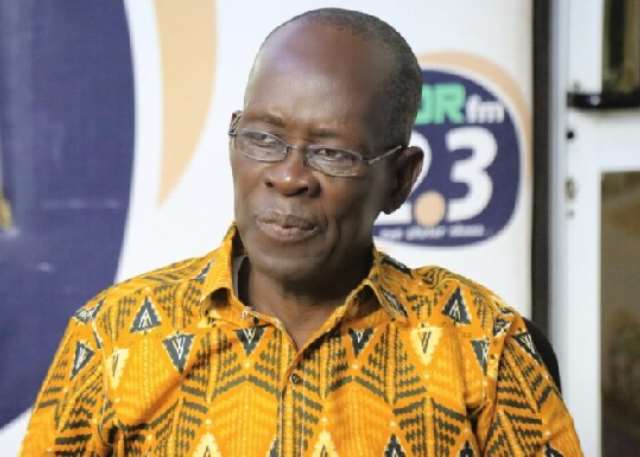
The Secretary-General of the Ghana Federation of Labour (GFL), Abraham Koomson, has defended the MTN proposed 0.75% levy on electronic bank transfers, insisting that the tax is different from the controversial E-Levy introduced by the previous administration.
Speaking on Ahotor FM’s Adekyee Mu Nsem programme, Mr. Koomson explained that the proposed levy is a special tax that applies only to bank transfers and does not affect every Ghanaian in the same manner as the former E-Levy.
According to him, the government initially intended to implement the levy but reconsidered after listening to concerns raised by Ghanaians.
“Government listened to the cry of Ghanaians,” he stated, contrasting the current administration’s approach with that of the previous NPP government during the introduction of the E-Levy.
Mr. Koomson argued that when labour unions and sections of the public protested against the E-Levy, the then government ignored their concerns and instead celebrated its passage into law.
“How do you compare those characters to the NDC?” he questioned.
He also dismissed the Minority’s recent press conference opposing the proposed levy, describing it as unnecessary and an attempt to divert public attention.
Mr. Koomson further questioned the credibility of Minority Leader Alexander Afenyo-Markin, particularly on issues relating to the Electricity Company of Ghana (ECG).
“He told Ghanaians that rot at ECG was overwhelming. What did he do about it when he was Board Chairman of ECG?” he asked.
The labour leader also claimed that the government’s Operation Recover All Loot (ORAL) initiative was producing results, adding that the Minority had been given too much space to attack the government politically.
He suggested that the NDC grassroots should be allowed to politically engage the Minority while government concentrates on governance and national development.
Mr. Koomson maintained that the proposed 0.75% levy on bank transfers was even modest, arguing that government could have increased it to 2% because it is a “special tax.”
He further defended the rationale behind charging for electronic bank transfers, stating that individuals who choose the convenience of transferring money from home instead of visiting the bank physically should expect to pay for the service.
“Why don’t you go to the bank and do the transfer yourself? If you want to sit in the comfort of your home and do the transfer, then you will have to pay,” he stated.
He concluded by advising the governing National Democratic Congress (NDC) to organise workshops for its grassroots members to help them better understand government policies and the current economic situation.
Story by Stephen Kwaku Owusu Mintah


