


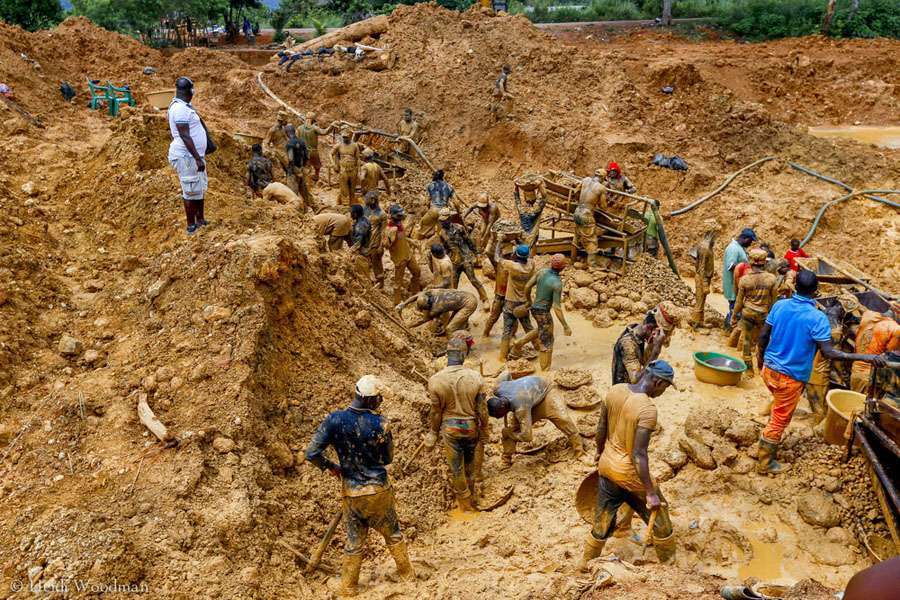
In many mining communities across Ghana, the story of galamsey is not just about excavators tearing through riverbanks or muddy waters flowing from once-clean streams. It is a story of power—who holds it, who uses it, and who looks away when it matters most.
Galamsey’s true cost is not measured in ounces of gold but in poisoned rivers, lost livelihoods, damaged health, and broken futures. It damages the environment that sustains life and undermines the humanity of those forced to choose survival over sustainability. Until long-term solutions replace short-term gains, both nature and people will continue to pay the price.
At the center of this story stands the chief, the traditional custodian of the land. Long before modern laws and ministries, the chief’s authority over land was unquestioned. Even today, no miner sets foot on land without first seeking local consent, spoken or silent. In some communities, chiefs openly resist galamsey, calling meetings under the tree, warning their people about poisoned rivers and barren farms. In others, the silence of the palace speaks louder than words. Land changes hands quietly, gifts are exchanged discreetly, and the chief becomes both guardian and gatekeeper to destruction. This dual role blurs the line between tradition and complicity.
Hovering above the local scene is the politician. During campaigns, promises are made: jobs, development, tolerance. Galamsey operators become voters, financiers, and political foot soldiers. When crackdowns come, they are often short-lived, ending abruptly after a phone call from “above.” In this narrative, the politician is both a lawmaker and a negotiator, torn between protecting the environment and protecting political survival. Enforcement becomes selective, justice uneven, and the fight against galamsey turns into a performance rather than a commitment.
Then there is the state, powerful in appearance but fragile in resolve. Soldiers arrive in convoys, excavators are burned, and rivers are declared off-limits. For a moment, hope rises. But soon, the task force withdraws, the machines return, and the pits reopen. The state’s authority, though backed by law and force, struggles to compete with the quiet influence of chiefs and the strategic interference of politicians. Corruption seeps into institutions, and the law bends under the weight of personal interests.
In this unfolding story, ordinary citizens are caught in between. Farmers lose their land, children drink polluted water, and youth chase survival in dangerous pits because there are few alternatives. Galamsey becomes both a crime and a lifeline, sustained by a system where power is fragmented and accountability is weak.
The narrative of galamsey is therefore not one of absence of laws or lack of force, but one of conflicted power. Chiefs hold land but lack oversight, politicians hold influence but lack consistency, and the state holds authority but lacks independence. Until these characters in the story choose cooperation over convenience, the rivers will continue to suffer, and the fight against galamsey will remain an unfinished chapter in Ghana’s governance story.
Effects of Galamsey on the Environment and Humanity
Galamsey leaves scars that go far beyond the mining pits. Its effects stretch across rivers, forests, communities, and generations, quietly reshaping both the natural environment and human life.
Environmental Effects
Once-clear rivers such as the Pra, Ankobra, and Offin now carry the color of destruction. Galamsey introduces mercury and other toxic chemicals into water bodies, poisoning aquatic life and rendering water unsafe for drinking, farming, and fishing. What was once a source of life becomes a channel of illness.
Forests also suffer deeply. Trees are felled to make way for mining sites, exposing the soil to erosion. Without vegetation, fertile topsoil is washed away by rain, leaving the land barren and unsuitable for agriculture. Wildlife habitats are destroyed, pushing animals away or driving them to extinction.
The land itself is permanently altered. Open pits are abandoned without reclamation, turning productive land into death traps for humans and animals. These pits collect stagnant water, creating breeding grounds for mosquitoes and increasing the spread of malaria and other diseases.
Effects on Humanity
For humans, the consequences are immediate and long-lasting. Communities that depend on rivers for drinking water are forced to rely on expensive treated water or unsafe alternatives. Health problems such as skin diseases, respiratory issues, and mercury poisoning become common, especially among miners and nearby residents.
Livelihoods are destroyed even as others are created. Farmers lose their land and crops, fishermen lose their catch, and food security is threatened. While galamsey offers short-term income, it undermines sustainable economic activities, trapping communities in cycles of poverty and environmental damage.
Children are among the most vulnerable. Many drop out of school to engage in mining, exposing themselves to dangerous working conditions and limiting their future opportunities. Others suffer from polluted water and poor sanitation, affecting their physical and cognitive development.
Social tensions also rise. Disputes over land, water, and mining rights lead to conflicts within communities. Crime rates increase as competition for gold intensifies, weakening social cohesion and trust.
A Shared Cost
The effects of galamsey do not remain in mining communities alone. Polluted rivers increase water treatment costs nationwide, placing a financial burden on the state and taxpayers. Environmental damage today reduces opportunities for future generations, making galamsey a national problem rather than a local one.


