


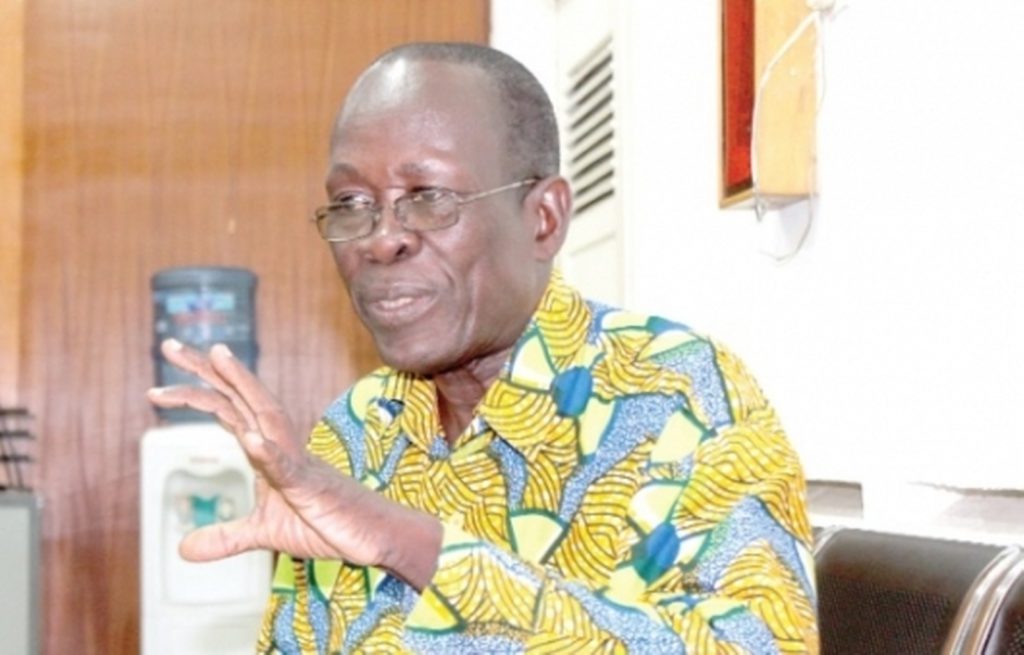
TEMA, Ghana, 13th June: The Secretary General of the Ghana Federation of Labour (GFL), Abraham Koomson, has questioned the rationale behind the fumigation tax imposed on imported raw materials used by local industries, describing it as a “nuisance tax” that unnecessarily increases production costs and undermines the competitiveness of Ghanaian manufacturers.
According to Mr. Koomson, the tax places an additional financial burden on local industries at a time when businesses are already grappling with high operational costs and intense competition from imported finished products.
The fumigation tax, which is collected by the Ministry of Health, is intended to serve as a public health and biosecurity measure. However, Abraham Koomson argues that its application to certain industrial raw materials lacks justification, particularly in cases where no fumigation service is actually provided.
Speaking on Ahotor FM’s Yepe Ahunu programme on Saturday, June 13, he noted that dry bulk raw materials such as clinker and limestone, which are commonly imported for cement production, are tightly sealed and do not pass through standard disinfection or fumigation processes.
He therefore questioned why manufacturers are required to pay fumigation charges on such goods when they do not receive the corresponding service.
“This tax acts as outright extortion on some imported raw materials. Companies are being compelled to pay for a service that is not rendered to them,” Mr. Koomson stated.
He explained that the mandatory charge, estimated at about US$0.50 per tonne of cement clinker, contributes directly to higher production costs, which are eventually transferred to consumers through increased prices of locally manufactured goods.
According to him, the accumulation of such levies at Ghana’s ports continues to raise the cost of doing business and weakens the country’s industrial sector.
“The fumigation tax charged on imported raw materials for local industries is difficult to understand. Such nuisance taxes add extra costs to locally produced goods, making them more expensive and less competitive,” he said.
Abraham Koomson warned that the situation places local manufacturers at a disadvantage against imported finished products, which continue to dominate many sectors of the Ghanaian market.
He further called on the relevant authorities to provide clear explanations regarding the purpose of the tax, how the revenue generated is utilised, and whether the state derives any significant benefit from its collection.
“We need an explanation as to why such taxes are imposed and whether the state genuinely benefits from the revenue generated,” he stressed.
The GFL Secretary General also cautioned that excessive taxes and levies could discourage investment and undermine government efforts to promote industrialisation and economic growth.
He specifically warned that such policies could negatively affect the success of the government’s flagship 24-hour economy initiative, which aims to boost productivity, create jobs, and attract private-sector investment.
“If care is not taken, investors will be driven away, and the objectives of the 24-hour economy policy could be undermined,” he warned.
Abraham Koomson therefore urged the government to review and eliminate taxes that unnecessarily burden local industries, arguing that creating a more business-friendly environment is essential for economic expansion, job creation, and increased local production.
He maintained that reducing the cost of doing business would encourage investment, strengthen local manufacturing, and ultimately contribute to the growth of Ghana’s economy.
Story by: Emmanuel Romeo Tetteh(#RomeoWrites✍️)/Ahotoronline.com | Ghana 🇬🇭


