


The kind of political system we are currently operating as a country risks eventual collapse if individuals, civil society, and organized groups lose faith and refuse to rally behind the vision and agenda of political parties.
The support and goodwill shown by Ghanaians toward the National Democratic Congress (NDC) leading into the 2024 general election reflected a strong desire for reform and accountability. Many expected the new administration to reset the system and hold corrupt former government officials accountable. It is long overdue for the government in power to take decisive steps to clean up alleged corruption and remove political bottlenecks created by past officials who still occupy influential positions.
Some observers believe the NDC government and its leadership are conducting themselves too cautiously, attempting to appease political opponents who are perceived to be undermining the government’s vision and agenda. According to this view, the party’s electoral victory was built on years of struggle by supporters and independent citizens who believed in the party’s promise of change.
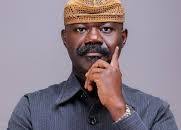
The Executive Director of the Good Governance Advocacy Group Ghana, Listowel Nana Kusi-Poku, made these remarks on the Adekyee Mu Nsem morning show on Ahotor 92.3 FM in Accra, hosted by Citizen Kofi Owusu. Although he stated that he is not a member of the NDC, he expressed disappointment in the party’s leadership, particularly regarding the use of ORAL as a tool that many Ghanaians initially embraced as a genuine anti-corruption initiative but now perceive as a political gimmick or public relations strategy.
He suggested that the government could introduce a policy to establish a fast-track court dedicated to prosecuting former government officials found culpable of corruption-related offences.
In a related development, the Mahama administration has revoked 541 public sector recruitments, appointments, and promotions made during the final days of the Akufo-Addo government. This decision followed a comprehensive review conducted by a presidential committee established to examine a controversial wave of hiring that occurred after the December 7, 2024, general elections.
Presidential Spokesperson Felix Kwakye Ofosu announced the findings at a press briefing on Tuesday. He described the exercise as a necessary due process rather than a politically motivated purge.
After the New Patriotic Party (NPP) lost the December 2024 election, the outgoing Akufo-Addo administration faced accusations of rushing public sector appointments during the transition period between the election results and the January 7, 2025 inauguration. Critics argue that such last-minute appointments have become a recurring feature of Ghana’s political transitions.
The Mahama government stated that it had written to the outgoing administration requesting a joint review of appointments made during the transition period, but the request was reportedly ignored.
Upon assuming office, the Chief of Staff issued a directive ordering all institutions to revoke appointments made after December 7. This blanket directive attracted criticism, as it risked affecting legitimate, merit-based hires.
To address these concerns, a presidential committee was established to review each institution individually and distinguish between compliant appointments and those that violated established procedures.
Of the 36 institutions that appeared before the committee, 28 had initiated their recruitment processes before the December 7 elections. Thirteen institutions revoked appointments in response to the Chief of Staff’s directive, while 17 sought guidance from the Office of the President before taking action.
In total, the committee reviewed 2,080 recruitments, appointments, and promotions. Of these, 879 had already been revoked by institutions following the earlier directive, leaving 1,201 pending review.
After its assessment, the committee recommended that 1,539 of the 2,080 cases be upheld, as they complied with established procedures and had appointment letters issued before December 7, 2024, meeting at least an 80 percent compliance threshold.
The remaining 541 cases were recommended for revocation because the recruitment processes concluded after December 7 and failed to meet required compliance standards.
Notably, the 541 recommended revocations were fewer than the 879 appointments initially cancelled by institutions. Kwakye Ofosu explained that this difference resulted from special consideration given to vulnerable individuals, particularly persons with disabilities within the Ghana Education Service.
Some individuals whose recruitment processes did not fully comply with procedural requirements were granted clemency due to their circumstances and the potential hardship revocation would impose. They were allowed to regularize their documentation to remain in public service.
Kwakye Ofosu strongly criticized the previous administration, alleging that it knowingly approved non-compliant appointments despite being aware that procedural requirements had not been met. He maintained that the review exercise was conducted without malice or ill-feeling and described it as a necessary step to uphold the rule of law and ensure accountability.


