


For some migrants from Ghana, the journey to Europe begins on a bus heading towards Niger. The route passes through Nigerien towns before reaching Agadez, a major transit point for migrants travelling across the Sahara towards Libya and, for some, onward to Europe. Before entering the desert, travellers are given bottles of water as they prepare for one of the most dangerous stages of the journey.
From Agadez, migrants continue across the Sahara in vehicles locally referred to as “Heliux.” The vehicles travel over rough and uneven terrain, with passengers sometimes using sticks for support as they move. A fall from the vehicle can be fatal, while running out of fuel, getting lost, and encountering animals add to the dangers. Some journeys through the desert can last about four days, leaving travellers exposed to extreme heat, exhaustion, and limited supplies of food and water.
The scale of deaths along these desert routes is significant. The International Organization for Migration (IOM) says more than 17,000 migrant deaths have been recorded in Niger since 2014, mostly involving people attempting to cross the Sahara Desert. The IOM also warns that the actual number is likely to be higher because many deaths occur along remote routes and are never recorded.
The desert routes also expose migrants to armed robbery, kidnapping, and other forms of violence. Armed men have been reported along some routes, while migrants may be forced to surrender their money and belongings. Some travellers resort to hiding money inside their bodies to protect their savings.
A joint report by the United Nations High Commissioner for Refugees (UNHCR), the IOM, and the Mixed Migration Centre has documented kidnapping for ransom, robbery, torture, physical violence, trafficking, forced labour, and enslavement along routes used by migrants travelling towards Africa’s Mediterranean coast.
Reaching Libya does not necessarily mean the danger is over.
Some migrants become stranded and are forced to work while trying to raise money for the next stage of their journey. Others face detention, kidnapping, trafficking, and exploitation. The UN agencies have also documented arbitrary detention, forced labour, and other serious abuses along these migration routes.
For those who eventually reach the Libyan coast, the Mediterranean becomes the next major obstacle.
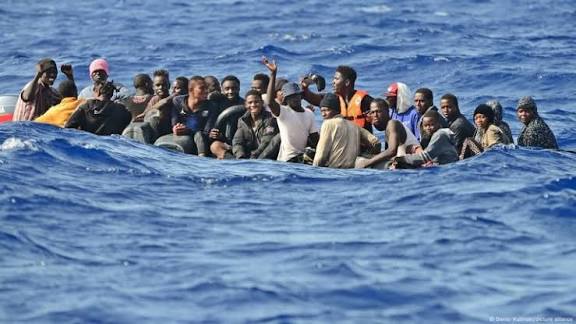
Migrants pay intermediaries, commonly described as “connection men,” to secure places on boats known locally as “lampalampa.” Boats that may be designed to carry about 50 to 60 people can become dangerously overcrowded, with some journeys reportedly carrying between 120 and 180 passengers.
According to accounts of some crossings, children are placed inside first, women sit around them, while men remain around the edges of the boat. The arrangements leave passengers with little room to move and limited ability to respond if the vessel encounters difficulties at sea.
The journey across the Mediterranean can take about two days, with passengers facing overcrowding, mechanical failure, rough seas, attacks, and drowning.
Some migrants believe that paying intermediaries to “stamp” or protect a boat can prevent attacks, while others may be forced to operate the vessels despite having little or no experience in navigation.
The danger is reflected in IOM figures. Between January and April 2026, 821 migrant deaths and disappearances were recorded on the Central Mediterranean route. The IOM describes the Central Mediterranean as the deadliest migration route to Europe based on available evidence.
The number of people who survive particular journeys can be dramatically lower than the number who begin them. Some journeys are described as involving between 150 and 180 people, with only about 50 to 70 reportedly surviving the sea crossing. Similarly, desert journeys involving around 150 people may reportedly leave only 30 or 40 survivors.
These figures should not be interpreted as official overall mortality statistics. Rather, they illustrate the scale of the dangers described by migrants and others familiar with the routes.
As the boats move farther away from the Libyan coast, passengers look towards the horizon, hoping to see the waters associated with approaching Europe and rescue teams patrolling the Mediterranean.
Some rescue operations use aircraft and other assets to locate people in distress, but many migrants never reach safety.
From Ghana to Niger, through Agadez and the Sahara to Libya, and finally across the Central Mediterranean towards Italy, the journey is marked by extreme environmental conditions, violence, exploitation, and the constant risk of death.
The journey is not simply a passage from one country to another. For many who attempt it, every stage presents a new and potentially fatal challenge. International evidence shows that the dangers exist throughout the route—from the unforgiving conditions of the Sahara to the deadly waters of the Mediterranean.
Ahotor online
Sorkpa Jennifer


