


Introduction
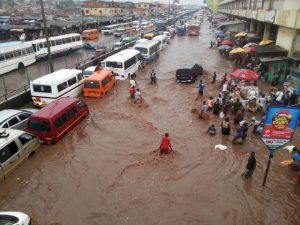
Flooding has become one of the most persistent environmental and developmental challenges in Ghana. From devastating urban floods in Accra to recurring disasters in coastal and northern communities, floods continue to destroy lives, property, infrastructure, and livelihoods. Despite repeated tragedies and growing public awareness, the problem remains unresolved. This raises an important question: why does flooding persist in Ghana despite decades of policy discussions, engineering proposals, and public campaigns?
The answer lies not only in climate variability or poor drainage infrastructure, but also in the interconnected issues of political will, leadership, vested interests, public lifestyle, and societal discipline. Flood management in Ghana is therefore as much a governance issue as it is an environmental challenge.

Political Will and Governance Challenges
Political will refers to the commitment of leaders and institutions to implement policies and make difficult decisions in the public interest. In Ghana, flood management policies often exist on paper but suffer from weak implementation. Governments routinely announce desilting exercises, drainage projects, demolition of structures on waterways, and sanitation campaigns, yet enforcement remains inconsistent.
One major problem is the politicization of urban planning and environmental regulation. Illegal structures are frequently allowed to remain because of electoral considerations, political patronage, or fear of public backlash. Politicians may avoid enforcing demolition orders against unauthorized developments to maintain political support. As a result, waterways are encroached upon, wetlands are reclaimed for housing, and drainage systems become obstructed.
Leadership failures also manifest in poor institutional coordination. Agencies responsible for sanitation, urban planning, disaster management, and environmental protection often operate in isolation, leading to fragmented flood control efforts. Sustainable flood management requires long-term planning that extends beyond electoral cycles, yet many interventions in Ghana are reactive rather than preventive.
Politics and Competing Interests
Flood management in Ghana is heavily influenced by competing political and economic interests. Urban land has become highly commercialized, particularly in rapidly growing cities such as Accra and Kumasi. Developers, traditional authorities, private individuals, and political actors often prioritize economic gains over environmental sustainability.
In some cases, permits are issued for construction in flood-prone areas despite existing planning regulations. Corruption and weak regulatory oversight further worsen the problem. Illegal developments are sometimes tolerated because influential individuals benefit from them financially or politically.
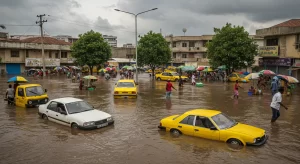

Flood disasters also become politicized after they occur. Rather than focusing on long-term solutions, political discourse often centers on blame-shifting between successive governments. This cycle undermines accountability and delays comprehensive action.
Lifestyle and Urban Behavior
The lifestyle and everyday practices of citizens also contribute significantly to flooding in Ghana. Indiscriminate waste disposal remains widespread, with plastics and solid waste commonly dumped into gutters, drains, and water bodies. During heavy rainfall, these materials block drainage systems and intensify flooding.
Rapid urbanization has also encouraged unplanned settlement patterns. Many residents occupy flood-prone areas because of housing shortages, poverty, or proximity to economic opportunities. Informal settlements often lack proper drainage infrastructure and sanitation services, making them highly vulnerable during rainy seasons.
Consumer culture and increasing use of plastic products have further aggravated waste management challenges. Although public education campaigns exist, behavioral change has been slow. This highlights the need for stronger environmental awareness and community participation in flood prevention efforts.
Discipline and Civic Responsibility
Flood management cannot succeed without public discipline and civic responsibility. Environmental sanitation is not solely the responsibility of government agencies; it also depends on the attitudes and actions of citizens. Respect for planning regulations, proper waste disposal, and adherence to environmental laws are essential components of sustainable urban management.
In Ghana, enforcement of environmental laws is often weak. Individuals and businesses frequently violate sanitation and building regulations with little consequence. This culture of non-compliance reflects broader governance and societal challenges. A disciplined society is more likely to protect public infrastructure, preserve waterways, and support environmental sustainability.
Educational institutions, religious organizations, community leaders, and civil society groups all have important roles to play in promoting environmental ethics and responsible citizenship.
Toward Sustainable Flood Management
Addressing flooding in Ghana requires a multidimensional approach that combines infrastructure development with strong governance and behavioral change.
First, political leaders must demonstrate genuine commitment to enforcing planning regulations regardless of political cost. Unauthorized structures on waterways should be addressed consistently and transparently.
Second, institutions responsible for urban planning, sanitation, and disaster management must improve coordination and data sharing. Investment in modern drainage systems, early warning technologies, and climate-resilient infrastructure is essential.
Third, waste management systems should be strengthened through recycling initiatives, improved collection services, and stricter penalties for indiscriminate dumping.
Finally, public education and civic engagement must become central to flood management strategies. Citizens should view environmental protection not as a temporary campaign but as a shared national responsibility.
Conclusion
Flooding in Ghana is not merely a natural disaster; it is a reflection of deeper governance, political, social, and behavioral challenges. Political will, effective leadership, responsible politics, disciplined lifestyles, and civic accountability are all critical to sustainable flood management. Without decisive action and collective responsibility, floods will continue to threaten development and human security in Ghana.
The future of flood management in Ghana depends on whether leaders and citizens are willing to prioritize long-term environmental sustainability over short-term political and personal interests.


